Father and Son Went Fishing—Then Something Swam Toward Them!

 Apple Podcasts

 Spotify

 Castro

 RSS Feed
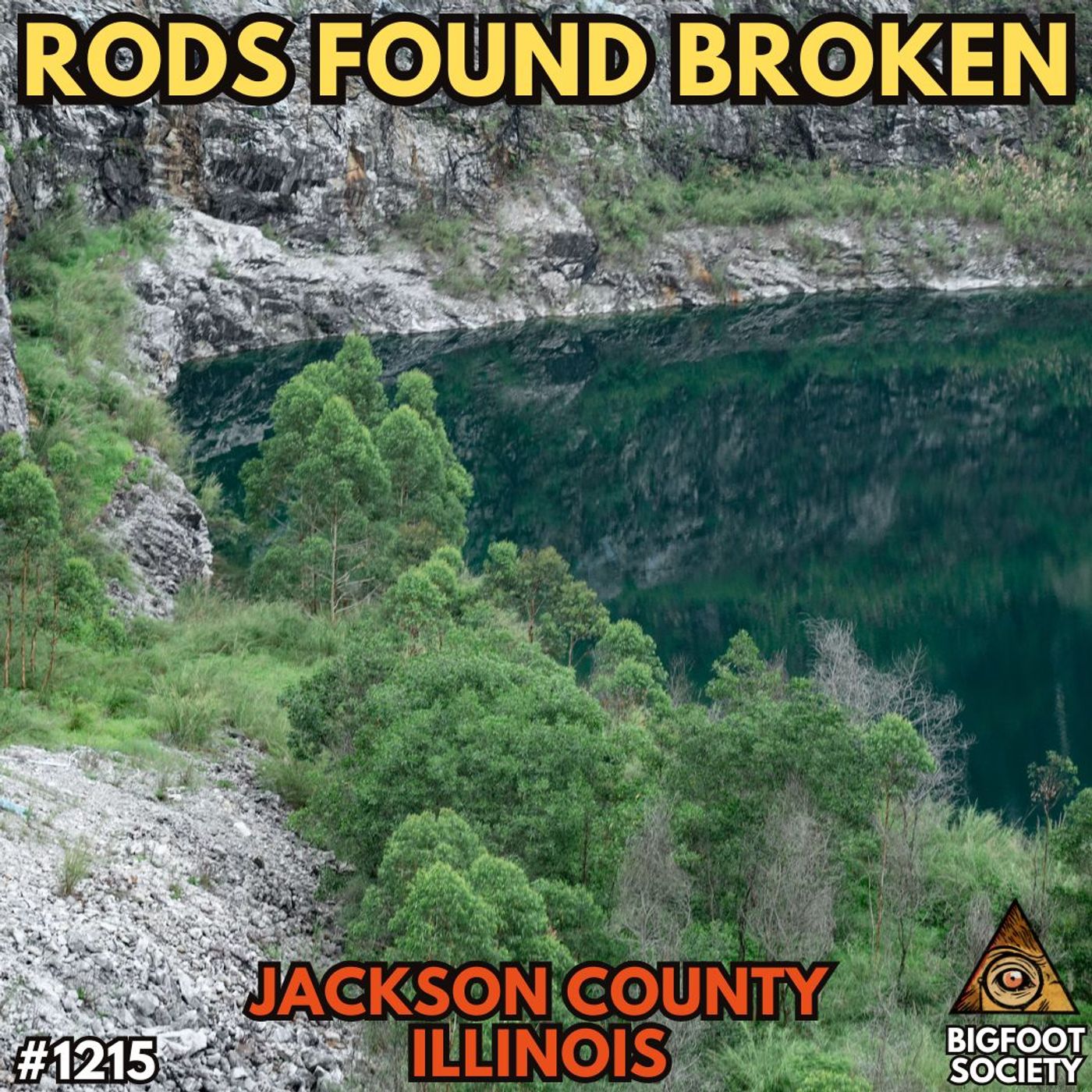
A father and son go fishing at an isolated Illinois quarry pond. A creature growls from the opposite bank, jumps into the water, and begins swimming toward them.
In Bigfoot Society Episode 1215, author and longtime nurse John Reiners shares this reported 1983 encounter from Jackson County, Illinois—a place the previous owner had kept off limits to his own family. What happened there left the fishermen running for safety and their grandfather with questions of his own.
John also recounts his personal Kentucky encounter: a massive, hair-covered creature chasing a buck on all fours before rising onto two legs. That night launched a search for answers that eventually led to his newest book, Aquatic Sasquatch.
Join Jeremiah Byron and John for a conversation about swimming Bigfoot reports, unusual movement, and John’s theories about how these creatures might navigate the water.
Resources:
John Reiner’s First Episode:
https://www.youtube.com/watch?v=QHiI3Fnk3bY
Get the books here:
https://johnreiners.com/#books
Get the free Bigfoot hotspots report: https://bit.ly/bfsreport
📖 Follow Jeremiah's cancer health updates here:
https://www.caringbridge.org/site/569ef3d3-68be-11f1-8790-97fdfd2bbc64
🗣️ Share Your Story
Had a Bigfoot encounter or strange experience?
Send it to bigfootsociety@gmail.com – your story might be featured on the show!
🎥 Watch & Subscribe on YouTube
🔴 Subscribe here → Bigfoot Society YouTube
💬 Leave a comment & let us know your thoughts!
📞 Leave a voicemail with your story → Speakpipe (Use multiple voicemails if needed)
👥 Share this episode → Watch & Share
🎧 More episodes → Podcast Playlist
🌲 Recommended: New Jersey Bigfoot Encounters
💥 Support the Show & Get Perks
✅ Join the community on Supercast – Become a Member
✅ Listen ad-free & early on YouTube – Join Here
📱 Let’s Connect
- Instagram: @bigfootsociety
- Twitter: @bigfoot_society
- TikTok: @bigfoot.society
These help support the show at no extra cost to you:
- Beam (Better Sleep): Try Beam
- Wildgrain (Better Bread): Join Here
- Seed (Probiotics): Get Seed
- Medi-Share (Healthcare): Learn More
- LMNT (Electrolytes) Free Sample Pack with your first purchase! : Get LMNT
- Organic and non-GMO groceries delivered for less
http://thrv.me/uarEhS
- Repurpose.io: Try It
- Descript: Sign Up
- Streamyard: Start Recording
- Riverside.fm: Try Riverside
☕ Buy Me a Coffee – Support Here
🛍️ Grab Some Merch – Shop on Etsy
📬 Mailing Address:
Bigfoot Society
125 E 1st St. #233
Earlham, IA 50072
0:00 You're listening to Bigfoot Society, and I'm Jeremiah Byron. In this show, we go beyond the campfire stories to bring you firsthand encounters from people who say they've seen something impossible. From backwoods trails and remote mountain haulers to quiet farms and crowded highways, the stories come from everywhere, and each one leaves us with more questions than answers. These are the voices of the people who've lived it. So settle in because today you'll hear another account that just might change the way you see the woods forever. So stay with us. Please keep Jeremiah in your prayers as he continues his fight against cancer. For more updates about his medical journey, please go to the CaringBridge link in the show notes.
0:42 Thank you. This episode includes discussion of suicide and suicidal thoughts. If this brings up difficult feelings for you, please know you're not alone and help is available. In the United States, you can call or text 988 or chat via 988lifeline. org to reach the Suicide and Crisis Lifeline. It's free, confidential, and available 24 hours a day. You don't have to be in immediate danger to reach out. Whether you're in a crisis, feeling overwhelmed, or just need someone to talk to, trained counselors are there to listen. If you're outside the U.S., you can find international helplines at findahelpline.com, which will connect you with local support in your country. If you believe you or someone else is in immediate danger, please contact your local emergency number right now. And thank you for taking care of yourself while listening. All right, Bigfoot Society, we've got the privilege of talking to a friend, John Reiners today. John is an author and we'll show it right off the bat. Newest book is Aquatic Sasquatch. We're going to be talking about today. It is an amazing book.
1:44 We've had, we were just talking, John, we recorded our first interview and you were like, this is about a year ago today, which is pretty wild. So welcome to the show, John. How are you doing today, sir? I'm doing just peachy, Jeremiah. I've been fishing at Dale Hollow Lake, so life can't get any better than that. I love it. I love it. What a lake that is. It's massive. It's beautiful. Man, how have things been for you since the last time we talked with this whole journey you're on? Well, everything's gone well. I'll give a little bit of bio for those that hadn't seen me on your show a year ago. My name's John Reiners. I've written three books that I would say I graduated high school in 85.
2:25 So I'll be 60 coming up next month. So I'm kind of getting long in the tooth to my coworkers. I work at a hospital. So most of the people I work with, they're a lot younger. So I'm the old man, but guess who they come to if they need some advice. So I've been a nurse for 26 years. I worked orthopedics for 20. The last five years I work in mental health and there's a family history. And like, I have a sister that, that unfortunately committed suicide. At one point. So I knew at some point I would get into working in mental health. And with that, that's very rewarding. It's tough to do. But years earlier, my nursing career, I wouldn't have been able to talk to people who are depressed and sad. So I always tell people, if you're in any kind of deep depression, make sure to get help. Don't try to self-treat or self-medicate. That does not really work. But anyway, I was in the U.S.
3:14 Coast Guard after high school. saved up money for college, then started a wicker and rattan importing business, did that. And one day I just realized after working 100 some days in a row without a day off, you know what? I wanted to go to nursing in the 80s or early 90s. I went to nursing school and the rest is history. So that's kind of a little bit of bio on me. Absolutely. You've had quite the journey and you have had an actual Bigfoot encounter yourself, which we talked about in the first episode, but we realized there could be some people that haven't heard that. You'll have to go back and listen to it. But do you mind sharing a bit about what happened that day when you had that experience?
3:54 Yeah, it was about a year ago when I was on your show and that was episode 969. And it was about the same time of year. But anyway, to kind of encapsulate I'll kind of abbreviate the beginning and the setup, but long story short, I was being sent home at the hospital. I worked on an immunocompromised unit and I was also working on the COVID floor. Well, I couldn't take COVID back to the other floor. It'd be devastating for the patients there. So they would swab you every morning after work. Well, that evening I was ready to go to work, tested positive. So you can't come to work for seven days. So I'm fortunate enough, I built a little cabin up at Rough River Lake, which is in Breckenridge County where I'm at. And it's about 58 miles from my home in Owensboro. So to get away from my wife and my elderly father-in-law who was staying with us at the time, I wanted to quarantine at the lake. So I drive, it's about a 58 mile drive from Owensboro up here to the cabin.
4:51 And I go through a town, I go 54 East and I get to the town of Fordsville just past Fordsville. There's a highway 261. And, um, 261, you take north, it's an 11 mile stretch. And that's where I had my encounter. You got 11 miles to go and then you hit 105 south to go straight to Ruff River Lake. So on this 11 mile stretch, if you GPS it, it's a very rural, there's farming areas. So there's agriculture, food supply, corn, deer, but there's a lot of woods that come in and meander through it. And a lot of them come right up to the road. It's a road that you really have to watch. I've had horses come out and escape from farms. I've had deer. armadillos, all kinds of stuff. So you really got to kind of pay attention. I was kind of dozing off, you know, just looking at the line, watching for animals. I get about 10 miles up the road. On the right side of the road, you got some woods that come up to the road. On the left side, you have a row of trees right along the road. And then you have a gap of about 30 yards with some of the farming field that goes in between the two ravines.
5:57 The second ravine was about 30 yards back from the first one and extended about 100 yards further. So keep that point in mind, the end of that ravine. So as I'm coming down on the right side, all of a sudden I see this greenish-white eyeshine. This animal enters the highway right away. I could see it was a buck. It was a trophy. If I was a hunter, that would be one you'd want to put on your wall. It had four or five times on each side, well-spread rack. So he gets up there. On the road, stops. He's looking off to the left towards the end of that ravine. the second ravine, kind of that direction, maybe at my eight, eight o'clock. So as I'm coming up, this deer's not even paying attention to me. And I couldn't figure out what, he looked kind of tired. He was panting. I'm getting closer.
6:39 It's just a rural two lane highway. And at this time of year, it was about 9 PM in November. It was November 20th of November 17th of 2020. So I get up there and the thing's not going to move. So obviously I'm going to have to stop, get slower, slower. And before I stop over on the left at the end of that ravine, The second one, something catches my eye. I see two gold eyes shining back at me and they looked to me like about a size of a silver dollar. But what struck me is they were looking face on. It was like a predator kind of look. Now I grew up in the black Hills of South Dakota and we would get mountain lions on our property at certain times. So I've seen them and I know what their eyes shine looks like. So I know predator, but they were big. If it was a mountain lion, I was thinking, oh my gosh, this has got to be a world record mountain lion. We get occasional mountain lions in this area, but they're not something that's regular.
7:31 But that was the first thing I thought, especially because it was about three feet off the ground. And beyond that ravine, it was all farmer's field. So he was standing right at the end of that ravine on the field level with the surface where I was at. So it was about three feet off the ground. I'm thinking, if this is a mountain lion, he's the biggest one in the history. But as I come up, if you notice how your headlights shine ahead, you get the the shine to the sides of your headlight. So you could see as you're coming closer, it illuminated what this was. And this thing had, I had the size of a basketball and it was large eyes. I saw a hooded nose. You could see gray skin and the rest of it seemed to be hair covered. Now it wasn't your classical conical shaped head. His head was shaped more like Brock Lesnar, the all-star wrestler that used to be. And anyway, the thing about it, it was on all fours. And it was moving helter skelter when like it laid its eyes on me. I think he was headed my way and he was going back and forth, just like on that picture.
8:29 That's what I was looking at with the pair of gold eyes. I don't think they were glowing. I think my headlight was illuminating them. So that's what I'm looking at. And that's what this deer's looking at, apparently, because he was looking off in that way. So I come to almost a stop. Well, suddenly this deer bolts and he's going off into the open field. I'm thinking, why didn't he just turn around and go back to where he came from? I can explain the why in a minute. So he takes off at about 10 or 11 o'clock out into this open field. Well, this creature that's on this picture right here, he turns towards where the deer's running and in a smooth operation, he goes to galloping. So his legs and arms, at that time, I thought they were all legs. They all form into more like how a wolf would run and it starts running. towards this deer. He's gaining on him. This deer, for some reason, wasn't running as fast as what you'd think a deer running scared would run. I think it was because he was tired, but he was running and this thing was gaining on him. But as it approached him, it went up on two legs. It was just like a, if you used to see like a paper airplane going whoosh and going right back up, it was like that. It was smooth. There was no mechanical stop or awkward pause.
9:40 It went right up to two. And a lot of times you'll hear people stay in the opposite like they'll drop and but this one went up and I think as it approached him he went up on two and I believe he went up on two because of the mass of antlers I think if he would have took it and I think they generally go for the neck area you think about if you're the head head level with the deer, you could have possibly run those horns into your face or your eye. I think he went up to be higher than the horns. And as he approached it, it got out of my eye, eye light. So I rolled, rolled my window down and I'm seeing if I could hear anything. I really couldn't until I hear a crash from the woods on my right where this deer came out of So then I was like, I don't know if something was coming through the woods or something through a tree or smashed a tree. It was a loud crash. So at that point, I took off.
10:28 I was in this Ford F-156 cylinder. I took off and I went up the road because I thought something was going to come through and rip the door off my truck. So I stopped at this little post office in the town. It's not really a town. Now, if you Google it, there's a few more buildings. But at the time, there's just a little trailer of a post office and a service station kitty corner. Now, I think there's a church. But it's just a four-way stop sign, and you go rural left on 105, rural right 105, or continue on 261. So I take a right there. But I pulled in there at that post office just to assess and think about what just happened. And the thing about it is I was stupid enough to think about going back. I think I'm going to go back and see if I can see anything in the field.
11:12 I felt sort of safe. because I was in my vehicle, but right before I could, here comes a semi, I hear the Jake brakes coming down that way. So I thought whatever's down there, it's gonna spook it all. So I thought, well, in seven days when I'm done quarantine, I'll go over there. And it was on private land where this thing attacked the deer. I figured I'd go ask the farmer. The farmer was standoffish. The first time I knocked, I never got an answer. A few months later, I stopped by again and the guy didn't really, I said, have you ever seen anything unusual on this farm? No. I don't really like people on my land, but when I had gone back on the road, I could not see any horns, but usually a big rack like that in Kentucky is not going to sit long. If somebody saw some horns, they probably walked out there and cut them off, but I couldn't see a carcass out there.
12:00 But that time of year, all the fields trimmed down to the ovens, all the corn and everything. So it's easy to see that whole field. I did not see a carcass out there. So that's kind of what, where my mindset was. I get to my cabin and I, had a good friend of mine across the street. I called him and told him I was coming up. He put a couple of cold beverages on my doorstep, you know, soda. So I come in the house, I opened one of those sodas and I'm sitting down there. I figure I called my wife. I call her, I tell her, I tell her I'm up here. I'm safe. And she knew something was wrong. So long story short, I explained what I saw and she goes through the usually sure it wasn't a bear and all this stuff. So I Anyway, I was up here. I was going to use my seven days and write the rest of my fishing book more than just fishing. It's a funny fishing book. And because I saw this, I started researching to find out, you know, if I was going to order a book, I was going to get on Amazon. I think I'll order a book on Bigfoots on all four and see what I can learn. Well, lo and behold, I find out there was no books. So after researching, I started reaching out to people and I made a mistake right away.
13:07 Don't ever just go on a website, say looking for witnesses online. I got so many witnesses, found some good ones. I talked to them. And then I realized after a while, I got enough information and had interviewed enough people. I think I do a book. So the new book launched off of that. And because of the way these animals move, the way I saw it move. And you hear people talking about swimming Sasquatch or Sasquatch in the water. A lot of people say they frog kick. I'm thinking, well, my theory on the joints from that first book goes hand in glove with the movements of people see them swimming. I think they have all the same type of joints. I can get in a little bit on my theory of the joints, what it would take to pull off.
13:48 So that's kind of how I never really meant to start off writing Sasquatch books until I had my sighting. And I just was questing for information. And after you talk to so many people, you accumulate. I was very meticulous. I had a file with all my stuff. So then I launched right into this book. It is fascinating. And as you were saying before, if listeners want to hear more about that encounter and discussion about it, it's 969 on the show. I'll have it in the show notes. And you also write about that, of course, in your first book, right, John? From what I remember there. Yeah, my whole story is laid out there really in more detail than what I just gave. Absolutely.
14:29 The first book, I remember reading that and What struck me is that you have so many encounters in that book that I had never heard before. And I've heard a lot and a lot and a lot of stories. And I was like, man, he has some really interesting things in here. So I'd recommend, you know, we're going to be talking about aquatic Sasquatch today. But the first one, you definitely want to start with that because it is just as good. But As I was saying, we're going to talk about aquatic Sasquatch. So I am curious, you had mentioned that there was a similarity or the joints kind of combined the two books together in a way.
15:20 So before I start, you had mentioned about the witnesses. And what's so funny about it, the advantage of a book, what you find is there's some people that don't want to necessarily some people get scared i've talked to people who are afraid to go on a podcast oh sure i mean you get a little bit of nerves and whatnot and um what happens too is you have some people i mean there's people that are professionals that come forward too but in my instance there's several doctors i talked to they don't want to go on record and identify their name on a podcast before free or ridicule from their cohorts because there's a lot of people that are ignorant on the issue and in this new book i actually have One really good story. I could share that story with you in a little while. But this lady who watched your episode 969. And when I told you I was thinking about doing one on the water. Well, she contacted me and said, I have a son, but he won't go on the podcast. If he went on one, it would go on Jeremiah's podcast. And he had an encounter that was a water experience. So she put me in touch with her son. And he was a student at Florida Atlantic University at medical school. field and he has a new job and he didn't want to be ridiculed.
16:30 So he felt comfortable sharing it. He changed a little bit of detail, changed his first name so it wouldn't identify him, but he was comfortable doing it in a book form. And I find that to be something comforting for people. It's not, there's a lot of people would rather go on a podcast, but you do get some of them that I have a few of them that were on your podcast in this new book that reached out after seeing me on. So your show has a lot of reach. There was a lot of people contacted me. It actually made my work a little easier. to find some good witnesses from watching. I love that. That's awesome. So what I got here, this is a hinge joint versus saddle joint. So if people look at their knees and their elbows, we have what you call a hinge joint.
17:10 And the thing about a hinge joint works just like a door. You only have the key movements. You have extension and you have flexion, extension, flexion. That's the only plane that those joints move in. Same thing with our knee. They can extend, they can flex. They can't go in a circle or, They can't move in odd angles. And if you think about it, with the hen's joint, there's some advantages. We have stability and it helps us walk on level ground better. If you notice, we humans have a little more trouble going up inclines, down and whatnot. It's not quite, it's more of an awkward type of joint for that kind of maneuver. But I think, and if you watch humans, when we walk, we kind of bounce more. And that's due to our hinge joints and the way our foot moves. But also with the hinge joint, it's easily, if you look at, take the NFL, people watch the NFL football. What's the worst thing happened to a running back? They get their knee blown out. Well, what happens to a knee getting blown out? They'll hit you either on the medial or lateral side, a helmet to the knee is almost like a ruination of a career of a player. Because what happens, you get your ACL, your MCL, all those, ligaments and tendons get tore up.
18:25 And a lot of times you'll never get back to running as fast and graceful as what they did. So that's a big disadvantage of a hinge joint. So then if you look over on the other one, you have a saddle joint and a saddle joint is what we have in our thumb. That's a good example of our thumb. If you move your thumb, you have extension and flexion, extension, flexion, extension, flexion. And So that's one plane like a knee, but then you also have, because you're over at the top right, you'll see it looks like a saddle where the bones fit in. And the way your tendons and ligaments, now your ligaments are usually what join bone to bone and your tendons join those muscles to the bone. So like in a standard knee, when those get damaged, it really affects the way you move. You can barely move your extend and flex that knee. But on a saddle joint, you have the advantage. I think there's another slide there that will show the thumb. If you can click to that one. Yep. Yep. So on that one, you have that saddle joint. You have, like I was showing, your extension and flexion. You have adduction and abduction like that.
19:33 And then you have circumduction, which moves around. Now imagine if you had a joint like that in your knees or your elbow, it would allow you to move your arms and your legs in unreal positions. huh spider crawl what do we have there you have arms splayed out legs splayed out and most of the time people say their arms are at such an odd angle they look uncomfortable how can they do it because people are thinking about from our own anatomy we're assuming because you see something shaped like a human that their anatomy is exactly the same and that's the rub i don't think they are if you think about a saddle joint, the advantages of it in as big as a Sasquatch witnesses say, think about, you have a bone that's a lot more, their bones are porous. They have good blood supply in the bones, but if you have a much larger bone, you have more stability already. Now, if you've got much bigger ligaments and tendons, now if you switch to the one about the anatomy cutaway, where I have a human knee and my theory on the Sasquatch knee and elbow.
20:37 Yeah, right there. Yep. So on the left, you've got a human joint. And if you see in the front, you've got a kneecap. That kneecap kind of protects like your MCL. But it also, if you look at the tendons on the side, and that's where you're restricted to opening, closing, opening, closing. And you can see why that joint can get damaged if you get hit from the side. There's no flexibility. Now, if you go over to the Sasquatch, my theory on the Sasquatch knee, you don't have a kneecap. You've got a big, heavy tendon there. You've got heavy tendons on each side, much thicker ligaments, very much more padding. The ligaments in between are stabilizing ligaments that go in between the joint. Now, a knee like that or an elbow can move in a big circle. They can move back and forth. They can move on three different planes, basically, more so than a knee. And the advantage, you think, going up a hill, up an incline, you always hear about Sasquatches moving like they're on a human escalator. It's because a joint like that would not make you bounce like a hinge joint. And also if they have the mid-tarsal break in their foot, that would aid in it too.
21:45 But that can explain, those two things can explain why they don't bounce when people see them moving through the trees. They're usually not bobbing like a human. And sometimes that's how you can identify a hoax. If you see a human's going to bob, if they're trying to fake somebody out and run between trees, they're usually bobbing. And so I think that the saddle joint or a modified type of saddle joint would greatly enhance. Now, an orthopedic surgeon will tell you, I've talked to several of them when I was writing this book. They say, yeah, but it's not quite as stable. But you're thinking in human terms, think now a much bigger bone and a bigger bone. Bones are highly vascular. A lot of people don't know that. There's a lot of blood supply. Where you don't have blood supply is your tendons. your tendons and ligaments tend to have very poor blood supply. And that's why it takes so long to heal from a bone out knee.
22:33 You know, they got to slow that back together and there's not a lot of blood coming to heal. To heal, you need blood supply, which blood carries oxygen to those tendons and ligaments. So, but now if you have basically a knee on steroids, that's made differently, a saddle joint, you can take blows to the knee and your knee's just going to roll off of it. It's not going to blow. So in nature, that would be a death sentence. You would think of something that might be 800 pounds to, you damage a knee. Well, you kept the advantage. If your knee, even if it is damaged, you can go down on all fours for a while and distribute your weight and help heal that. But also if you have a lot more, you know, bigger bones with a lot more vasculature, it could bring more oxygen and heal quicker. Even if you do get damaged. And if you look at a Buffalo, the anatomy on a Buffalo, they have really big tendons. I've actually seen a Buffalo knee when I grew up in South Dakota, one when they were butchering a Buffalo that, um, The knee tendons, I was able to see the tendon. They're huge and thick. So if you have something like that, you can stabilize the knee much greater, especially when you have flexibility and it can bend in different directions. So that's kind of why I think that I've talked to a lot of witnesses in the book where they say these Bigfoot, they saw it frog kicking, like swimming like a frog. And their legs bend out. And then they use their feet like big old flippers. Well, that would explain if you have saddle joints, a human, you know, humans frog kick to a degree if you're doing a breaststroke. You've got a modified version of it, but you really don't stretch your legs out and then straight back behind you, like almost like propellers, like what people have described these Sasquatch. But
24:06 if you have saddle joints that can move like that, it would go a lot to explain that as well. So I think that this book is a continuation on, because of the joints that allow them to do it, it allows them to be able to remain invisible from humans. They can either drop down or like this book says, they can swim, they can use water, they can get more food out of the water. They're more flexible. They're, they're more easy to hide too. They can dive and go underwater. It's, it's really, it's extremely interesting. Have you, it sounds like you've been presenting this at different, at different festivals and things like that. Have you gotten anyone that's come up and been like, well, I say we play devil's advocate.
24:48 Is there anyone that's been like, oh, that's, that's cool and all, but, We've never actually seen a Bigfoot like on a slab yet to see if this is actually happening. Has that conversation ever happened yet? Well, last week we had our first annual. I helped a man named Fred Chisholm in Owensboro. We had our first annual Blue Bridge Sasquatch Festival. For one day, our first event, we had 7,500 attendees. Charlie Raymond was our keynote speaker. He commented to the two of us. He pulled us aside, said, gentlemen. I have never seen a first day event with this kind of traction. But we put the word out, you know, we're blabbermouth. We went all over the newspaper. When one reporter wouldn't talk, I tried a second one. Then she put the article in the paper and we got the word out. We started a Facebook group. So next year, I think we're going to do a two day event because we had such good attendance. So anyway, some of these slides I'm sharing with you actually had made for last week's festival. Well, of course, you find glitches. So I was the first speaker.
25:47 So I was the guinea pig, so to speak. I wanted to go first so I could go schmooze with people and run my booth at the festival and get it out of the way so I didn't be nervous all day. So since I was helping organize, I said, I'll do that first, get it out of the way. So unfortunately I was the one that we found out our projector didn't quite work. I had 30 some slides made for that presentation and only eight of them that ended up working. So I knew the material well enough so I was able to talk. Now here's where the rub, when I'm looking in the audience, we had a pretty big auditorium. It's a Kentucky soundstage was the venue and they actually film movies there. So they had a lot of big rooms for vendors and we had a car show included that helped bring more people in a bluegrass band.
26:28 We made it family friendly. We had Harry and the Hendersons. We got permission from that production company to play in one of the theaters. So the kids, we had face paint, we had all kinds of stuff. It was a family event. I've never seen so many kids, but anyway, so in this theater, there's like, I think it holds 220 and I was pretty full. And as I'm talking, I saw that two people in the audience that I knew were orthopedic surgeons at the hospital I work at. So when I got to the end, I have questions. I'm thinking one of them guys are going to give me a zinger and try to stump me on something. When I took questions, I looked right at them. I was kind of giving an eye. Don't you dare try to stick one on me. They did. But I had some really good questions. I had a few doubting Thomases that wanted to come to the festival anyway. But what I wanted to share one thing at the end of the quest is there were so many kids there too. So I said, I never had a question for many of the kids.
27:23 Any kids want to ask a question? This little girl raised her hand. I've got a question. She's probably, I don't know, eight. She comes up to the stage and I hand her the microphone and she goes, I need you to hold the microphone. So she stands up there and I hold the microphone. She says in the microphone, can a Sasquatch do this? And she does the splits and her legs played straight out. And then she jumped right back up. It brought the house down. Everybody's laughing. And I was amazed. I said, I don't know. I've never heard of a Sasquatch doing that. That hurt me just looking at it. I know I couldn't do it. But that was the best way. I mean, it was such a kid-friendly, fun event. But then we had a couple of questions. And I'll tell you about where people doubted even the existence of Sasquatch. So the way I explained to him is there was a man named, he was a philosopher and a mathematician. His name was Bertrand Russell.
28:16 And he lived from like 1872. I think he died in 1970. And what he was known for is challenging witnesses on different things. So he explained it like this. And this is the way I told the gentleman I asked the question at the festival. He said, if there's a China teapot that's orbiting around the sun, between Earth and the sun, and I can see it with this powerful telescope, He said, to make a claim like that, the burden of proof lies on the person making the claim, not for the person to prove a negative. So I understand completely that that's fine and well. But however, what if, say there was 10,000 people looking at telescopes and all of them were saying, I see a teapot that's orbiting around.
29:06 So now you got 10,000 people saying it. Now replace that with the word Bigfoot. When you have that many people claiming something, if only one person's seeing it, That could be written off as you just don't know what you're looking at or you're looking at an asteroid. But you have thousands and thousands over long periods of time. Well, it goes to figure there's probably likely they're seeing something. Can some of them be misidentified? Sure. But on the flip side, I think there's people that see a bear. And because of peer pressure, everybody says, oh, it wasn't a big foot and they get talked out of their sighting. And then they, okay. Hey, it was a bear. Have to release the resistance, right? You don't want to be laughed at by your cohorts. So I think just as often that are talked out of it. So I think there's something to it when you have thousands of people reporting the same type of behaviors.
29:54 Oh, absolutely. And I agree with you a hundred percent on that because, you know, I've, I've, talked to over, I figured out the other day, it's over a thousand people easy. And, uh, what people don't realize is that take that number and double it or triple it easy, because that's the. That would be the mountain. There's, Easily another thousand that have been like, I can't tell anyone about this. You know, as you were saying, like, it's just not comfortable, which is no problem. But there are so many witnesses out there. People have no idea the massive amount of witnesses that don't even go on on shows or podcasts. It's incredible.
30:35 This there's a lot of the saddle joint theory. Does this show up in nature at all? That's a good question. I have never actually seen anything. There are animals that have hinge joints, but they're typically shaped quite a bit different. So there is evidence that they don't all have the exact type of hinge joint. So I always feel like if you have, you know, some people theorize like a Sasquatch could be a hybridized human, which sounds fantastic. But if you and I both took and anybody listening went and took a DNA test, we're going to have one to three percent nandrothal in most of our DNA. So why couldn't a Sasquatch have 1% human be a totally different species? But I think because of that, I think way back when, I think they'd been around for thousands and thousands of years. I don't happen to think that evolution is not anti-biblical. I think they can both be true. I think there can be some evolution that these things to survive and hide over time have developed these joints. You know, they slowly change from, you know, maybe like an odd type of hen's joint into more of a saddle joint. It really wouldn't take that much difference evolution to slowly over time evolve that, where they're more able as humans to take over the planet, where they have to survive, have to have more ways to hide, or they're going to go extinct.
31:59 Man, it's one of those theories where the entire community misses them, but it makes you wish even more that you had individuals like Dr. Meldrum still around just to get his thoughts on on a theory like this? Because it is really, it's a really cool theory. And there's not many cool theories being thrown around like this anymore, to be honest. I've interviewed him in my first Sasquatch book. So Dr. Meldrum had told me that he goes, I don't want to like burst your bubble. I don't think that Bigfoot, he believed they go down on all fours. He says, I don't think they do it frequently. So I had told him, well, I don't think they do it frequently either.
32:42 You know, Frequently can be a couple of times a week, you know, a couple of times a day. That's still not frequently. If 90 percent of your ammulation is on two legs, 10 percent of the time is on all four. That's not frequently. And he said, well, that's fair enough. So then he explained in that there's two chapters in that book with him where he explained in detail how they could be enabled, what he was seeing with that metatarsal break and all the different features that he needed. He theorized that these things could easily go up hills in down incline. He said, I definitely think they use it to get traction to go up very steep inclines and down steep ones. And I think they will sometimes do it to hide. Well, if you think about it, there's along with my theory, there's one slide I sent you that's got some footprints in the snow. If you think about the way a human walks, humans, because we have ball and socket joints, we've got hinge joints in our knees and our hips. We've got ball and sockets when we walk. Our foot path is almost like right, left, right, left.
33:42 It's about the width of our shoulders. Then if you take a big foot, if they do indeed have what I theorize a saddle type of joint, it would also go hand in glove to explain why more people say when they walk and see footprints, they run in a straight line. When they run in a straight line would explain if you think of your thumb, I can't do it the opposite way very easily to show, but your thumb kind of swing when you bring it forward. Like if you were going to walk with your thumb, they swing. And if your legs have salad joints, your joints going to come and swing around and rotate planting one foot. The next foot is going to come in front of it, in front of it, in front of it. So these types of joints also would explain why so many of the footprints run in a straight line.
34:26 Dude, dude, dude, dude, dude, hold on. The Hens Joint couldn't do that. So if they're on Hens Joint, I find it hard to believe. Do you remember Sasquatch Legend Meets Science? Have you watched that recently? There's a part where they do a recreation of. Not recently. You should watch it again because there's a recreation part where they talk about how a witness noticed the weird gate. And the way you just described it was. They were talking like it was a way almost like a horse. Horse has that weird gait and it kind of goes, I can't explain it the way you just did, but the way that you just explained it is very similar to something that was said way back in Sasquatch, Lizard, and Meat Science, and I would recommend checking that out again if you can.
35:16 That's really cool. Yeah, that's awesome. Yeah, definitely check it out. But I think to pull that off, you would almost have to have a Sasquatch. type of joint or a variation of there to be able to pull that off. A hinge joint doesn't explain those footpaths going in a straight line. You just can't do it very easy. I've tried to do it in the mud barefooted and I fall over. It's not easy. So even people that see, you know, like Patterson Gimlin, they took straight footprints. How could somebody look over towards these people and keep foot after foot and get like a three foot stretch between steps and it would be kind of hard to pull off in my opinion, but I think that that, that would explain why they have straight footpaths. The other thing too, is, is being able to move on all four. I don't know enough about woo to say that I'm more of a flesh and blood because what I saw looked to be flesh and blood and it was trying to eat.
36:14 I think I came in on the middle of a hunt where there was one in the woods that had been chasing this deer. And I thought that's why that deer was tired. And then this other one was, do you need to eat? So with the hair, the hair follicles, if you think about it, you have one up from, there you go. So that shows hair follicles. And on that hair follicles, you have two different kinds. You have some animals have hollow hair. Think of a deer. You know, you look at a deer, a deer is an ungulate. It's got hooked feet. If you look at a deer, really, they shouldn't be very good swimmers. I mean, how do you swim with little sticks for feet? But what the deer's advantage is they have hollow hair. That's like a life jacket jump in the water. Even a deer dies, they're going to float for a time. So those hollow hairs help them float. Then you have hair that's like a beaver. They're solid hair and they're covered with oil. Well, that oil on their hair, that protects them, insulates them from cold. So you see beavers like being in cold water that keeps them warm. So I theorize like, and there are some animals that have both types of hair.
37:25 And so I feel like a Bigfoot, you'll see a lot of people describe at times they appear to be molting. Sometimes they have areas or the private areas. And I think that's sometimes why people don't see a lot of genitalia. I think that they got heavier hair in certain areas. Well, it couldn't be a difference of some of the hollow hair And then other areas have more of a solid type of hair, but it would help them survive. When you see people like in Vancouver, saying they're swimming from island to island, for one, that's a very strong current. So you have to be in the water for a lengthy amount of time. You have to be able to sort of float. If you weigh 800 pounds, you better have some way to help float. You can't do it all just on strength for an hour. If you also have some of those areas with the oil over it, it protects you and keeps you warm. It insulates. you like having a jacket on. So I think that they have both the combination of both of those types of hair have some of each.
38:24 You have another slide here about swimming as well to do with, I believe. So you have like a, it's a comparison between Michael Phelps and how that would compare to Sasquatch swimming. Is that right? Correct. So Michael Phelps, he's the guy, you know, most everybody agrees. He's probably the greatest swimmer, greatest human swimmer that we know of that's ever walked the planet. So I use him as the apex human and how that would compare to a Sasquatch. So if you think of Michael Phelps, the, um, his wingspan, his arms are so far apart. His wingspan from fingertip to fingertip is like six feet, seven inches. That's huge. And he's got dinner plate size hands. He also has, I understand like a size, um, think a 14 foot, maybe a 15. So they're, they can act like flippers. They'll help them swim. Michael Phelps also has lungs that are reportedly three times bigger than the average adult. Well, that helps him hold his breath and he can, you know, when they do the type of swim where they go underwater for a long time, those large lung capacity helps him with swimming tremendously. So now if you take a Sasquatch, I don't have the slide pulled up there, but it's going to be considerably more.
39:42 When you look at the size of these reported and the length of the arms, You can think of eight, nine-foot wingspan from fingertip to fingertip. And most reports, they don't just have dinner plate-sized hands. They have party platter-sized hands. So they've got the big hands. Their lungs, from when you hear people talk about how they howl and bellow and these siren howls, they have to have immense lung capacity. So with that lung capacity, they can hold their breath. When people say they dove underwater, they never come up. Well, he could swim for a long ways underwater with the rest of the lungs. And also, coincidentally, those massive lungs would help. Another reason they can heal faster from knee injuries and the different types of injuries. You have alveoli on the bottom of your lungs. That's where you're at.
40:30 So with those bigger lungs, they're going to heal from wounds much faster as well. So it gives us several advantages. And then swimming, of course, big foot. They have huge feet. Well, if you could swim like a frog and splay your legs out, like a frog, if anybody's ever seen a frog swimming, they have pretty good size feet for the size of them, those web feet, and they can kick. Now you think of a Sasquatch with, you know, a 20 inch foot and being able to move and splay your legs out in that odd configuration. Well, that's a swimming machine. That's a, that's a creature that could swim really adept. So there's another thing about their eyes. You know, most people know you hear about eye shine and stuff like that. So Sasquatch eyes are, If you look at the eye, what makes it shine like that, most animals that have eye shine, they have in the back of their eye, there's a retina. And behind the retina, you have tapetum lucidum. Now, humans don't have that. Some people say we do when they get a camera and it's red eye. Those are just blood vessels. That's all that is.
41:30 That's not tapetum lucidum. So the creatures that have that, it enables them to see. You can have just a small sliver of a moon. They can see 10 times better. A lot of times, too, they have very little. large from what reports people say they didn't see any whites of the eyes. I theorize that their pupils are so big that they, you only see the whites. If they turn their eyes right or left, then you can see the whites. I believe they have whites of the eyes, but with that tape and lucidum also underwater as humans, when we go underwater, we see blurry. You see, you can see shapes, but it's blurry. But now you think of predators that go underwater. Think of a shark or a seal, a seal predator when they're hunting fish. they have that eye shine. When your scuba dive will shine light, their eyes reflect back. That is taking any light down in the water, even at deep depths where they can see. Well, if you have that, think how much easier a Sasquatch could find fish. They could find holes where catfish go.
42:28 You know, humans, we go noodling. If you're underwater and can actually see the holes, you can see exactly where to go stick that massive paw and grab a fish out of there. So I think that that aids them And the other thing, if you think about it, if they've got really big pupils and they have that very able, that lucidum works, it goes through the retina and reflects back and forth like a mirror. It's like an amplifier. So at night, that's where a lot of times they can run in the forest and avoid smacking into a tree. As a human, if we run full blast, we're going to run into a tree most likely. But also if you think about a lot of Sasquatch sightings, people tend to see them in the daytime on the edge of the woods. Sometimes they'll see them out, but I think the reason they're on the edge of the woods a lot is because their eyes are sensitive to that bright sunlight.
43:20 Cloudy days, you tend to have more sightings out in the open. But on a bright sunny day, I think they tend to stay on the edge if they're going to be curious and check a human out because I think it hurts their eyes unless they've been out there for a while. Now, some people also talk about I've got a friend of mine said he talked to some people that it looked like they had two sets of eyelids. Well, I don't know about that. I haven't talked to anybody that saw that. But if you think about, there's a thing called an epicanthal fold. You'll see a lot of people up in the far North America, like native tribe. They have an epicanthal fold, how their eye is. That's there to protect them. like from sun bouncing off the sunlight.
44:07 You know, you talk about people going snow. I think sometimes when people say they look more like a Native American, I think some of them do have that epicanthal fold that helps protect from bright sun. And I think that their eyes are so sensitive, that gives them some reprieve from the bright sunlight in the daytime. So you'd asked earlier about the... The people that ask doubting questions if Sasquatch exists, another one asked, well, why don't we get good pictures of them? So I explained it. I've got a slide in there. It says 1,000 acres. So Glacier National Park is greater than 1,000 acres. So I challenged this man to think, okay, sir, and say his name is Steve. So I said, Steve, suppose that I'm going to give you an assignment. Say we're going to put 300 Delta Force soldiers in the Glacier National Park. I'm going to give them two months to habituate and take residents up. And their mission is to avoid humans at all costs. Don't leave any footprints and trails where people can track you. Now, two months later, I'm going to send you in and I'm not just sending you in.
45:12 I'm going to give you the greatest photography equipment known to man. And all you have to do is get a good, clear picture of one of those 300 that, you know, there's 300 of them in those million plus acres. All you have to do is just get a simple picture. And he says, well, that way, they're their Delta Force. They know how to evade and everything. I said, bingo. So think about it. I said, Delta Force still has human senses. Now, they might be trained to be able to smell better, you know, what to look for and how to see. They have to have already good genetics to be able to accomplish a lot of that. But they're still human beings. Now, if you imagine, what if those Delta Force, so he thought it was probably less than half of 1% of getting a picture, a clear picture.
45:55 I said, it's probably less, but anyway, along that line. So I think now you take something that's bigger that can drop on all fours and hide, but has probably 30 times better vision, you know, hundreds of times better smell. You know, us humans to find something, we have to use dogs to find drugs and things like that. What if this creature had senses even better than that dog? And they might have other senses. Think of a shark. They say a shark in the water can hear a heartbeat, the electrical impulses of a heartbeat. from up to two miles away. So what if you have something like that that can hear the electrical impulses of your heart? They can hear you coming way before. So they're way better than Delta Force. So that explains a lot of how they're so hard to catch up with. And I said, the only time I think we catch up with them is one, if they want to be seen. Maybe they're trying to push you away from an area and scare you.
46:47 They might have a young one around the area. I think they kind of work as a clan. If they have a female giving birth or has a small one that It's not able to travel real far. I think they have sentries around a certain area. And when people talk about getting paced out, I think they're pacing them out to get them out of that area. And I think he might accidentally, like when I saw him, so I think that's from humans for a bit. And, you know, they're worried about their own survival for food. But other than that, you know, I think that by and large, they do pretty well at evading us. So I think when we see him, it's purely by accident. So he couldn't really come up. I said, so what percentage chance is that going to happen? That you're going to see one now that you can't catch up with the Delta force.
47:40 And he said, yeah. And it's just like this too. If you say, if I came home from work this evening and there was a tree, somebody put in the middle of my living room. Well, that doesn't belong there. I'm going to see it right away. So now if I go into Sasquatch's living room and put a game camera, we think that it's camoed and whatnot. I think they could spot a man-made object. You know, even withstanding the theory that they could see it, I think they could smell it. I think they could smell the plastic. I think that that camo is not like we think it is. I think they could see. It'd be just like me spotting a tree. So I'm going to avoid that if I think something suspicious. So in their living room, we got a game cam. I don't think it makes that much sense that we don't get very many pictures because they're easy to spot. It's in their living room. It's something that doesn't belong there. Not to mention you got a shiny lens. They probably equate that with the rifle scope.
48:35 So why would you want to walk in front of that? If something could shoot out of there, make sure where you got the guy with the camera, you know, good luck getting a picture of one. Even if you got the best camera, you can, it's like good luck, but a bigger camera, a better camera is also going to be bulkier and heavier too. It's going to slow you down. So most of us have these jingy little cell phones with it's not really set up to get something moving really fast past us. And then people sit there and poo poo. Well, everybody's got a cell phone. Well, every witness I've talked to, the last thing they're thinking is a cell phone. They were thinking of their survival and like, I got to get out of here. I'm scared. You're scared for your life or your safety. Even if you're not scared for your life, if you see it and don't feel threatened, you're astonished. You're not thinking of getting whipping a cell phone out.
49:20 Absolutely and i think um there's another theory that i kind of have i've been working on and i it's i think that there's some sort of sense they have where they can sense electricity in some way um And it kind of, it puts us in an interesting situation because no one's going to come, no one's going to go out into the field or the woods or camping without some kind of electrical device. I mean, most people they'll have, like, if they're going hiking, they'll have some, even a kind of GPS locator beacon. So if that is true, then it's like, are we, are we pretty much broadcasting to the Bigfoot out there?
50:06 Hey, here we come. Yeah. And the very thing that people accuse, well, everybody has a cell phone camera with them. Well, that could be one of the very things that they can hear. Right. And one of the reasons they can avoid us because they can hear you coming. Not to mention how clumsy you are and the footsteps clawed through the, even the best hunters make some noise and are detectable by something that's very keen. But, um, But yeah, the phone in the pocket might also be our detriment at seeing one because they could probably hear that, the hum or whatever. They know the electrical impulse. Sharks can. Why can't a Sasquatch? Yeah, absolutely. And listeners, don't just go out in the woods without anything to make sure you're safe.
50:48 Make sure you're safe. I don't want that to be the thing that comes out of this episode either. So, John, in the last few minutes we haveâ When you were putting together this book, were there any witness accounts or people that you were able to talk to that really stand out? They're like, wow, this is an incredible example of the aquatic Sasquatch that I'm putting together. Yeah. Before I start, I wanted to share, you saw this because you got a copy of the book. Right in the front, very front, this is a statement by Dr. Jeff Meldrum when you're talking about science. He says, I've never argued that science should recognize the existence of Sasquatch.
51:29 Most people think he did. He said, I've simply argued that science should recognize the legitimacy of pursuing the question of the existence of Sasquatch. So back when he was alive and I had a conversation with him, we were laughing at what science does spend money on. They get government grants to study the gerbils like pixie sticks or jawbreakers better. Let's spend five million taxpayer dollars on that. Let's ignore the. tens of thousands over the years of people that have seen a Bigfoot, that's not worthy of studying. So that's just how ridiculous it is. So then amateur sleuths get criticized for their techniques when we're not trained. But darn it, we're doing work that you guys should be doing. But because you're not getting paid for it, very few people like Dr. Meldrum put his own personal time.
52:13 And I might say a lot of genuflect, or not genuflect, like a lot of hate from his colleagues for even pursuing it, making us look ridiculous. Well, there's enough there to start looking into it. They just won't put the money in studying it. Everybody can theorize. Everybody's got reasons why. But I'd like to share, this is something really cool that's in the book. There's Jackson County, Illinois. I talked to a man named Douglas. When he grew up, this happened in 1983. So his grandfather had a farm at Jackson County, Illinois. So they lived in Carbondale. At the time, now Douglas lives, he works for a big pharmaceutical company over in the Boston area. So this is one reason, one guy that he wanted to do the interview via book.
52:55 But he said when he was a kid, they lived in Carbondale. They would go out to their grandfather's farm and they would go fishing in this pond that he had. Well, anyway, so the grandfather had this neighbor. They always went to the back of the property and they got to a certain point on this game trail where there's no trespassing. and signs, I'll shoot and all this stuff. So, and they were warned from the grand dad, don't go past my property into this other guy's, there's a old stripper pit that this guy has. He protects it. He won't even let his own family go there. So everybody kind of thought he's a recluse. Well, anyway, the guy dies, the daughters inherit his property. So they sold part of it. They sold the back area. Their dad had always scared him from going back there. He said it was haunted.
53:38 So anyway, so he sold that back acreage to this Douglas's grandfather so he had just bought that so he and his dad went out there oh we're going to get to fish in this new place and finally see what that stripper pit looks like so they get to go past they take the no trespass and sign down and they continue on they mander down they come up and it's a really good size stripper pit and they can see an area this game trail goes you can see the area where it was smooth and they figured that's like the game trail and you can see on the other side of the lake another area that was sort of like that so Evidently animals would cross or come from two sides to get water. A lot of the stripper pit was inaccessible and hard to fish by foot.
54:20 So they planned on, man, we come back here at some point, we'll bring a canoe and just stash it in the woods so we don't have to carry it so far. So they started fishing. Well, pretty soon they hear something on the other side and they look up there and this creature standing there and he's growling out on making all kinds of a racket. And he acted like he was frustrated. Well, they could hear another one coming through the woods and Well, this thing came running forward and he didn't dive like a human would. They said he pencil dived. He came in and he jumped into the water feet first and it scared the heck out of him. Well, this thing, they realized he was swimming towards them. They could see awake. So they start running. They run and they can hear eventually this thing get on the other side and they're getting down the trail, down the trail. And after a bit, they didn't hear anything, but they assumed he was still hot on the trail.
55:09 And they got all the way back. So this thing had dove down and was swimming towards them. So what they ended up getting back and they told their grandfather, you know, what they could. And the grandfather was kind of like, yeah, I don't know about that. Well, then the grandfather, after they left, he thought about it and he started thinking, you know, there's times I've heard odd noises, you know, on the back end of the property and whatnot. So anyway, he decides a couple of days later, he's going to walk back there and go and investigate himself. So he gets back there and before he gets to the pond, right where that no trespassing sign was on this certain oak tree, their fishing gear was all there, but like the rods were busted in half and their tackle all scared, like something grabbed it and just dumped it.
55:52 So then he's like, not sure if there was a human back there. He started to recognize why this old man never wanted anybody back there. And he started putting more credence in what his son and grandson was telling him. that maybe there is some kind of creature. Well, then he said he started getting a really odd feeling. So he picked up what he could. He come back. And the next time they come out there, he gave him a bag. I found your fishing gear. And he said, let's just agree not to go back there. The grandfather had looked into it more. He never would tell him if he saw anything, but he told him enough that he thinks there's something back there that he said. Now, I believe he said, I thought you guys were a little bent when you told the story. But when I went back there, He says, I know you wouldn't have destroyed your fishing gear. That was really top quality gear that granddad had given him at a Christmas a year earlier.
56:39 So he knew at that point there was something to what they said. So I think that was a really good, really good instance of, you know, not necessarily an ocean one, but this right in a farm, like a, you know, what I call a farm pond, but it's a stripper pit on the back of this guy's property. Apparently they'd had the run back there and that's why the farmer put it off limits. So they were so used to never having humans back there. And he felt like it really upset them when they, they did get that property and come back there. They were, did not want them back. So they never did go put the canoe there and the farmer or the, their granddad, he owned it for maybe like 10 more years and now it's in hands of somebody else. But if you Google that County, Jackson County, Illinois, you'll see a whole bunch of like little ponds and stripper pits all over the place. And that's a heavy deer rich area. So I've been to that County. It's full of deer. So, you know, there's a lot of reasons why something would take up residence at a stripper pit in a remote area. And it was only 20 miles North of Shawnee national forest. That's a well-known Sasquatch place. So, you know, it kind of adds up.
57:44 No, absolutely. Down there. I mean, you don't mess around. They're all over the place. So that is, that's a great example, John of, the type of encounters that you have in this book. And it's not just like you did a search for the word Bigfoot and swim and. You put whatever in there. Like the thing I like about your books is the accounts are in there for a reason and you put a lot of work into it. And it is, it's a highly enjoyable book with, and there's also a really good interview with a good friend, uh, Jason Kenzie in there, in there too. Oh yeah. Yeah. Jason was gracious to them. There's a lot of good info. It tells how he got into searching for Sasquatch, which that's a nice, interesting story in of itself. It is. It is.
58:27 But John, I just want to say thank you for, for coming on the show for sharing about, you know, a new book, aquatic Sasquatch. Thank you for hooking me up with a copy of that. It's been fun to read. Um, I know your journey is not done because once you start going down, I mean, I can't even imagine what's in your mind for the future. Yeah, it just keeps going and going and going. It's the same with me, man. People have no idea. But I just want to say thank you for coming on the show. It was great to catch up with you and to hear about all your theories. And I think it's good for theories like that to get out there. I mean, let's not let the science, go away just because, you know, and we miss Dr. Meldrum, but like, let's come up with scientific theories ourselves, you know, and keep that going. So thank you for doing that, man.
59:24 Well, thank you, Jeremiah. There was about... a while back, I'm just grateful to have this opportunity to talk to you. I was really worried about you for a long time and I've said a lot of prayers. I know all your listeners have, and I think there is power in prayer. I think that, um, you know, you've got a massive amount of people behind you and I'm just thrilled to have opportunity to come on and talk to you and that you're still doing your show. You know, from our selfish perspective, we worry about you not doing the show from a personal human perspective. It's great that you're able to do the show and, and, and so forth. So, you know, I couldn't ask for anything more than that. How cool is that? Thank you. I mean, there are so many people I know that are praying because my email is full every day. And I want to say thank you to everyone that is praying.
1:00:09 That is the most important thing you can do. And that means the world to me. And it is making a world of difference. And John, do you mind spending a few minutes how people can keep up to date with what you're doing, how they can get a copy of your books and all that good stuff. Sure. Straight on Amazon, you can get any of my books on there. But if you forget the name of the book, if you go to my website, johnreiners.com, just capital J, John Reiners, just like it is on the screen, but all run together, johnreiners.com, you can read a little bit about me and my books. And that gives links right there. It'll take you straight to Amazon to get them. I'm also on Facebook. If somebody wants... to hit me on messenger with any questions. There's a link to my email from, um, my website. If anybody's got any questions or anything like that, I love to interact with people and answer, answer questions for them. So, you know, those are the easiest ways. Facebook, um, you know, I'm on there.
1:01:04 They can hit me up on messenger or do a friend request and keep up on stuff there too. Fantastic. Well, we'll be keeping an eye on, on, uh, on you as you travel down this road, John, and we'll be with you every step of the way. But thanks for hanging out today, John. Jeremiah, I really appreciate it. Godspeed. If you've had a Bigfoot encounter of your own, I would love to hear from you. You can send me an email with your encounter at bigfootsociety at gmail.com. I've come out with a free report about the top 10 Bigfoot hotspots. You can go over to bit.ly forward slash BFS report. I'm Jeremiah Byron. Thanks for listening to Bigfoot Society, and I'll see you in the woods.


