He Spent Decades in Oregon’s Bigfoot Highway But the Woods Started Talking Back

 Apple Podcasts

 Spotify

 Castro

 RSS Feed
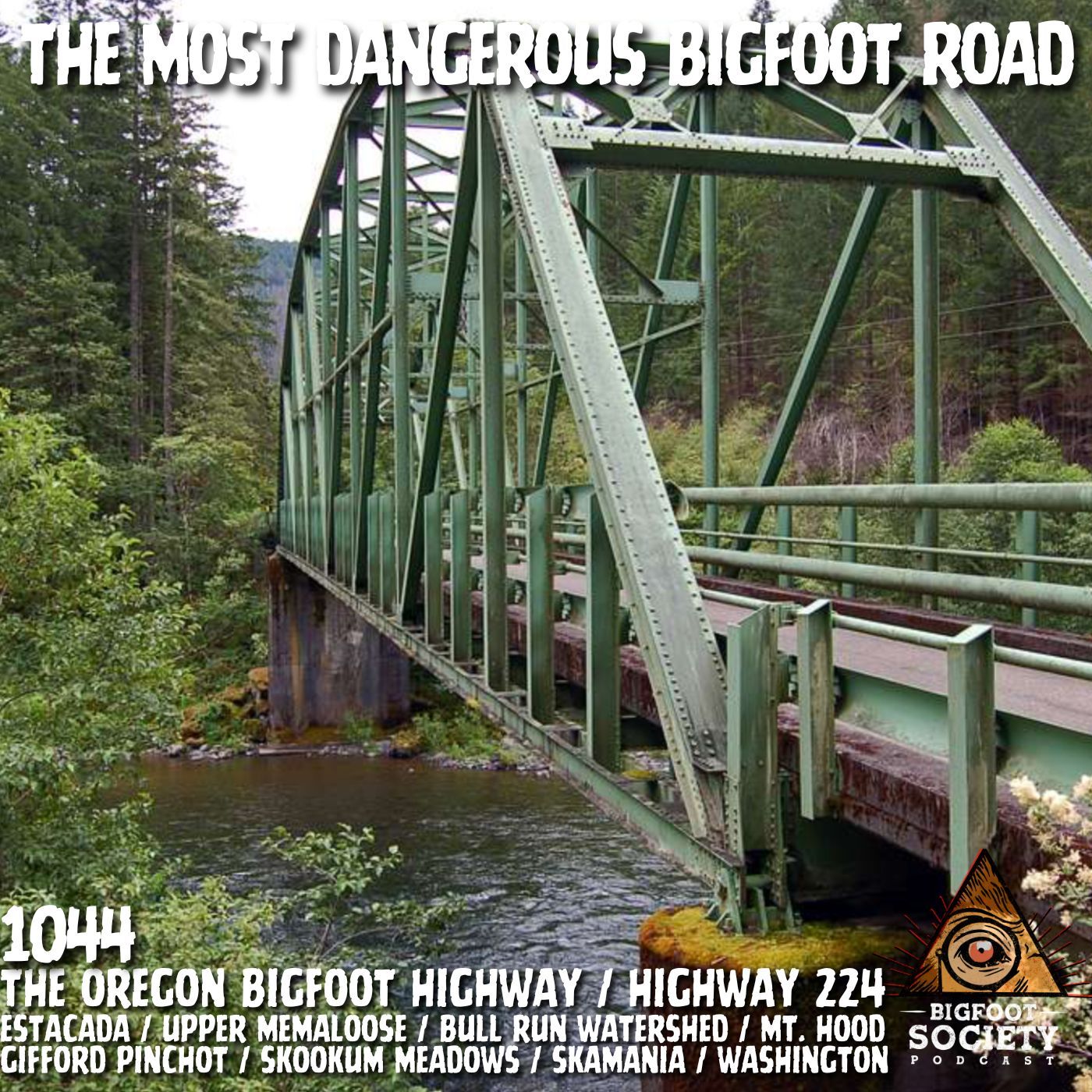
In this episode, we explore the long and deeply rooted experiences of Joe Beelart, a veteran Bigfoot researcher who has spent decades investigating some of the most active regions of the Pacific Northwest. From the forests south of Corvallis to the remote stretches of the Oregon Bigfoot Highway, Joe shares stories shaped by years of repeated visits to the same locations. His journey moves through the upper Clackamas Valley, the Gifford Pinchot National Forest, Skookum Meadows, and the rugged terrain surrounding Mount Hood, where patterns began to emerge over time. Through nights spent camping alone, encounters reported by others, and physical evidence found in meadows, creek beds, and old rock quarries, Joe paints a grounded and methodical picture of ongoing Bigfoot activity across Oregon and southern Washington. Join us as we follow his experiences across forests, mountains, and watersheds where something continues to leave its mark on the landscape.
🗣️ Share Your Story
Had a Bigfoot encounter or strange experience?
Send it to bigfootsociety@gmail.com – your story might be featured on the show!
🎥 Watch & Subscribe on YouTube
🔴 Subscribe here → Bigfoot Society YouTube
💬 Leave a comment & let us know your thoughts!
📞 Leave a voicemail with your story → Speakpipe (Use multiple voicemails if needed)
👥 Share this episode → Watch & Share
🎧 More episodes → Podcast Playlist
🌲 Recommended: New Jersey Bigfoot Encounters
💥 Support the Show & Get Perks
✅ Join the community on Supercast – Become a Member
✅ Listen ad-free & early on YouTube – Join Here
📱 Let’s Connect
- Instagram: @bigfootsociety
- Twitter: @bigfoot_society
- TikTok: @bigfoot.society
These help support the show at no extra cost to you:
- Beam (Better Sleep): Try Beam
- Wildgrain (Better Bread): Join Here
- Seed (Probiotics): Get Seed
- Medi-Share (Healthcare): Learn More
- LMNT (Electrolytes) Free Sample Pack with your first purchase! : Get LMNT
- Organic and non-GMO groceries delivered for less
http://thrv.me/uarEhS
- Repurpose.io: Try It
- Descript: Sign Up
- Streamyard: Start Recording
- Riverside.fm: Try Riverside
☕ Buy Me a Coffee – Support Here
🛍️ Grab Some Merch – Shop on Etsy
📬 Mailing Address:
Bigfoot Society
125 E 1st St. #233
Earlham, IA 50072
0:00 You're listening to Big for Society, and I'm Jeremiah Byron. In this show, we go beyond the campfire stories to bring you first hand encounters from people who say they've seen something impossible. From backwoods trails and remote mountain haulers to quiet farms and crowded highways. The stories come from everywhere, and each one leaves us with more questions than answers. These are the voices of the people who've lived it. To settle in, because today you'll hear another account that just might change the way you see the woods forever. So stay with us, all right, Big for Society. You've got the privilege of talking to mister Joe Beelert today. Joe is one of the authors of the book The Oregon Bigfoot Highway. Co author was Cliff Olsen, and it is one of the best. It's one of my favorite Bigfoot books. And it's a pleasure to have you on the show today. Joe, how are you doing today, sir?
0:53 I'm doing good. I got a little cold yesterday, so my voice is a little worse, but I say your audience will still be able to hear me. All right, Oh yeah, well, we will definitely have no problem there. But you know, Joe, as I said, this book is so incredibly the way it's written and the information in it. I mean, if a bigfooter doesn't have it on their bookshelf, even if they don't live in Oregon, I mean, they need to have it on their bookshelf. It is really, really that good. There's so many amazing stories in it. But you know, someone who has you go all over the place. You go to well, of course the organon Big Fa Highway, which is esticated down to Detroit on on Oregon Scenic Byway number five of course, and then you've got you do mount Hood stuff, you do Gilbert Bincho, So you are all over the place, back through the years. But you know, let's start with this, Joe, what was it that got you into this field to begin with? And how far back does did that go?
2:02 Well? I I don't really like to talk about it, but one Christmas afternoon, late in the day, my nephews and I were driving around looking for deer out in the out in the forest of the foot of the the south of Cortalis, and we came around the corner and there's a blowdown and we're driving a full sized Bronco and and I said, boys, look at the bear, and dang bear stood up and looked at us, and it's only about twenty five feet away, and took two steps out of the blowdown and walked off into the forest on two legs. Very disconcerting. I have a considerable amount of timing training when I was in the service, and it was lasted about fifteen to twenty seconds, and then I just put it away because you don't really want to see a big, hairy, naked man in the rain, out in the middle of the forest. And I just
3:37 told the boys it was a big bear. And I just sat on it for many years. And we had a branch up in North Portland, and I was just walking down the street, Lombard Street one day and waiting for I don't know what I was done doing whatever I was doing at the branch, and I came up on his bookstores. It was ray Crow's bookstore, used bookstore, and I went in and he had a bunch of bigfoot stuff there, and so I bought some of it and left, and I came back in the next time.
4:24 I was up about three weeks later and went back in his bookstore and bought some more stuff, and the third time I went in he had a copy at John Green's book with a dust cover, a real nice copy, and he wanted fifty dollars for it, and to him that was a huge amount to Ray, and I plumped down fifty bucks and that made that finally made him mad enough. He goes, what are you doing? Why are you so interested and this stuff? And I said, well, I I really am just interested, and he says, welcome to one of our meetings. And the first meeting I went to was in his basement. I was the fire marshall closed it down. Uh finally uh because of lack of exits. And then we went over to Dad's and I got to know and some of the people and they were they were good people. They weren't doctor Lloyd SIPs for instance. They retired veterinarian. I enjoyed him Bill Uh, I can't remember his last name right now, Bill Harper natural and he's a naturalist, Uh, very big on h
5:57 on being outdoors and natural foods. And finally I met mister Peter Byrn and he came to one of the meetings, and Peter and I hit it off fairly well, although Peter had a kind of a unique personality, and I had been around the horn enough that I kind of recognized it. But he and I, you know, I've I've been to I've been to his house. I spent three nights with him, just investigating one sighting. Anyway, I finally did a presentation and learned that I enjoyed to hear myself talk a little bit, and I have since done about eighty a little over eighty presentations I did every year at Home Valley when they were having that festival, there was eight, eight or nine of those. I once spoke in front of a theater that somebody had read it, and we had a guy in a bigfoot costume running around behind me, and that caused and we had some sheets out and colored sheets, and that caused the audience
7:32 to get really happy. The presentation part was very little of what I did. I finally decided to I went out after I retired. My high nights out in an unimproved campground was twenty three. This last year when I fell down the stairs and the heart valve replaced toe distress, I was only out three nights and on improved campground this year, I'm projecting going back up into the ten to fifteen range, I hope, and I've I worked the Oregon Bigfoot Highway. I wrote the book. Cliff Olsen lived up there for thirteen years and worked up there for a total of about fifteen or sixteen years when he worked for Portland General Electric and he lived in the heart of the forest at Ripplebrook when they have a permanent facility up there. And so he introduced me to Native Americans, to loggers. We had one lawyer that popped
9:02 up who happened to be a Native American, incidentally. And then I went over in the Gifford pinchhow believe it or not, it's easier to drive. It's faster to drive up to the Gifford pinchhow than it is to get up to the upper Clackamas Valley, because you got Highway eighty four, a Freeway eighty four, and then you got a straight shot up to Loan Vite. And so I've spent a bunch of nights out up in the Gifford pinchhow one night there was a BFRO expedition down in the Lewis River Canyon, and I didn't want to go down there. So Tom Powell was along and Steve Kylie, and they went down to join the ex editions such as it was. They're chomping around the bushes and one came around behind me. We were camping in an old rock quarry, an old log landing, and there was a little ridge above us, and I had a fire going and I was just sitting by the fire, enjoying the evening, and one came out of the bushes and walked up
10:32 behind me, and I was listening to it. Had I spent a lot of time out when I was in the Marine Corps at night. And also I grew up in Nebraska where we did not have TV because there wasn't a TV transmitter that got to us. We didn't even have a telephone until I was fourteen because of phone company didn't run a line out to a single ranch. So I learned to walk at night and enjoy the night time. And so I became immediately attuned to this thing.
11:13 And it kicked a little rock and it rolled down right behind me, and I had my three point fifty seven there, and I just I just I just grisped, grasp but I didn't I didn't particularly want to do anything with it. Shooting somebody is a terrible, terrible thing. And the thing walked around through the off to the off to the west, went through the brush, went down by the road, walked back from west to east on the old gravel logging road and was gone. And when Steve and Tom came back, they said, I had every flashlight, every lantern that we had. It was all lit up.
12:13 We were in this big bungalow tent and they on zipped it and I immediately roared to my feet, as you should do when you're startled at night. And anyway, they got kind of a half laugh out of it, but not too much of it. And in the next day we found all the footprints and they were about sixteen and a half inches. We found a number of them. That area was so little used. I went up there and camped one more time, twice more times by myself. Being alone is a good thing with these things, because they don't feel so threatened, I don't think. And I brought up some wood for campfire, and that wood was still laying there three years later when I went up, the hunters hadn't even burned. So that's one episode in the Gifford Pincho. We also camped over by schook Of Meadows, of famous scuok Of Meadows. I've camped over there numerous times.
13:35 Have you had anything happen in Schuoka Meadows. Yes, we had two sightings there by other people, and Tom Powell was along on one. A college professor was along on one, and the college professor brought along a graduate student who was about rady to get his PhD. And this is an amusing story to me. The graduate student wanted to get a taste of the wilderness. So he had gone down to some outfitting store and said, give me a give me a sleeping bag and you know, whatever else I needed, and some pants and some hat and a tint and it was a mesh tint. And he camped about a quarter air mile away from us, about a little over a third of a mile by logging road. And the first night when we woke up and we had breakfast, he came in and he just looked terrible, just just awful, And we didn't give it much thought, you know, you know, his first night out in the forest, and you know, they're owls and all
15:08 that stuff. And the second night he came out and he just looked really terrible. Next morning for breakfast, I mean, he couldn't even hardly hold a cup, he was so tired. And we go, well, what's going on, what why are you not sleeping? And he goes, well, he's a pretty tall guy. And he says, these guys showed me a sleeping bag, and my feet stick out and they get cold, and he says, and besides, every night, about two in the morning, this thing comes by and stands over my tent and blocks out the moon, and it breathes, It breathes heavily, and then it walks off into the forest, into the in the meadows, Scuka meadows. All he said was we Tom and Steve and I jumping our truck and roared off back there. And sure enough, coming out of what's called the Crazy Hills, there were sixteen and a half inch tracks. And they walked up right along where this guy's tent was and and stopped there and walked around and smashed the grass. But there was enough imprints that we could see him. And this was fairly close to where later the Scuokum cast was taken. Anyway,
16:44 the third night, we got together some blankets and made sure he was comfortable and he slept all night long. He thought the thing came by and we checked the tit, We checked the we checked the ground around it, and it did have it did have fresh footprints. Again. This was only about a half a mile from where the famous Spookham cast was taken. This would have been about two thousand and five or six. I can't remember that particular PhD. He has capped out with me four, if not five times in various places because he likes to get a break away from his academic world. At one time I had eight PhDs on my call list, most of them one was a wildlife biologist in Florida who got interested in the swamp ape of all things. And he got a hold of me, and you know, he basically said, like all of them, did you know, let us know if you find something. Uh. Since then three of them have passed. Uh. They they did not want to have their names sullied by Bigfoot. They tended to
18:17 be retirees and older. Uh, older retirees. Anyway, Mike, Mike is he comes out once a year and uh and and sometimes he goes out with a B F R O. And sometimes he goes out with me and and there's others, but UH going into the UH into the Oregon Bigfoot Highway, that was a pretty unique experience because we could we could uh, we could research in depth and repeatedly go into one area. And we also had observers out including in my book, there's four different Forest Service employees that gave us information, one of which I unfortunately insulted. He was first off reluctant to talk about Bigfoot, even though he kind of knew they were there. And then he told me they there was a big barn back when they were using horses to restock the lookout towers, the
19:49 old lookout towers that they had stationed all over the place, and they used horses and packs and all that. And he said, do was we put in elk feed, which was a combination of it was molasses and viewed rye grass. I think, and I'm very familiar with rye grass because I worked my way through high school and college on combine cruise. And I go, oh. He says, they come in and they open up the sacks and they eat the stuff. And I go, oh, man, that's one of the wildest stories I've ever heard. You can't expect me to believe that and made him mad, really upset, and I go, boy, I got to calm this guy down.
20:44 I mean, oh, and I got him calmed down. I just I mean, think about it, you know, bigfoot opening a door and tearing open a feed sack for elk with elk feed and eating it. And he goes, yeah, I guess it is kind of wild. Later, we camped in that area and we found I took two guys out. One was a filmer. He's filmed a number of documentaries and feature films and is well known into the secondary film business. And I took him out there and we explored around and we found a little green bottle and I took very good care of it, and I sent it to Jimmy Shilcut, who was a policeman outside of Houston, Texas who was interested in the bigfoot phenomena and he was getting towards retirement, and he took off fingerprints off that bottle that were either made with pig skin gloves or an onnon primate source. And he wouldn't say it
22:17 was an onknown primate source except to offer that as an alternative. And also in that area, we put out offerings. Offerings are good you don't want to. You don't want to put out bananas. They go bad pretty fast, but scores and that kind of stuff goes good. And we put out on a big fallen log about about a half a mile from the barn, across a crick We put out cat food in those little cans, and one day we went over there to check the cat food, and sure enough it had been eaten. And the cans were still sitting there along the log, which indicates that they weren't eaten by a bear or a raccoon or something like that, because they were cleaned out, but they were still sitting there in a line. But down by the creek there was a beautiful footprint about seventeen inches long, absolutely beautiful, and the guy with a film, the film and his friend alex As Blake echered as who it was.
23:54 The filmer and his friend alex they got so excited over this footprint they slid into it and we can only take we can only take a casting of the of the fork on the front part of the foot Oh I disgusted. Oh man, I mean it was absolutely beautiful footprint. Wow. Yeah, any that kind of stuff anyway. Yeah, offerings are good I'm looking over at my h. One thing they like out there is boiled corn. Corn boiled in salt water, and they like that salt water taste.
24:42 They do not like corn with with butter on it. We think the butter turns for ancid and and I've got several stories about corn corn h You know, you peel back a little bit of corn when and you want to find the ears with a little handle on them. And they liked that little handle and they'll peel it back and eat and I uh Warner hnt Warner hinter finner Dock. He was a primate theologist at the Oregon Primate Center and uh he analyzed some of it and he said, no, this is this is this is primate eating.
25:34 But it's it's not anything like we have. And it was nice and straight lines and this is this is one example. And the uh the that particular offering, the cord husk was left over by the fire pit, which was about a quarter of a mile from where it was left up in the hill up in the mountain, up mountain. Yeah. Henter was quite a guy. He was very He used to come to the to the ray crow meetings too. His wife and my wife both dislike big footing with a passion. But one night I was out with Sharon and we were sleeping out in the back of the truck open you want to sleep out in the back of the truck or on a cot or something that's open, so they can see you, and they'll walk around you and they'll look at you. And one morning we woke up and sure enough, coming up out of the forest walking up the hill, we're about seventeen inch long tracks, and it circled our truck, my full size tundra, and and uh obviously looked at us
27:05 why we were sleeping. I can go on and on about about various escapade. One night we were up at the what we call the New Rock Quarry and there were three ice chests in a row, and I had already been up there. It was one of my favorite places to go, especially alone. And one time I had a walking stick leaned up against the door hinge of the truck and the walking and in the morning it was a gravel area and it was just absolutely pitch your esque with with a little little seasonal lake walls, beautiful pint fining maples, and my walking stick was gone, and I didn't. I wanted it. I needed I like a walking stick, and I started looking around the quarry and I found a game trail where the deer had come down and the deer used it, And that walking stick was about one hundred and fifty yards up that
28:36 game trail. Something had picked it up off the side of my truck and taken it up there and walked off. We later found sixteen and a half inch and fifty and fifteen inch tracks up there. That was. That is a good place. But the big fires. There were terrible, big fires in what was it twenty in twenty twenty two, and they've wiped out quite a bit of that habitat there is. Interestingly enough, there was a lake over the top of Thunder Mountain and down the This is at the base of Thunder Mountain, or part of part of the base of it. It's called Scukum Lake.
29:33 Yes, because Franzoni used to go there a lot, right. Oh yeah, Franzoni, Oh yeah, I can. Oh, my great friend Henry Franzoni. Anyway, he used to go up there. But there used to be a road into the to the lake. That's been since then. The Forest Service has deconstructed it, but that's a hard hike in over the top and then back up again. There's another criek in that area that's called ogre O g r E Crick and it was a it was a creek that was named by the surveyors that went up through there. You can only imagine what. And they were surveying for the timber company or the timber harvest. But this was when it was still a virgin timber. And I interviewed a a architect, a retired architect, and he told when he was a he was a youth and they walked into a place called Round Lake, which was in the area,
31:04 and about in the night time before they went to bed, they saw a tree stump out in the water. Well, when they got up, the tree stump was gone. And one of the three of them was not feeling well, so he stayed in camp and one came around and started throwing rocks and raising hell, and the other two were out an inflatable raft and they they came back in and he was all upset. So they it was a long walk in and a long hike out, and when they hiked out, the forest service was there because they the Forest Service lookout towers had spot of fire and they were pretty upset that these kids were building the fire up there. So anyway, that's just another story.
32:15 I don't want to bore your audience with too much of too many stories. But when I started to get into this thing, I decided to make an acquaintance and I was a regular correspondent with mister John Green. I met Reneeda Hendon and Larry LUN's basement for two and a half hours, and he let us look through his projector. Steve and I at the Bluff Crick film his version of it, and neither one of us managed to get through.
33:00 It was so vivid compared to what you see on TV, but neither one of us managed to get through in two and a half hours. All the way through the film the frames, Renee was very interested in what we were doing, and he was very polite and very nice. I think his reputation was gained because if you insult anybody, they're gonna be unhappy with you. And I think to us he couldn't have been more cordial and informative, and he wanted us to keep him advised and to also come.
33:46 He invited us up to his house in his trailer in British Columbia, John Green. I have a nice thick file on Green, and he wanted to know what we were doing and why. There's a number of other people that that you couldn't ask me about, and I possibly know them. There's one person actually I do want to ask you specifically about. He's come up already. He was alluded to.
34:30 So in your book, you have a whole section of people in the back, the clacamus Esquatcheans, which are the individuals that would you guys would all hang out together or you would be doing research and you'd spend a certain amount of time out in the woods each year. Correct. Yes, and to become a capture a Clockamus, a Squatchian, and it still holds true, you got to spend two hundred hours feet on the ground, not driving around, and all those people met that criteria. And Henry Franzoni was he was a great friend of mine. He was he was taken from us way too soon.
35:12 I agree. That's actually who I was going to bring up. Do you have any any stories or memories you can share of maybe times you guys were out and you had something happen or anything like that. Oh, Henry and I were out numerous times, several times. And one thing that he he told me about, and it was it happened to him and his girlfriend was he was up in the Memluse, which means place of evil. According was, I can't remember the dialect that transferates into his place of evil, and the uh the he he he he saw a and I think he's documented this someplace.
36:13 He saw a cyndrical spaceship emerged from the rock. And I've been to this place and it's a big rock wall. And it hovered over the over the forest for a little bit and then departed to the southwest at a great rate of speed. And it had it it was a shape somewhat like an ice cream cone, and it had an orange flame for lack of a better word, towards its rear end. Well, Henry, that caused Henry a great deal of interest. So he went back up there a couple more times, and he brought his wife along, and he came upon one day. He parked and he got out of his van and he walked down the road, and he came upon a white vehicle, which was an unusual make, he said, and there were three people around it, and two of them were men, slender men dressed like men in black, and the third one was a slender
37:46 woman in a red dress with bright red lipstick, but her face was pale. They indicated to him. He did not hear them talk, but they talked to him in his mind, and they told him to get out of here now. Now. That is not the first time we've heard those words, get out of here now. And he and his wife decided it was time to beat feet, so they went up. They went up to their van, and it was late in the day and so they didn't want to drive out, so they spent the night there and it was uneventful night. But he told me that that story at least three times and it never waivers.
38:52 Yeah, absolutely, I think he's actually I had him on the show a few times, and I believe he shared almost same exact thing, Like the details are very very pretty much dead on. Yeah. Yeah, Well, I I never have liked the Memoris and I've gone through it and I've walked the area in the daytime, but I've never camped there. I just I just don't like the place. One time, Steve Kylie and I before he unfortunately passed I have. I have a real bad tendency to associate with people that passed too early.
39:38 He and I went up to to the to the Clackham was the up there the memo the Color Wars drainage and he uh, he and I separated and we were going up Pete Creek and Rush Creek, I think it was. I can't remember the other name. Pete Creek is one of them. And we were separated from each other. It was May, and we were out of shouting distance. But we were going up to a upper logging road and then making a circle back to the truck on a logging road. We were going about fifteen or twenty minutes and I came out in the forest and I had my three point fifty seven on and a water bottle, and I took off my web belt and passed it in the back of the truck. And here comes Steve off of his It was like a big V and we were down at the basemin of V and he comes out of the forest and passes is. He was carrying a forty five seventy marl and I think it was,
41:15 and he puts it behind the seat and we get in the truck and we drive off and we drive all the way past Ripplebrook, all the way past Ripplebrook, about twelve miles, and then he says, did you hear anything up there? And I go, yeah, something told me to leave here now. And he said, that's what it told me, leave here now. And we didn't say another word.
41:57 We didn't. We were to esticatea and and stopped and got a bottle of pop or something before we even said another word. It was it was, it was. It was stunning, it was startling. And we went back up there. We went back up what go ahead? Oh, I just wanted to clarify real quick. So did you hear that verbally out loud or was that telepathically inside you? No, it was in, it was in. It was in my mind. Wow. And and it was in his mind too. He did not hear it verbally out route. And then we went back up there and we found uh, some sixteen inch tracks and they were accompanied by about twelve inch tracks. So we think that was a a possible birthing area. I I told my acquaintance at the forest service about it, and he says, I don't want to hear the word bigfoot. But he says. He says, what we'll do is if if I said, he said. He asked me, is is that a calving area for elk And I go, yes, it is and he in. About two weeks later they dug one of those big trenches to keep people out of the road. Uh that they
43:30 put in and uh anyway down below that we didn't we er Kylie and and uh and Olie and I we decided we would get a skin sample. And what we did was we got some put a stapled some hardware wire inside, cut it and bent it and stapled it inside of a five gallon bucket and put in all kinds of goodies in the five gallon bucket, like spam and whatever and uh and and drilled holes in the bottom of it so that the let us and that kind of stuff would drain out. And we ran up a tree, hung it up. We got I used some PVC piping and made we used it several times way to put bags up a tree, hang it up.
44:49 And then we got to thinking about it. You know, these are our friends. And I talked to Cliff and he goes, you know, I really feel I mean, if you scratch somebody that much you might get them affected, and we didn't want that. So after about a week I went back up there, about five six days and retrieved the bucket, and sure enough, around the bottom of the bucket and with some of the stuff taken out of it, was about sixteen and a half inch tracks. And then there was a game trail that went up a ridge up to the to the upper Coal Wash, and those tracks went up that ridge and that's where and that ridge led to where Steve and I heard the words inside our head leave here now. So I'm glad we took that down. I'm also glad we took it down because the Forest Service law enforcement officer they thought we were planting marijuana up there, and they'd taken to when we came through Esticada my truck. They had
46:19 an informant group and once in a while they would follow us up there, or me up there, or whatever. And they had found the bucket and found the tracks. The law enforcement officer told me about it. In fact, he gave me a report. What he did was he was talking to me at the filling station there in Estacada, and I had my map out and he was getting ready to retire, and he says, if I were you, this is where I would look for him. And he circled it so hard it made he made it circle so hard that it indented in the paint of my toyota.
47:12 And it was about the upper Memluse. And that's where that's where Henry Franzoni saw the flying saucer or the flying cigar and had the boat run in with the men in black. Oh, absolutely bizarre. And then he said, he says, watch the mine shafts. And he said, I watched I go up and eat my lunch and watch the mind shaft with my binoculars. And I said, well, where's that mine shaft? He said, well, you should know roughly where it is. And he said the ground around it is all smoothed out, and passed it down in the in the grass and ferns or padded down. He says that I think they live inside that that entrance to the mine. And sure and sure enough on Dicky Peaks, which is you can easily find him on the map. Oh, there is a number of mines. Do not go up there.
48:26 Those shafts are still open. And the four Service tried to blast a bunch of them shut, but they're still open. And you fall down one of those shafts, you are dead. I mean that's as simple as that. So you can you can go up there and look for the mind shafts, but you better do it by binocular. Absolutely. I want to jump in it for a minute, because I think this would be a good time to say. It is the Oregon Big Feet Highway. And you write about this in the aning of your book. It is a thing where you don't really take it lately at all. You need to make sure you have replaced, spare tired, plenty of extra gas in a can. Like you have to be ready for the worst possible thing to happen if you go out into this territory.
49:19 Yeah, I'll give you an exact example of that. Uh. I used to go out quite a bit by myself and spend the night out because I think they liked it. They like a single human being. And I was up on oh what the heck was that mountain? Anyway, it was it was It's about an hour and a half outside Astikudo. And I went up there and and I was fully prepared, and the wind started blowing. This is just one example. And the wind became a howling fit and I had a Brunton wind indicator, which means you held it up in the in the wind. And it was about sixty six to seventy miles an hour and it was a terrible storm. And I backed up clear up underneath the trees, and the limbs were flying off, and I was I didn't want to not want a limb.
50:47 I backed in so that if a limb came in, it had come in through the rear of the truck hopefully and avoid me. And the next morning I got up and there was so many blowdowns that it was. It was. It was a wonderful experience, but I mean the wind was just I have been in in a hurricane and two hurricanes when I was in the Marine Corps Navy, and the wind was like that, and there were trees down every place, and I ended up coming out down by Detroit because the fallen trees. Wow, And it took took me most of the day to get home.
51:41 That's just one example, but that was that was an amazing wind. Storm, Joe. That's absolutely incredible. It's a great example of how you really don't mess around when you go and there are any of the wooded areas of Oregon for that matter, I want to take a little detail or in our the last part of our interview together. I've been talking to a gentleman on the show a few times now, and you have you've come up. His name is Gary Allen, and oh, yeah, right, and so I was gonna see if we would get here. I'm just gonna launch right into it. So he's got some really interesting stories. Uh, and we'll say it's around the mount Hood area. And and he just told me one this is actually yes, it was yesterday. It was yesterday, and he told me, man, you've had some really interesting things happen in this area that you guys are researching around Malhood.
52:45 Oh, absolutely absolutely. His wife has horses, right, And this is a third time I've run into this. Actually Banionoff's book, and I cannot recommend it highly enough. Banionoff in the Steps of the Russian Snowman. There's a farmer in Russia whose horses were getting their manes, were being braided, and he stayed up in his hayloft one night and one of these things came in and I'm nasty and braided, and the horses stood still, and they braided their hair.
53:29 I was walking one night, I went for a long walk. I recommend this if you're knowing how to do it. Walking at night, carry a flashlight, but don't turn it on unless you absolutely have to. There's a technique for walking at white at night, and and I use it. And I walked, I believe it or not, one mile away from our camp. It takes about an hour and a half one way. I was going about three hours. And the other guys I told him who was along with me, Oh, David and one other fellow. Anyway, I told him about this tree struck and then one followed me back and followed me back all the way to camp.
54:30 And then in the morning it had stomped around. Man had slept in a tent with a vent on the top, like the guy up and Scook and meadows and and the other fella. He believed in the little people. But I've been told by at least three different Native Americans that what we're looking for is the wrong thing. That the little people are much more numerous. But you've got to be where they're at. And this fellow that was with us, he managed to stay awake all night long, and he said the little people came out about three point thirty in the morning. Anyway, we went back up to the place where I described it in the moonlight, and sure enough, it was about a mile away. And then we went on further and we stopped at a horse camp and they were getting ready to leave, and I was curious because it was the middle of the week and I was curious about and they said, and one of the women said, I just want to get out of here. And she says, and something's coming into our camp at night, and it's braiding the hair of our horses. And I took pictures of it, and sure enough,
56:01 here's and it wasn't wind braids. It was braiding. Gary Allen, his wife has horses and she brings them and she rides them. And they've had horse braids at least two times when we're up there, at least and Gary rides an electric bike, and he has seen them at least three times in that area. I have camped up there by myself, and I've heard him smashing around and crossing their creek, but I haven't personally seen one myself. There's a humorous story about Peter Burn. Peter Burn managed to get a lot of money from several from a couple of sponsors, and they set up a real high tech at the time, I'm uh transmitting station and got permission in Bull Run to set up cameras. Wha they didn't get and oh this is this is well documented and uh they didn't get anything. Well. On the way out, they had an Indian, a Native American that worked up there and with him and he worked at the Bull Run reservation to the watershed, and he says, they they
57:38 put their stuff in the wrong in the wrong canyon. The the creatures you want live in the next canyon over. But nobody asked me if you've got if you've got a Native American around, and you don't ask them forquestions and if they will answer you, Oh, you're very very foolish. Oh absolutely, yeah, yeah. Yeah. Anyway, that's just a that's a Peter Burns story right exactly. Now, Gary, to ask you specifically about something Gary had told me about how you were in a tent and you ended up becoming uh paralyzed or you couldn't move because of something that happened right outside your tent.
58:34 Yeah, that that was that that happened, And I don't know what happened. But I could not move. I woke up and I was awake, and I could see moonlight through the camp because it was I didn't put up a rain for life if you didn't need one, and and I just couldn't move. And that's not the first time that that's happened. I've had several other people report.
59:14 It to me in the same area or just across the board. In the same area and across the board. Okay, gotcha, yep, yeah, wow. Gary Garry, Gary's boy. What he does though, I started up that up that trail, and I don't want anything to do with I'm seventy eight, I was starting. I was seventy five when I started going over there with him. Yeah, maybe seventy four, And I don't want to. I've been partly up that trail and it gets it gets darn nasty, and she rides it up and training her horse. But they do, they do long distance rides.
1:00:00 Do you have any advice for people that are solo camping in an area and wanting to have bigfoot interaction. Well, you've got to go to the same place repeatedly. That's the most important thing. And you got you need to in my opinion, you have to sleep during the day and stay up at night. And you also have to have a fire. Now, if you don't have a fire, I've got one of those propane fireboxes that's legal to use up up there. But they like to see a fire.
1:00:44 I can go on and I can go on about that, but those are the things. What happened to me was I used to go up by myself. Sharon was traveling, she was a CPA, and she would travel and I would Tom Powell or somebody Gary or whoever it might be, that we're going up up the mountain today, and I tell him roughly where I was going, so that somebody had know, And obviously I wanted to go by myself. But one day Tom called and Sharon answered the phone and she says, she says, I thought I thought you were camping with Joe this tonight or a couple of nights.
1:01:33 And Tom goes. Oots, yeah, right. And then Sharon Sharon and Sharon got really excited that I was going up by myself. So I think one year I made it to thirteen nights by myself. My goodness, dude, that's incredible. That wind, that wind night that I described I was by my self. H It's it's really neat because I I I like to go to where the the nighthawks fly and what they do is people often confuse them with screaming bigfoots, but it's really the nighthawks fly and get these big insects that they eat and uh, it's our wings going uh sub sonic flapping in the in the dive and it's a very wonderful thing. Uh, Cornell University. Okay, Library of Animal Sounds. I cannot encourage your guests more to learn to listen to those sounds. You need to know what's going on at night, and the way to do that is to listen to animal sounds. And most
1:03:04 of those animal sounds were taken by by master's degree students biologists, and so they're verifiable and you can listen to the nighthawk of thunder anyway. I like to go up and I like to see I like to see the sunrise on Mount Hood or wherever it might be. It's it's very very calming. Absolutely, that's great advice about being familiar with the animal and bird sounds in your area. Let me repeat that one more time, Okay, Cornell University, moquahe library of animal sounds you need if you want to be a bigfooter, you've got to study those sounds in my opinion.
1:04:00 But one last question for you, Joe, and thank you so much for spending your time today when you are out there by yourself doing a solo bigfoot focused expedition trip. Are you more a person that is just quiet the whole time out there or there's some individuals where they're like, you want to make a lot of noise. You want to be laughing, you want to be listening to music, and that's what brings them in. The people that make real loud noises. I disagree with that because it breaks up the peace of the night.
1:04:42 A little bit of music is fine. I've got some recordings from to bet bunks chatting. I had a loud speaker battery powered, and I would play that, but not to excessive amounts. Uh. Laughter is good. Uh trust me. If you hear a bunch of kids laughing and you're out in the forest, you better pay attention because those kids are not kids. They're not They're not a medium uh medium school group. And uh I I but I know one fellow that goes out and yells and screams and shoots his uh rifle and blah blah blah, and he claims to have called him in every once in a while, and they show up at their room of the of the he goes to a certain rock Cory rock Corey is are your friends because they can they can stand, they can look down upon you. I got I got about one hundred rock Cory stories, and I think there's a couple in my book too.
1:06:09 Yeah, there are definitely. Uh, that's that's a good that's a good call out though, for sure. Uh, Joe, what a fascinating conversation. I want to also remind listeners if they don't already know, you are planned of planned to be as of right now one of the speakers at Sasquatch Summerfest. Correct, Yes, yeah, I I I enjoy that Don Monroe and m K. Davis are going to show up and they're they're I I rate them as good friends. They're really cool guys. And I think Tom poul is going to go. I don't know for sure.
1:06:52 That's awesome, that's really cool that that would be fun to meet him. I will also be there. I'll be one of those speakers this year. Good, so that will be a fun time. Hey, you never know who you'll meet at these things, right, but Joe, what a fun conversation. Guys. If you don't listeners, if you don't have Joe's book yet, The Oregon Bigfoot Highway, please please please get a copy of it. Best way to do that is on Amazon, Joe, or what do you think. The best way to do it? Say Amazon. It's been a pleasure. Really, I really enjoyed this today today, So thank you very much. Yes, sir, thank you for sharing your knowledge gained over the years, and we will be in touch and thank you so much for being on the show again.
1:07:40 Okay, talk to you later. You got it, Joe,


