The Rise of W.A.R.G: A Conversation with Brian Brown | Area X, SE Oklahoma
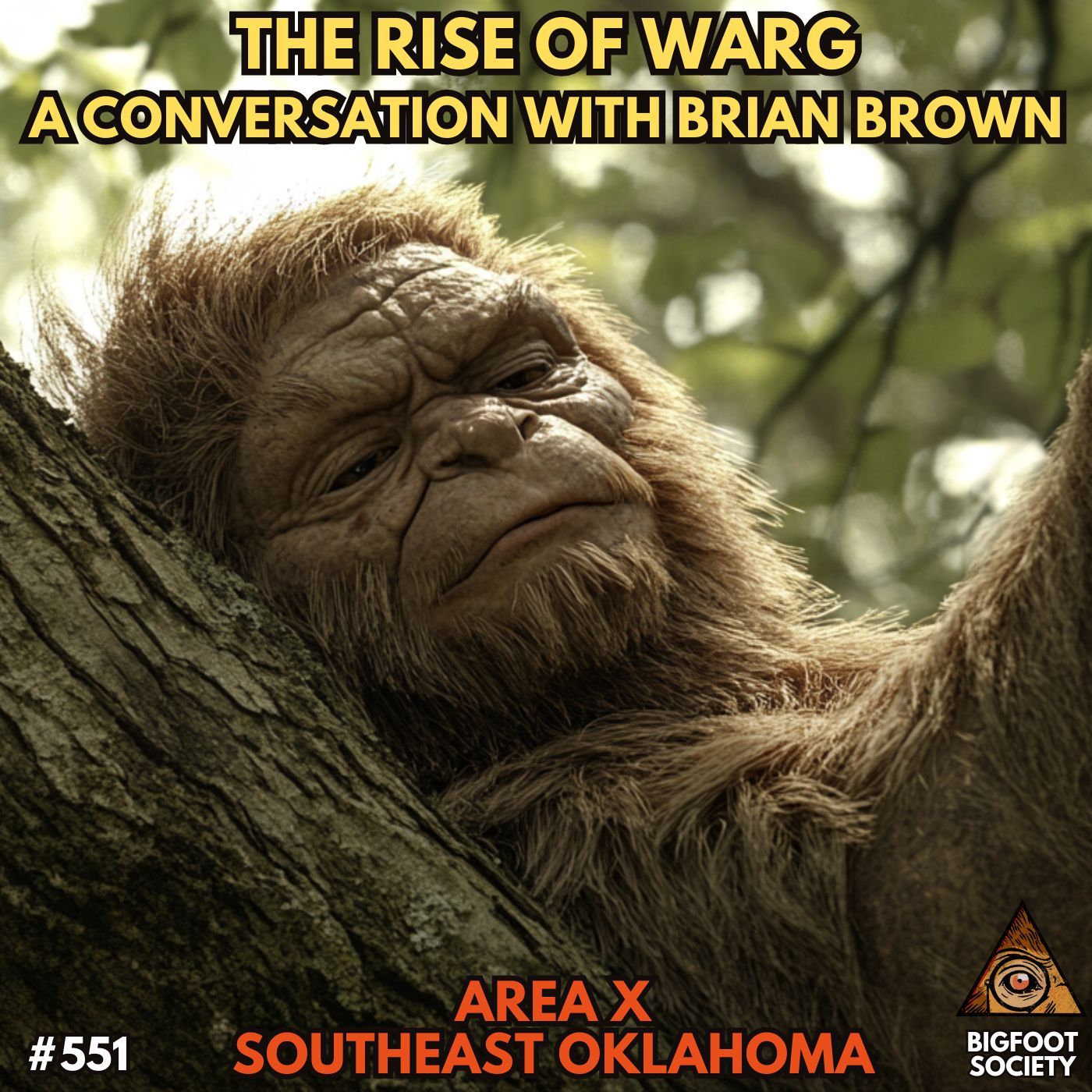
Join us as we delve deep into the world of Bigfoot with Mr. Brian Brown, a seasoned researcher and founder of several Bigfoot-related forums and podcasts. In this episode, Brian shares his experiences investigating the elusive wood ape in the remote...

 Apple Podcasts
 Spotify
 Castro
 RSS Feed
 Join us as we delve deep into the world of Bigfoot with Mr. Brian Brown, a seasoned researcher and founder of several Bigfoot-related forums and podcasts. In this episode, Brian shares his experiences investigating the elusive wood ape in the remote valleys of Southeast Oklahoma. From founding the Bigfoot Forum in 2002 to his current work with the Wood Ape Research Group (WARG), we explore his many encounters and research findings. Brian recounts detailed sightings and interactions, such as seeing a large gray ape through a gap in the trees and having close encounters in camp where apes poked at tents and displayed aggressive behaviors. We also learn about the unique features of Area X, the nut-cracking stations, and strange lights observed in the woods. Watch as we uncover the unique behaviors and potential social structures of these elusive primates, and discuss the challenges and methodologies of collecting evidence in such rugged terrain.
Resources:Tag 7 paper (NAWAC) - https://www.woodape.org/index.php/tag7/
Audio Catalog from NAWAC - https://www.woodape.org/index.php/catalog-of-recorded-audio/
You can find the Wood Ape episode of Rob Lowe's show here on Amazon: https://www.amazon.com/The-Lowe-Files-Season-1/dp/B074CLQBD4
Share your Bigfoot encounter with me here: bigfootsociety@gmail.com
Want to call in and leave a voicemail of your encounters for the podcast - Check this out here - https://www.speakpipe.com/bigfootsociety
(Use multiple voice mails if needed!)
🔴 Subscribe to hear more Bigfoot encounters: https://www.youtube.com/@BigfootSociety?sub_confirmation=1
Share this video with a friend: https://www.youtube.com/watch?v=z5v75Od-X38
Watch more episodes of the Bigfoot Society podcast here – https://youtube.com/playlist?list=PL3t1vwtsKh-MGeHs0XglFJE5LwUHpmJm_&feature=shared
Recommended Playlist – New Jersey Bigfoot Encounters - https://www.youtube.com/playlist?list=PL3t1vwtsKh-Mk4032IyZtWgP6LVPU8uat
✅ Help me help others share their Bigfoot Encounter by joining the community on Patreon - https://www.patreon.com/thebigfootsociety
✅ Hear ad-free episodes early by joining the community on Youtube - https://www.youtube.com/channel/UC8Qq45W6iaTU8FE9kelxT7Q/join
Let’s connect:
Instagram – https://www.instagram.com/bigfootsociety/
Twitter – https://twitter.com/bigfoot_society
Tiktok - https://www.tiktok.com/@bigfoot.society
Affiliate links mean I earn a commission from qualifying...
0:01 You're listening to Bigfoot Society podcasts hosted by our captain Jeremiah Byron, where it's all Bigfoot, all the time. Have you ever had the urge to do more, to be more? Now you can by joining Bigfoot Society on the Patreon. Get out free. Episodes and even number only episodes, take part in movie Night and even live video chats, interact behind the scenes with Jeremiah and other Patreon members like me, play it the powerful podcast goes on, and you may contribute a verse in our Patreon community car padm Seize the day, Bigfooters and make your lives extraordinary.
0:43 Welcome to big for Society. If you have Bigfoot activity to report from the same areas discussed in this episode, please reach out to me directly after this episode, and if you'd like to be on the podcast to discuss a personal Bigfoot encounter, please reach out to me directly at Bigfoot Society at gmail dot com. Do you wish there was more Bigfoot Society to listen to every week? Well there is now. If you become a supporting member over at Patreon, you get a special members only episode every single week on Wednesdays, and sometimes even more episodes, head on over to Patreon dot com, forward slash the Bigfoot Society and now let's get on with the show. All right, bigfot Society, You've got the privilege of talking to mister Brian Brown today. Brian Brown is an individual that you may have heard his name in different things associated with Bigfoot over the years. In two thousand and two, he founded the Bigfoot for him. He also started the Bigfoot Information Project podcast, and of course a lot of people know him from The Bigfoot Show, which launched in two thousand and seven. He was part of the newac where he served on the board directors.
1:50 There. He helped launch the podcast Apes among Us back in the day, and he's had a ton of time spent in the great state of Oklahoma looking into what is called down there the Wood Ape. So, Brian, it's a pleasure to have you on the show today. Thanks for coming on. Now, it's my pleasure. This is this is great. I'm excited to be. Here, absolutely, Brian. I wanted to have you on because there's so we were talking in the pre show. There's so much media and things you can find about those things that I just talked about that you've been involved with. Yeah, you're involved with some things now. The organization is called WARG.
2:31 What WARG is what a research group. That's what we call ourselves. And honestly, we're just a group of friends. We most of us, if not all of us, I think about it, most of us are former any w a C members. We wanted to continue to go out into the field and work together and hang out together, and so we created this group to sort of support that effort. And you know, we've we've done some you know, internal fundraising in the group. We've we've procured some equipment like a thermal and things like that, some audio quarders. So we're just trying to continue our work and continue to work together in these in these areas that we've spent so much time in already. And so yeah, it's that's that's pretty much it. We're we're we're not that big, we don't have a huge public profile, but we do.
3:20 We do get out at least once sometimes twice a year. In fact, I just got back from a week spent in the Oregon Forest actually with a couple of WARD members, and we're planning another trip into what is sort of largely referred to as Area X sometime next spring. That's that's extremely interesting. So you guys are I would assume that from what I've picked up from different places you are close to. I don't know, did you call the whole region down there's Area X, like ANYWC doesn't own the region Area X, but you kind of made it a little bit bigger and broader, so it's other areas as well.
4:02 One of the ways that I think it's best to find if you go back to the any of the Very Sea and you look at the TAG seven paper, which is the radio tag work that happened while I was in the group, and that animal was tagged, and the various times that the group was able to actually track it and see where it was. That the geographic region was much larger than just the valley that the group was working in. And that was really interesting because for a long time we didn't really understand what the range of these animals were. We didn't really understand what if there was anything unique about the particular valley that up to that point had been called the area X. And what we saw on that TAG seven data is that the animal that was tagged moved all around that region in and out of that valley into neighboring valleys.
4:51 If you've ever looked on a map at the washatas in southeastern Oklahoma, you'll see that there's all these sort of adjoining drainages, and there's all these valleys that sort of are over the ridge from each other. But there's lots and lots of habitat in areas, so it does make some certain sense that these animals wouldn't necessarily be locked into particular valleys. So the way that we started me the people in warg and I think also the people in the Nawac, we started talking about sort of the that region, that sort of series of watersheds and drainages all being basically area X so that it isn't like there's dotted line on the map that says it exactly where it is. But I would say that that all of those valleys neighboring with one another. In my mind, that's all area x so, not only the specific valley that the ana w a C Works in that I've been in, you know, many times over the years, but also the neighboring ones and literally what we in the wood A Research Group, we're we're in the valley next door, so we're very close, and we didn't really know it was going to happen when we went in there. It's a very different scenario. None of the property in there is owned by anyone in the group. It's not private, a lot of it is public lands. We weren't sure if we were going to have any encounters in there, but it turns out that we have. So it just goes to show I think it supports what the radio tag information showed us is that these animals are sort
6:24 of all around that region and they're not just they're not just inhabiting the one valley that the INADAC has been in for so long. You know, if you've listened to the ANC podcast, there's an episode or where we talk about what the group calls old gray, which which may be one large gray ape or it could be a number of large gray apes. But we have seen large gray apes, either individually or a number of them in the valley that they work in. I've seen that ape in that valley. I've also seen a gray ape in the valley we work in. Is it the same, I don't know, but it could be. It's not that far away. It's a very large animal with presumably a large range. So it's it's it's really an unknown. We don't know if they are exactly the same animals or if they are a related group of animals. That's that's just one of those unknowns that we probably will never have the answer to you.
7:20 Honestly, I think it would be good to take a few minutes to kind of focus on what does WARG view this creature as as an organization and what is the main end goal? No, I think that what we're trying to do now is just collect evidence. Like I said, We've We've invested in an a thermal affirmal unit that has video recording capabilities. We've invested in some sound and a sound recorder an ARU, So we're trying to collect evidence. We are our missions, such as it is is is pretty modest. Because we understand what our what our capabilities are, and you know how many people are in the group, There's only so much that we can do. We don't have nearly enough people in the group to put on sort of you know, multi week operations where we have various teams all changed together.
8:11 So we're just trying to collect We're just trying to collect data. We're trying to collect evidence at this point, so and that would be you know, any of the things I said so, Thermal footage would be fantastic. We don't have any of that yet. Audio would be fantastic. We do have some really interesting audio. I don't know that any of it is so unique that you've not heard things similar to it out on the internet, but we have collected some interesting audio. You know. We'd be interested in finding track information, footprint information. It's very hard in that substrate in the washatahs to collect the animal tracks, but we would love to see that. Now. I don't think any of these things are necessarily going to prove the animal to someone who already doesn't accept that it might be possible, but that's pretty much what we're doing.
8:52 And of course we're all friends, so we want to hang out together and have a good time doing it. That makes total sense. How many years have you guys been in this area as an organization warg. Uh twenty twenty. I'm going to say so about four years. I think that's about when. Everything now in my mind is like did it happen before the pandemic or after? And I'm pretty sure that we came together in twenty twenty, so I'm pretty sure that's the first time we went in there and the area that we operated. An actually funny story about that when back in the day, if you remember that, Rob Lowe had a TV show called The Low Files two Kids, and you know, they went all over the place I'm in I'm in one of those episodes, and the place that we took them. We didn't take them into Area X proper. We didn't take them into like the area that the NAWAC worked in, mostly because it's just too hard to get into. They had this whole production career with like you know, trailers and you know, RVs and things. So we took them into the neighboring valley and we had some really interesting things happened that night with mom below and his kids present, and so that's basically kind of the nexus of where we operate. We don't stay exactly in that spot all the time, but that whole valley is where we are operating right now. And again, because we had so much really cool stuff happen that one night that we were there with Robblo, they didn't have enough time, they didn't actually want to be there overnight. They just wanted to come in and shoot and then leave. So there was really no way we could have taken them into the
10:25 actual spot that has you know before that one valley called air X. It just takes too long to get into and some of the roads are really not great. And again they had a whole Hollywood production team. They had three RVs and you know, different vehicles. It was a real sort of like a caravan of Hollywood bizarreness in Oklahoma, like the likes of which I'm sure Oklahoma has never seen. And so we could we couldn't really take them in there. But again we took them right next door, and we didn't really know what to expect, but it was a tremendous night. Actually I heard two whoops, a whoop and a return. Standing right next to Rob, we heard these amazingly clear whoops, a call and a return from one from one side of the creek and one on our side of the creek. Another guy in warded, Brandon Lenz, he saw an ape through a thermal device that did not have the canpability to record, so he saw an ape that way, we heard and the Lows heard various vocalizations like like ape sounds, you know, like kind of sounds. It was. It was a crazy It was a crazy night. We had all kinds of cool stuff happening. And that was like literally from I don't know, two three hours before sunset to about I don't know one or two in the morning thereabouts, So it wasn't a huge amount of time and all kinds of crazy place it was. It was amazing. It was awesome, and none of it, none of it showed up on the TV show. If you watch the show, you don't get any of that. Unfortunately, that's terrible.
11:57 But yeah, that's that's Hollywood, right. Yeah, when you started going back into this valley and you started up oreg in twenty twenty, was there a situation where it just something off the wall happened and you're like, Okay, we are in the right place. This is really intense. You know, it has it. I would say that again, we had an inclination that there were the apes were there because of this this night we spent there with Roblow, and also we had been scoping out other areas when I was still in the any of Doba a c. We had sort of explored this valley and a couple of our members had gone in there and had also experienced in things that seemed really ap related. So we had a really good idea that there were going to be apes in the valley, and there's really no reason for there not to be. It's a little easier to get into, but the environment and the lack of any sort of normal human activity is almost exactly the same as the neighboring valley. There are roads that go through them, they're pretty darn rough once you get in there a little ways, Like at this point in my life, I don't think I'm going to drive down one of those roads anymore because I've done so much damage to my truck over the years. But the people that go through there are almost always a tv years. Obviously, hunting season is a big deal, but you go one hundred feet off the road and you're in areas that people just don't go. They're just not penetrated by human beings. And
13:29 if you look on a map, if you look on the satellite map, you can see like whole drainages, valleys that have no roads in them whatsoever, that are probably that a human being goes into maybe once a year, and if that often so it's pretty remote, even though it's maybe fifty percent easier to get to than the neighboring valley where the other group works. So we had no reason to believe that there wasn't going to be apes in the valley, and we're sort of pleasantly surprised. Not pleasant, not surprised at all, but it's sort of, you know, it's nice that when we go in there we can still have some experiences, and I think that is one of them. I don't know if mystery is the right word, but it is one of the questions that this area presents. Why are there so many Why is it so often that if you go in there for a period of time and do the right things, Why why so often is it possible to either see or hear or in some way interact with an ape in this part of the world. It is, It is truly, truly amazing. And again, I just spent a week near Mount Hood in Oregon, following the direction of Cliff Bartman.
14:44 He sort of gave us a general idea of where we should go and was really generous with his time, and and it was an entirely different experience, you know. So it is it really just showed to me, highlighted the uniqueness and incredible just habitat the area. X represents that you know, you can go there for a week and you have a reasonably good chance of having some kind of of ap related experience up to and including visuals, which we've had multiples in the four years that we've been over there. Not to get two sidetracked, but just really curious, what was the main reason to go off to the mount Hood area when you have access to this area in southeast Oklahoma, which is probably like people would kind of nuts in order to get there, right.
15:31 Like, Honestly, it's because I've been going into these very same mountains since oh gosh, what was it two thousand and six? Oh wow, I think two and six, two thousand and seven. One of those is when I first went in there, and there are some years. There was one year I think I went down there three times. I live in Minnesota, right, so it's an all day drive to get down there. There was one year I think I went in there three times. There were multiple years where I went twice. Big for Society, who will be right back after these messages, I've.
16:21 Covered those and in several of us. You know, the folks that went to Oregon, we were looking for just a change of scenery, and I kind of want to know more about other areas. Comparing contrast, like I feel like I know a lot about these valleys in southeast n Oklahoma, I don't know a lot about how apes are in other areas, and I would like to know more. So I think this is going to be kind of a thing I like, at least personally. I'd like to probably have a trip down to Oklahoma every year and then a trip to some other area where we know apes exists. For example, next year, I'd love to go to the Blues in eastern Oregon because so much stuff happens there. So I think it's just a change of pace, and also just trying to become a more sort of well rounded researcher or more having a better idea of all of these various habitats. I have been in northern California, I've been in the Peninsulas, I've been in Idaho, but I've never spent anything near the amount of time in any of those places like I have down in Oklahoma.
17:29 It makes sense to look at it that way. Were there any lessons that you took away from your time der mount Hood that will affect your research when you get down to Oklahoma. Next to really good question, I think the biggest I would say probably no, because we tried all the things that we do when we're in Oklahoma, and they didn't really seem to have the stuff. When we go into Oklahoma, we're we go into x over the area around there. One of the things we do is we try to insert ourselves into their environment. You know, we go we'd spent a lot of time walking the roads, but also cutting across country and really sort of making a show of inserting ourselves into the area. Because one of the things that I believe is that these apes, one of the they will follow you back to camp. They will come back to camp with you. And I have lots of reasons to believe this. I had lots of experiences that back this up that if you put yourself out where they are, they will come back and observe. They are incredibly curious animals and they are very patient animals.
18:30 They will spend they will be they will just sit there and watch you in camp, and that's what we want, right, So we did that exact same thing in when we were in Oregon in your menthood, and that did not happen as far as we know. We you know, we were looking, we had our thermal, We had nothing around camp for the entire week that really felt in any way apish at all like and that's just not how it is in Oklahoma at all. And one of the reasons I think that is is because when we were there, even during the week, there are a lot of people in those woods. You know, the forest where we were mountain Hood is you know, less than two hours from Portland, which is a city with millions of people in it, and there were lots of people in the woods that we were in. The roads that we were driving on were paved. For Pete's sake, I mean, I felt like I was cheating. I was big footing off of a paved road. This is not what I'm used to. And so I think that people humans in that habit that just aren't as interesting, you know, they aren't as novel as they are in Area X. Again, I think people will drive through on ATVs and things, but it's really I think unusual for humans to go into that area and stick around for a week at a time and trapes through the woods off of the beaten path, you know, literally, you know, trapesing through greenbrier and things like that. That's really unusual. I don't think in Oregon it's that unusual.
19:54 So I don't think people are that interesting to the apes there, at least this is my supposition, right, based on my entire week of being there. So I think that that what I learned was that our our approach to eliciting ape interaction just didn't work in Oregon. And so it's and I also think you have to look at the environment. You know, I was, as I was looking at the maps, there are wilderness areas that are very close to where we were that are many times larger than what I would refer to as Area X, right, So like these animals can retreat into this wilderness area and never see a person and never be bothered by a person. So I think one of the interesting things about X in my mind, I've always thought of it as sort of like a tide pool. You know, It's like the surrounding forests have been divided and clear cut and turned into you know, timber farms and you know, things like that. People have moved in and so the regions, the areas that are the hardest to do that kind of stuff and have remained sort of untouched, and so they are kind of a forest tidepool where the animals in the area can retreat into these areas and be in fairly high concentration. When you're in Oregon, the Pacific, Northwest Washington, Oregon, northern California, it's just vast. It's vast areas of forest, and so you might have the same
21:24 number of animals, but the animals per square kilometer in Oklahoma is going to be a lot higher. That's my perception. That's what i've that's what I figured out. We did have some interesting interesting things happen in near mount Hood. We heard wood knocks, we were doing rock clocks, and how to return from a drainage area down by a creek. We found a track with cliff So there's definitely apes there and I think if you have a trained ear, you can pick up on some of those things. But we never had anything like an encounter the way that we would I don't know if I would say that we would expect to have it in Oklahoma, but the way that we have had many time lines in Oklahoma. Nothing like that happened in Oregon. Back to Oklahoma. So, over these last few years that you've been down in this valley, have you also been able to have a class A sightings in the valley that you're in now?
22:16 Yes, yeah, I can. Off the top of my head, I can think of two of them. I'm gonna get the years wrong because I'm not good at this stuff. My brain just doesn't work this way. But I'm going to say I think it was two years ago, so like twenty twenty two. I was in there with a group of let's see, there was Rich and Steve and Brandon and so there's like four other guys plus me and five other guys plus me, so it's a pretty big group sick guys. And we were hiking down this road and we again, this is what we do. We just spent we hike miles and miles and miles over the course of the time that we're in these areas. And we walked all the way down this road. In some parts it's really not a road. You're sort of scrambling over boulders and creek beds and things like that.
23:00 But it was a pretty long hike and we were tuckered when we got to this sort of little intersection it's like a tee where the road ended butted into another road, And so we were just sitting there, resting, taking a break, and I was sitting on a rock in the middle of the road, and I was looking into the forest across from me. And it's one of those situations if you've been in the forest and sometimes there's just like these weird little slots where all of a sudden you can see like really deep into the forest, like for no particular reason, just because the trees grew in a certain way so that you would have, you know, visibility deep in And as I was sitting there, I saw a large gray thing walk through this gap in the trees, this like long sort of slot that allowed me to see deep into the forest. And I saw this thing walk through, and even me, even in twenty twenty two, after having been in the area for you know, at that point a long time, more than a decade, and having had sort of multiple visuals of these apes, even at that point, but the first thing my brain said was like, who's that guy? Like who's that like?
24:03 Because it was like, it's not one of my guys like, they're all sitting right here around me, right, And then almost as soon as it was out of sight, this visual lasted, you know, a second, right, because it was as long as it could take this thing to move from left to right through this gap in the trees. In my mind's like, that wasn't a guy, you idiot, That wasn't an ape, right, So I said, like, I think I just saw an ape. We did our thing, you know. The guys went in there and I stayed where I was to get an idea of size, and they went in there to see if they could see anything. They didn't see anything. And what I figured out from the size is that this thing was really big. It was, I mean, I can't tell you how tall it was, but it was significantly larger than the guys I was with through were all like, you know, six sheet and under you like. So, I mean, it was a very large animal, and which is consistent with the gray ones that we see down there. The gray ones are always really really big, and so that was prey exciting. And so we kept sitting there and as I was looking down the slot, there was this tree that was sort of like whipping around and and it was a pine tree, and it was interesting to me because there was a little bit of wind, but this tree was moving a lot more than the amount of wind that we had suggested it should, and I thought that was weird, right.
25:23 It didn't occur to me that it was aprilated. It was. So I just sort of looked at this tree from time to time. And this guy, Steve, who was in there with us, he's like really dialed in when he's in the valley. He pays attention to things, and so he was looking at this tree and he had he was right behind my left shoulder, looking down the slot at this tree, and I was kind of that I'd already seen my ape, right, so I kind of wasn't paying attention. He exclaimed that there was a monkey in the tree. That's what he said, There's a monkey in that tree. And as soon as he said it, I looked up and what I saw was like the rear end of two other guys because they all sort of jumped in front of me to look down the slot. And what they saw I saw nothing because they were in my way. That's okay, I already saw my eph that day. What they saw was a black animal all black in this pine tree, and they saw it drop out of the tree sort of hanging, so the tree was like it had bent over at a forty five degree angle and it was hanging from the top of the tree. It let go, dropped to the ground, the tree whipped up, and then it sort of walked off.
26:25 And this was not even half an hour after my visual. Clearly a different animal. Now, what's interesting about this is a couple of things that whipping trees, getting into a tree, high up in a tree, and sort of rocking back and forth, possibly an attempt to break it. That is the thing that we've seen them do. I've literally seen an ape do that. We've heard them do that. We know that they go up into trees and break the trees by sort of like rocking back and forth on the thing until it snaps right. I don't know if that's what this ape was doing, but it was definitely trying to shake this tree in some kind of display.
27:05 I don't know, So that's interesting. That's behavior that we've that we've seen before, that we've recorded before in those valleys. And also there were two animals, which is also something I think it's not unique to Area X. But it's very very common in an Area X that if you see an eight, there is another ape there. Often. We have a lot of reports, both in the old group and in our group of seeing pairs of animals, So that is also really interesting to me. It's just it's just a common thing in the Area X to see two animals together. That's what we saw that day. That just happened two years ago. That was pretty cool, and and so that's an example of the kinds of things we've had. Just last year, Steve was there again. Steve, like I said, he's a he's a bird dog. We had gone on a long hike around I was exhausting.
27:56 I remember thinking that I was getting too old for this stuff. But anyway, we've done a really hausting long hike. We were back at camp and Steve was standing there with the binoculars like burning binoculars, and burning binoculars are a monocular. I forget what he had actually now that I mentioned it, but he was he was sort of just standing around with this, you know, I think it was a monocular and he and I it's just I remember sitting there thinking looking at him, like God, he's just like sit down. Take a rest man. We just got back from the super long hike, and you're still doing it, right, You're still doing the thing. But because he was doing that, he saw an ape behind a tree, sort of looking around the tree at us. And it was far enough away that maybe it didn't think that Steve could see it. But Steve exclaimed to the group that he saw in ape looking from behind the tree.
28:48 And so one of the guys, Rich and one of the guy's Brandon, who were both burders and had binoculars, they went to where he was. I went over there too. I didn't have anything to use to enhance my vision, so I didn't see anything. But they're, you know, I don't know, maybe gosh, sixty seventy yards maybe a little further than that away there was a tree, and all three of them saw various parts of this animal. Steve probably had the best view, the longest view, but they all saw basically black fur behind this tree, standing up behind the tree, observing us. Which again, that's exactly what we want them to do. That's what we think they're going to do when we go on these long heights, that we're going to bring them back to camp and we can sort of watch them or have some other experience with them in that way. So those are just two examples off the top of my head of visuals we've had that are very reminiscent of the things that would happen, you know, next door in the other valley.
29:42 So yeah, definitely still having visuals, still having experiences, And those are just the visuals we've had, you know, wood knocks and how tight vocalizations and whoops and all the sort of regular laundry list of things you would expect from a week in area. You guys have actually had it sounds like visuals of the face. And I've talked to a lot of people over the years, and it's fascinating how people tend to sometimes describe it like different types of apes. Rangutan comes up, stuff like that. From what you guys are seeing down there, does it remind you particularly of any certain type of ape or is it its own special type of new ape.
30:27 I've not had extended visuals of a face with that kind of detail, so I can only speak sort of in secondhand. I believe the way that Steve described this animal, because he saw you know, one half to sixty percent of this animal's face as it was looking around, it was black. Big for society who will be right back after these messages, I. Believe it was black skin. Again, this wasn't my encounter, but it was ape looking, right, It wasn't people looking.
31:13 It didn't look like a human face. Now it's really I was just at Cliff Bergman's museum in Boring, Oregon, and one of the things that they have on display there is this like, you know, the Bigfoot Face Project. I forget what it's called exactly, but there's this poster of all the different faces that witnesses have described, you know, and there's quite a lot of variety there, So I know what you're talking about. But I think in this case, from what I recollect, what Steve described or was something that was that was pretty sort of gorilla looking, So yeah, not a human looking face. That's not what I recollect him how he described it at all. Has there been a time over the last few years where it's just maybe they got too close into camp.
31:57 I know there's been situations like this over and let's say the old group, But has that happened to you guys where it's like, you guys are they're too close. They're yeah, pretty much on top of us now, you know, yeah. I think that they have come into camp. They've they've walked through camp, They've poked at people in tents in the valley that we're in. One of the last times that we were that we can't really deep into the valley kind of in that same trip where we had the visual of the two different apes on that road, one of them came into camp late at night and woke up Rich and he exclaimed that, you know, I think there's an ape and camp or something like that.
32:38 I woke up and he heard it walk up this trail above our camp. And then as we were sort of like processing that we were all in our separate tents. We didn't come out of the tents very soon after that, there was just this like the most powerful resident wood knock I've ever heard in that valley. Like it was so powerful, like it I felt it in my chest right this this whatever this ape did, I had no idea how they'd make this sound, but it was clearly striking a tree, and it was so loud and so powerful, as if to say like I'm still the biggest, baddest you know, mofo in the valley because we were all making a big sound as it came to camp. That's pretty common for them to enter camp in that area.
33:28 It's kind of what we were hoping was going to happen when we were in near mount Hood. It never did anything like it. But yeah, so I think that the there are some there's some examples in the old group, especially in the earlier days, where the animals were really pressing in on us. I have sort of minor PTSD from a week that I one of the first weeks that I spent in there, where that sort of thing happened. I don't know that we've had that kind of experience in the valley next door, but again, I think that was more common in the early days, and I have some theories as to why that might be. But it feels to me like they're still very curious. They still come into camp, and they're still poking around, sometimes literally poking at people intense but it doesn't feel like they are quite as close or putting quite the pressure on us as they did in those early days.
34:22 Is that something that's happened to you specifically where you were poked through the tent or is that other guys in the crew. I've not been poked, not been poked in the tent in Oklahoma. That did happen to me once in Washington State, but the in area X, Yeah, we've had We've had people poking, prodded. We've had you know, one guy was an animal. I should reach through a window of a cabin and touched him as he was sleeping. So that that is a thing that we've experienced sort of we the royal we not me personally, but the people that I've been in there with, it is not unusual. Like my current theory of the situation is that the people sleeping intense or people just being there at night, the way that we are when we're in there is kind of novel. I don't think they see that a lot.
35:08 And so again they're they're they're very curious, you know, they are definitely obviously primates. They've got great, big brains, and so we're we're really interesting, I think. So I think that there is some curiosity. And one of my suppositions, one of my theories is the animals that were getting very close early on, I think they were just young. I think they were young and gumb I think they were really really insatiably curious, and they were willing to put themselves in a situation that that to us felt very threatening. I don't know that they were actually trying to threaten us, but you know, when you've got six seven eight foot apes, like you know, hanging out in the shadows all around you, it does feel a little freaky.
35:53 And so I think that there was sort of a youthful exuberance that you might say in the apes at that time that I think they've kind of grown out of. So that's just a personal theory of mine. It makes sense. I totally see that. Something that I always thought was really interesting mentioned in the Old Group was how there was that station that was found where it was like the nut cracking station was chos definitely intelligence. Have you ever found any evidence like that in your value at all? I think I think I found the first one in the Old group because the first time we saw in that crfing station. I don't know if that's one hundred percent accurate, but I remember that was the first one that we documented really well. In the valley that we're in now, I look for them all the time, and so what you'll often find is, you know, there's the if you're an ape researcher and you're observing like a chimp or something. There's like the hammer rock, which is the small one, and there's the anvil rock, which is the big one. And they smashed things on the big rock with the little rock. Right, So we've found big rocks that could be anvil rock if these are what if these are nutcracking stations. We have found rocks on top of other rocks. Sometimes there's really old remnants of shells.
37:10 I've not found one nearly as good as that first one where literally there were broken shells of nuts under the hammer rock that were not completely you know, they were you know, I don't know how long they had been there, but they weren't totally decomposed. I've not found one nearly as good as that first one. But we've found Yeah, we sometimes will find something that might be a cracking a nut cracking station, but they're not they're not they're not in a good enough condition to say for sure that that's what they are. When we were actually the first time we went down that road with the Lows, now that I think about it, we found a nut cracking station. Literally, I don't even know if it was ten feet off the road and it was a good one. It was. It was again, it was it was the hammerstone. There were nuts underneath the stone.
37:56 We saw it from the vehicles as we were driving in, so we stopped and showed it to the lows. That might actually be in this show now that I think about it. But that was actually a really good one too. And it was right next to the road, which, you know, weird that they would be sitting there, but again, hardly anybody goes down that road except for maybe the odd ATV or overlander, and you can hear them coming from a pretty far way off. So yeah, so there's there's We've we've found a couple of those, gotcha, But not a super good not a super good one in the last couple of years, unfortunately. But I'm always looking. I'm always looking for those. Has there been anything, ever, that's anything weird that's happened or doesn't fit in the paradigm of how you guys view this creature and you're kind of like, I don't know how we deal with this, but hey, it happened, and we got to make note of it.
38:48 Not that I can think of. We've we've seen some weird lights in the woods down there that I have no reason to believe that they're necessarily ap elated. We but we've seen some weird lights down there. That is not uncommon. People see lights in the woods, especially in the southeast for some reason. So that has happened. There was, in fact, a couple of years ago, maybe twenty twenty one, something like that, a couple of guys in the group actually sort of watched this light move along down a road. They followed it. They could see it like illuminating the trees as it moved along. Now, some people in the group think that might have been an ape with extraordinarily bright eyeshine, But there was just the one light. It wasn't like a set of eyes, So I don't know.
39:37 I didn't see it myself, so I don't know what to make of it. But multiple people saw this illumination. They saw this light, and like I said, some people have interpreted that to be eye shine maybe of an ape where one of its eyes was injured or something. But I don't know that we can say for sure what that was. But it was it was persistent, It was moving along the ground is going up and over you know, the terrain, and yeah, they observed that for for quite a while. That would be the closest I mean the other than that, Everything that I've experienced in those valleys I attribute to apes, and they are all vaguely ape related, like you know, throwing of rocks and you know, tree knocks which are pretty common in the area.
40:25 You know, displays with you know, shaking foliage or breaking foliage, the vocalizations that we hear. Pretty much everything else, I would say is pretty classically aped. The light thing is bizarre. I don't know how to say. I don't know what to do with that. I have no idea what's but you know, and again we saw that one and then the next year we saw other lights further away. But again lights in the trees. No clue what those are, no idea whatsoever. There's so many different ways you can you can put that. And then there's some really interesting research being done in science right now. That's a whole different topic. But from what you've seen in the valley that you're in, do you think that there could be whole family groups there or perhaps just adult males or I think.
41:15 That's definitely what we're seeing. You know there's this concept in biology of refugims where you know animals will go they feel safe enough to reproduce and have their young, and I think that's what we're looking at in Area X. I think that there's definitely there's definitely little apes being made there, both in Like I said, we often see them in pairs. People often see two eights, one of which is usually much larger than the other one. My first visual in the valley actually was of two to eight. Neither of them were The larger of the two was not so big. It wasn't like a seven or eight foot tall animal, but it was. It was definitely it was all of six feet. But the other one was smaller than that. And and they're in the other group.
42:02 There have been visuals of of small animals, like chimp sized animals. So I think it's definitely the case that they're reproducing in there. They're what their social structure is I wish I knew. I I think that there's definitely just just based on what I'm seeing, I think that there are I think that there must be a pairing that happens either for a while or maybe longer than that. But again we see animals two different sizes. Maybe the smaller one is the female and the larger one is the male. But I definitely feel that there is some kind of social structure and these animals are are being together now that is met to say. We haven't seen individuals, and I think that it's it could be the case that for a lot of people who see individual apes, those could very well be sort of rogue males quote unquote.
43:01 The animal that we tagged when I was in the old group, that one had a pretty wide range? Was was that one a male that was just sort of like, you know, doing the rounds, so to speak. I guess I wish I knew more about that. It's one of the things that I spend the most time thinking about when I'm out there, as I would love to know how they structure themselves because they're primates. They clearly have a hierarchy. They have some kind of social structure because all primates do, so I would love to know more about it. I do think that it is very telling though that we see them often in pairs, often enough that they're clearly pairing up in there and moving around together in pairs. That's definitely happening so I think that there's there's some there's some kind of pairing that's taking place.
43:46 Whether or not those are you know, mother offspring pairings that we're seeing, I think sometimes they are. Sometimes though the larger animal is so large that I think it must be a large male. So anyway, that's that's the best I can say about that. I that we definitely see pairs, and I think they are pairing up in there for reasons of reproduction. Gotcha, what do you think it would take to start to get at least an outline of what their social structure would be. I mean, we need like a you know, Diane Fossey of the wood apes, I mean, someone who can I I don't know that they would ever allow humans to observe them the way that we've observed other greade apes.
44:34 I just don't know that's every going to happen with wood apes, with the Bigfoot, but I think that's that's what it would take. You know, I was talking a clip about this, Cliff Berrickman when when I was with them last week, and they have they're they're tracking, literally tracking, they're there. They've they have this area that they're working where they're seeing two sets of tracks again and again and again, and one is larger and one is smaller, and they have sort of perceived that to be, you know, a young one with an older one, maybe a mother and an offspring. Big for society, who will be right back after these messages.
45:26 So it's not unique to X, but I think that the you know, using tracks might be one way to try to perceive what's going on there. I honestly, the theories that I've come up with, the sort of suppositions that I've developed, have just been because of all of the time that I've spent in there, and then hearing all of the accounts of the people I know and trust and have heard their accounts of what they've seen and experienced in there. So I think that the best way that we're going to sort of crack that nut, so to speak, is to just invest a lot of time in them, because I don't think they're gonna let you watch them there isn't going to be like a troop of gorillas a mountain GIRLA is that I'll let you like sit there and like watch them do their thing, and you know, to the extent that you can name them and all that kind of stuff. I don't, I don't think. I don't. I don't. I don't see North American would if ever allowing that. But who knows. I mean, maybe if someone spends literally every day in those forests and make themselves available, who knows, maybe at some point they would show themselves. You know, there are lots of witnesses out there who have these sort of quote unquote habituation scenarios, and they say that the apes show themselves to them, So it could be that that. You know, my thoughts on this are just tainted by what I've experienced, but it seems highly unlikely that we'd be able to have a scenario where we could actually observe them being sort of a social group together. I don't. I don't
46:57 know if that's ever going to happen. Yeah, it sounds like there's no cameras you guys have set up or anything of that nuture. No, I don't. I'm not always see time with cameras again, and this is just the lesson I learned from the old group. Though, though you know, I speaking to Cliff again, I have reason to believe that cameras will can collect evidence. We've never you know, no one's put out as many cameras as any of the ABC has over the years, and as far as I know, I'm not been in the group for four years now, but as far as I know, they've got nothing to show for it. And all the time. The first time I went in there was that was on a camera maintenance trip, right, And that was after years of the group trying to get a picture of one and they never got anything even remotely close to a picture of an ape with all of those cameras that they deployed. They deployed many many more cameras after I left the group, and as far as I know, have never, you know, captured an image of one the apes. They avoid the cameras. My theory of the situation is that they can see into the infrared, and what these cameras do is emit very bright infrared flashes.
48:13 If you've ever had like a night vision device and walk which I have, and up to your eye and walked in front of a game cam, it's blindingly bright. I mean, it's not bright to our to our eyes, but if you can see into the infrared, it's very very bright. And what these cameras do is that they occasionally will will sort of focus. They'll do an autofocus thing every once in a while, and they'll flash their flashers even if there's nothing there to see. So I think that these animals know that these things are there. And what I don't think. I don't believe for a second they know what they do. But I think that they are smart enough to want to avoid the bright, flashy lights that hurt their eyes. And so my personal theory is that they avoid game cams because of the infrared lights that they emit. So a really long way to say, I don't waste my time with games hands because I don't think I don't think they're likely to clutch data.
49:08 Yeah, it makes makes total sense. Just as a weird offside. Something I learned the other day is if you have a newer iPhone with a face I d Yeah, pretty much, it's shooting out. You can see it. Just it you light up like the fourth of July when the phone covers your face. Yeah, crazy, it covers. Yeah, it covers your facing a grid because that's literally how it's identifying you as through the three dimensional grid of these little ir pinpoints. Yeah, it is nuts. If you see that through a night vision device. It is like this like grid of little tiny pinpoints of lights. So if you think about that, when you're out in the woods and you open up your iPhone, you can't see it, but theoretically an ache might be able to see that. You just like totally flashed your face with this ir light. But yeah, that's how that's how face.
49:55 ID works, exactly. The question I have this this more for me just you know, I'll have these conversations with people and we'll talk about bigfoot and these are let's say, these normal people, these is not on the podcast, right, and they'll be like, oh, yeah, bubbles right right, yeah, exactly, Yeah, that's a great way to put it. They'll be like, oh, yeah, you have bigfoot out in California, right, And I'll be like, well, actually, Southeast Oklahoma is one of the craziest parts for bigfoot, and they'll just look at me like the nuts and exactly what is the way that you explain why Southeast Oklahoma is such a hot bed for bigfoot down there? Well, I think I think again, I think there's a couple of things that are working in at Saber. I do think that these valleys being almost completely untouched from from a development standpoint, because they are so rugged and difficult to get into and do anything too. I think that they are really great habitat for these animals to go into to do things like we produced. I think that the big difference in Southeast Oklahoma and say almost anywhere in the Pacific Northwest is that the population density, like humans, is so much lower in Southeast Oklahoma. Outside of like there are some some touristy towns where people go, you know, to do touristy things, but there's not a lot of people in Southeast Oklahoma. It's it's pretty sparsely populated, so again you're you're not dealing with a huge population
51:28 of people that might sort of drive the animals away. I also don't know that they have that many places to go to, so I think that there's there's fewer human beings which might make the apes feel more comfortable there. I think that there is. The habitat is extraordinarily rugged, which means that they feel like they can go to places and do what they need to do to perpetuate their species. And there's a lot of rainfall, right, there's a lot of water. They get a it's basically a rainforest they get a lot of rain in southeast in the Washingtons, there's just a lot of waterfall. And we also know, I mean, John Green did this research. I think first that if you overlay you know, rainfall over a map of where people see apes, there's a pretty high correlation between how much water is coming out of the sky over the course of the year and the likely that someone's going to see an ape. So there's some of my theories. I mean, I think that what I think a lot of people when I'm talking to people like you're describing they you know, I literally have had the conversation they really have had this conversation where someone has said, like, well, how can everyone be seeing that same ape? Like well of that same big flip Like, well, it's not just one, come on, it's a population, right.
52:41 But you know, northern Minnesota has a great number of sightings, that Ohio has a great number of sightings. You know, there's there they wherever there's forest, wherever there's habitat and food and rain, people see them. And so I think that even though they are sort of in the popular culture, really closely related with the Pacific Northwest. If you're in southeastern Oklahoma, They are totally in the culture down there too. You will see them in every store. You will see you know, the hoe, nubby, bigfoot. Whatever it is that they do down there, their conference, of their festival or whatever they call it, is right smack dab in the middle of the whole thing down there. Those people know about apes. They're in the culture down there just as much as they are in the Pacific Northwest. The only problem is there aren't as many people that live in southeastern Oklahoma, so regular people outside of that area don't know about it. There are people in Oklahoma they don't even know there are mountains in Oklahoma. I have a really good friend who lives in Tulsa, Tulsa, which is like just north of the Washatas. She didn't even I told her I was going down to camp in the mountains in Oklahoma. She had no idea the mountains were there.
53:53 I mean, they're just it's this weird little pocket where like there just isn't a lot of attention being paid to it outside of a few people that live there. Has there been an experience where if you tell I'm just gonna say, if you tell, muggles, they'll look at you like you're straight up crazy, because I already have those myself, and I'm just curious if you have one where it's like, if I tell this person this one thing, it's going to blow their mind and then I won't be able to talk to them ever again. Yeah, for sure. The first thing that comes into mind. There was a time that my friend Rich and Darryl Collier, who was in the INC. We were all in a w C at the time. Rich and Darryl and I were sitting around camp and it was sort of typical, you know, standard operating procedure in the group to be in a dark camp. So we didn't have a campfire going, and we didn't have lights going. We just learned to sit in the dark because we feel that the apes feel more comfortable getting close to us when it's dark.
54:52 So we had this experience where Rich, with his like naked vision because he has these incredible eyes you can see in the dark almost he saw eye shine of an animal that was up in a tree. It would like climbed up a tree, the trunk of the tree and was like peering down at us, and he could see the animal's eye shine. I could not see it. I don't think Daryl or I, either of us could see it with my naked eye. But when I got my night vision out, I could see the night I could see through the night ers. I could see these two little pinpoints of light that were the eye shine of this animal. And then we got the thermal out and it was like boom, there's an animal. There's the side of its head. It's little round head. It was like looking at from the tree, and it was it was holding under the tree. I could see on the from where I was standing, its head was coming out of the left side of the tree, and then on the right side of the tree. I'm sorry, its head was coming out of the right side of the tree.
55:46 From my perspective, and on the left side of the tree, I can actually see its fingers gripping the side of the tree, and I could see them moving as it was art of repositioning itself or holding under the tree. Like I had that. It was that much detail. And I came back and so this is crazy. We had this like all three of us saw this animal through naked eyes, through night vision, and through thermal. This this encounter went on for like a oh man, it was I mean, it was a good ten minutes. That thing was sitting there looking at us, and we were trying to play cool, you know, we wanted this to continue as long as possible. I came back and told that story to somebody exactly as I just told it to you, Like, you know, this thing was that, you know, the eyes had eye shine, I could see its fingers, I could see its a little round head poking around. And I was telling this person I work with, and she's like, couldn't have been a bear? Like, no, it couldn't have been a bear? What about what did I just describe to you? What if that sounds like a bear? So yeah, pretty much everything that happens to me down in the valley, And it isn't necessarily the individual stories, but it's like the weird sheer volume of stories. After a while, people just sort of like they either get really excited, you know, and they want to hear more, or they just sort of like back away slowly experience. And I would say more people back away slowly than get excited about it.
57:05 Almost every encounter I've had in there, you know, except for the really quick visuals. You know, that first week I was talking about when I went in there and had all that crazy stuff happen like that was just day after day after day of really intense ape interaction. And you can't tell someone that story. They just they think you're crazy. They just think you're nuts because they, you know, a regular person's, regular person's life. They have no room for bigfoot, They have no room for wit apes. They have no place, they have no no, no frame of reference to understand how vast the forests in North America are. They have no frame of reference for these animals and how they could exist. They don't know anybody who's ever seen one. So when you come out and you say, like, I've seen them, you know, eleven times, there's just like there's no that just doesn't compute. So they're either going to be the kind of person who is curious and wants to know more. They not not necessarily believe you, but they they're curious and they want to know more, or more likely they're just going to shut you down. They're just going to put you in a little box in their mind of like a crazy person and leave either.
58:16 I think that's a very very good way to put that. I found that a lot of the reports that come from that area of Oklahoma are aggressive reports. Do you think there's a reason why that tends to be for that area or do you think maybe they're just hyped up or. I think, yeah, I've heard that before that you know, sort of the rep that apes have in the southeastern part the United States is that they're more aggressive. I think part of that is that the people might be more aggressive. You know, it's far more likely that someone in the woods in Oklahoma or Texas or Louisiana or something like that, it's way more likely that that person is going to be armed and have the ability to be aggressive if they feel threatened then it is for someone in northern California or Oregon or Washington. There's just like the culture is very different. Having spent time in both of these areas, the people are very different. The people in the southeastern part of the country are just I think more likely to be aggressive themselves. And there have been instances even you know, inside these groups that I've been part of, where a person being aggressive towards an ape has led the ape to be aggressive back to them. And so I don't necessarily buy that the apes are more aggressive, but I do think that their interactions with humans might be a little more amped up just because the people are I think, more inclined to
59:50 feel like they can be aggressive back. I don't know if that makes sense. I'm not trying to like stereotype anyone, but I mean, I just knowing people from both parts of the country, it seems way more likely to me that someone in Oklahoma or Texas or Louisiana or one of those states is going to be more in the face of the ape than someone who lives in northern California. And so I think some of it is just a response. And again, the few times when I was in the India Sea where I feel like the apes were potentially very dangerous and demonstrating some real aggression, the human being involved was also demonstrating some aggression. So I think that it's just more likely the case that the people down there are willing to push a little harder. That's just a theory, But in my experience, I don't feel that the apes down there are aggressive or particularly dangerous. I mean, all wild animals are dangerus, right, I mean, any any wild animal above the size of a rabbit could be dangerous, But I don't think that they're necessarily aggressive. If anything, they're pretty standoffish. I don't think they really want to engage human beings that way, but I think they will, and that this is another part of another part of the question that I have about their social structure, because I think some animals will engage and show sort of
1:01:23 a threat display or or be aggressive in protection or trying to draw attention away from other animals in their troop or in their social structure. So I think that's also something that that happens. I can think of a couple of instances where that may have been the case over the years in both of the groups. So I don't know. I've heard that lots of times. I think I went in. I went down there assuming that those animals were more AGGRESSI because I think that's the rep that they have. But after having spent all the time that I have spent down there, I don't think they are. I don't think they're any more aggressive than they are anywhere else in the country. I think that's well said, because I think everyone has heard siege at Honabi and goes.
1:02:04 This is where went right right, and the siegeon ho Nabi is exactly what I'm talking about. Like those guys were not putting up with those apes, right, and so those apes, I think were responding. And and you know, I can think of a couple of instances in the old group where something happened, not nearly to the extent of what the Cagion Henb was, but but the same kind of thing where we perceived the threat from the apes. So we got big and blustery and the ape did too, right. And so I think in the cases that I think of, and again I I just don't subscribe to the notion that these are fundamentally dangerous animals. I don't subscribe to the notion that they are that they are that they had in their minds, or they're trying to be a threat to human beings. I don't think that's true. But in the cases where has happened, like the Sigon Honabi, clearly the humans were part of why that went where it did, right, There was a lot of aggression on both sides.
1:03:02 That makes sense. Brian, It's been an absolute pleasure talking to you tonight. Thank you for spending some of your time. Is there a way that people can reach out to you? And I asked this just because I've gotten to the point where tons of people will ask me and I kind of try to cut myself out as the middleman. You know. I'm on Instagram. That's probably the best way to do I'm also on Threads nine. The number nine, the word six and the number seven is my handle on Instagram and threads. That's probably the best way to get a hold of me. We don't really have a website for our group, that's how sort of casual it is. But yeah, so that's probably the best way to do it. I'm not on Twitter anymore, and I'm not on Facebook.
1:03:44 I mean I am on Facebook, but I never go there, so I have a page there, but I never ever use it. So Facebook Messenger works. I actually have people reaching out to me via Facebook Messenger, so you can find me Brian Brown on Facebook. So that's another way that they could reach out to me. Fantastic. I'll definitely be watching over the next few years to see where the research of yourself and war goes. And thank you again for coming on the show. Oh this is my pleasure. This is a lot of fun. I love talking about this stuff and so I was happy to do it. Please take a minute to help out the show by subscribing on YouTube, making sure you hit the bell so you don't miss any notifications, and share the episode on YouTube with a friend. Also, if you're listening to us on a podcast, thank you so much, make sure that you're subscribed, share the show with a friend. Really, it's all about sharing the show wherever you can. If you've had a Bigfoot encounter related to the following, or know someone who has, please reach out to me at Bigfoot Society at gmail dot com or pass on my email.
1:04:49 Here's the list. If you've had any encounters in Oregon, which I'm sure there's probably a few of you out there, please feel free to reach out immediately. You can use email Bigfoot Society at gmail dot A special thank you to all the big Foot Society, Patreon and YouTube channel members. It's your support that helps keep the show going and I extremely appreciate it. If you want to join in the fun, you can join over at patreon dot com forward slash the big Foot Society. I'll see you there, and again, thanks for listening.
1:06:09 Her and I can get on here. We can tell our stories. Maybe there's somebody else out there listening that's. Too afraid to tell their story. Maybe this will. Give them the courage to come out. And now it feels so bad about it. Who cares what anybody's thinks. I know what I saw, I know what's out there. That's all I care about. Please let people know, Please let them know. If you ever see one of these things. You need to tell because if you don't, you're shame on you.
1:06:52 You know, shame on you.


