Drumming For Bigfoot with Henry Franzoni: The Lost History (Archive Episode)
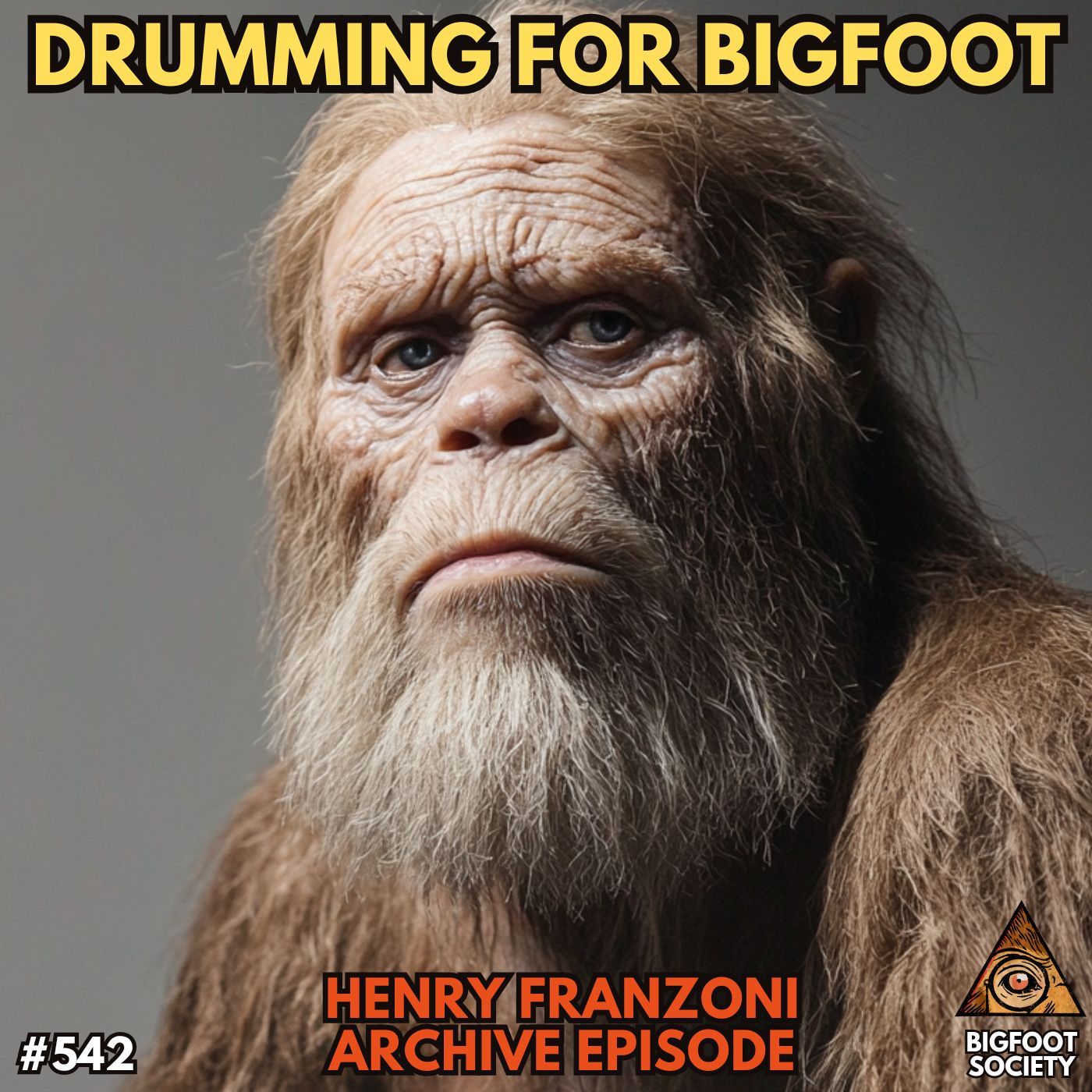
This episode was first aired on 1/2/23.I've been re-airing my old episodes with Henry Franzoni as a tribute to his legacy and that more people will enjoy him the way I did.
Description:In this episode, I talk to Henry Franzoni, musician and Bigfoot...

 Apple Podcasts

 Spotify

 Castro

 RSS Feed
This episode was first aired on 1/2/23.I've been re-airing my old episodes with Henry Franzoni as a tribute to his legacy and that more people will enjoy him the way I did.
Description:In this episode, I talk to Henry Franzoni, musician and Bigfoot enthusiast. The following topics are covered in this chat so you won't want to miss it!
Henry’s favorite Portland noodle place
Caveman Shoestore
Growing up in New Jersey
Henry’s 1993 Skookum Lake experience with Bigfoot, a UFO and the Men in Black.
The Physics of Bigfoot
First Nations interactions with Sasquatch
Working with Peter Byrne in the Bigfoot Research Project.
Interactions with Ray Crowe in his bookstore.
Henry’s friendship with Renee Dahinden
The Lost History of Drumming for Bigfoot.
Resources:
Books mentioned -
Henry’s book - In the Spirit of Seatco - https://amzn.to/3VvDPl6 (affiliate link)
The Oregon Bigfoot Highway - https://amzn.to/3G9QLXZ (affiliate link)
Mount Shasta’s Forgotten History and Legends by D.W. Naef - https://amzn.to/3G4bZ9X (affiliate link)
Movies mentioned - A Flash of Beauty on Amazon - https://amzn.to/3vsqOhp (affiliate link)
Henry’s documentary - Drumming for Bigfoot - https://tubitv.com/movies/475884/to-the-ends-of-the-earth-bigfoot-monster-mystery?start=true(titled on Tubi as To the Ends of the Earth)
VHS transfer copy of Drumming for Bigfoot on Youtube - https://www.youtube.com/watch?v=9VPdOq7x8uM
Sasquatch Odyssey on Tubi - https://tubitv.com/movies/706373/sasquatch-odyssey-the-hunt-for-bigfoot?start=true
Read more:Towards a Resolution of the Bigfoot Phenomenon by J Glickmanhttp://www.photekimaging.com/Support/rptcol2.pdf
Also, it seems as if there was a Raw Audio of this interview posted of this interview as well. I can't remember what I had taken out. Maybe cussin'? Find out and enjoy! - https://www.patreon.com/posts/bigfoot-society-76023685
Share your Bigfoot encounter with me here: bigfootsociety@gmail.com
Want to call in and leave a voicemail of your encounters for the podcast - Check this out here - https://www.speakpipe.com/bigfootsociety
(Use multiple voice mails if needed!)
🔴 Subscribe to hear more Bigfoot encounters: https://www.youtube.com/@BigfootSociety?sub_confirmation=1
Share this video with a friend: https://www.youtube.com/watch?v=z5v75Od-X38
Watch more episodes of the Bigfoot Society podcast here –
0:00 Welcome to Big for Society. If you have Bigfoot activity to report from the same areas discussed in this episode, please reach out to me directly after this episode. And if you'd like to be on the podcast to discuss a personal Bigfoot encounter, please reach out to me directly at Bigfoot Society at gmail dot com. Do you wish there was more Big for Society to listen to you every week? Well there is now. If you become a supporting member over at Patreon, you get a special members only episode every single week on Wednesdays, and sometimes even more episodes. Head on over to patreon dot com. Forward slash the Bigfoot Society and now let's get on with the show. All right. Bigfoot Society got the privilege of chatting tonight with mister Henry Franzoni from out in the Pacific Northwest.
0:50 How are you doing today, Henry? I'm doing really well. Thanks for asking. How about you? How are you doing? Oh, I'm doing good. I'm doing good up in my recording studio chilling out. But a few located I'm I'm located in Central Iowa, believe it or not, so talking about so I want to make sure that listeners know a little bit about, uh, what it is that that you've done over the years, and we'll get more into it, Henry. But if if. People have watched the the ninety seven documentary Drumming for Bigfoot.
1:31 People that have watched that documentary are usually super big fans of it, then this is the Henry Franzoni that's from that documentary. Also, Henry has written a book in the Spirit of Siatcho. And let me know if I pronounced that correct. I tried to get the pronunciation. I did, okay, good. And he's living in around the Portland, Oregon area, been involved with many different Bigfoot related things over the. Years, and it's going to be a chat about that. It's going to be a fun one. So, Henry, anything else that we need to put in there to kind of paint the paint. What's going on with the Henry Franzoni story.
2:22 I'm a little different than all the other bigfoot people. Oh yes, I love it. The strange thing about me is that I was a bigfoot freak in nineteen ninety three when I was really obsessed. For about five six seven years, I was really obsessed, and I became a real biologist from my fascination with bigfoot, so unlike most insane bigfoot people, I actually became a scientist.
3:02 That would be like one of the things about me that's weird. And then I worked for the tribes here in the Northwest, all along the Columbia River for about twenty five years, became a government supervisory scientist in fact in this basin. So you know, imagine my surprise as I became I had a career in natural resources management that developed from my interest in bigfoot. Which is it's fascinating how you were able to build a career that overlapped with that passion. It's just it's the coolest thing ever, really. And you refer to that a little bit in your You were in the documentary A Flash of Beauty. You had an interview in that, and you kind of refer to that a little bit in there as well. But I wanted to start off with a few softball questions, kind of get the ball rolling.
4:06 So you're in the Portland area. You've lived in there for quite a while, right, you've been in that Portland area? Well, yeah, you know, I mean I moved to Portland in nineteen seventy four. Wow, So I've been there a long time. But I've moved out of Portland in the year nineteen ninety seven. That's really when I left. I well, I moved to the periphery. I've moved about an hour outside of town. I've always lived about an hour from Portland, and right now I live about an hour from port I live in Washington and I live down the Columbia River in a place called Oak Point. So I'm about I don't know, sixty miles from Portland, maybe something like that, you know, but I'm in another state, but definitely that same area, lower Columbia River area. I'm a river rat.
5:05 I have stuck to the river and I still am still a river rat. So I love that the Portland area is so beautiful. You know, me and my wife, we took the we took a trip out there. Of course, you know, one of the groups of people that after Portland it was huge. We're like, oh, we got to visit like everyone in there in there, you know, did. But it's it's beautiful. So, as a person that lived there for a while, did you have any favorite restaurants when you lived in that area or anything you know cool that you would you would do that maybe the tourists wouldn't wouldn't know about I.
5:50 Yeah, well there was there was a lot of There was a restaurant still is called Frank's Handmade Noodles, which okay, total killer, like the killer restaurant. And I actually played a regular customer on Diner's Drive ins and Dives when Frank's got onto Triple D. No way, Yes, Frank's got on the trip which spoiled Franks and turned it into two Francs in two different places and made them go much more high end. So you know, just by doing a Triple D appearance, Yeah, it kind of messed up my favorite place, you know. No, yeah, like so I'm like, oh man, that was but you know, now there's two of them, you know, what can I say? But yeah, And there was always a place called Montage that I loved, which was totally the great hangout spot for late night musicians and stuff. You know, it was like the great place.
6:56 But now it's a food cart post COVID so oh yeah, sure, you know, it got scaled down. But yeah, there's there's a lot of like old school Portland stuff, Hubert's places like that that people, you know, modern modern people don't know about, but they're still there. Did you meet Guy FIEDI then. No, No, Okay, I'm like Guy was like this, you know, he was like three layers of people beat away from me, you know, like I was. It was evidently when he came to town, he had college friends he was visiting with, so all his producers and everything like just shot the whole episode and then he just like came in and right at the end.
7:53 We're going to get we will get to the bigfoot stuff in a minute listeners. But this is just this is totally unexpected. I just I love that little tidbit about diners, drives and whatever. Three d's So if you watch that episode, you can actually see yourself in it, like you're in it. One word I say something like, well it's food made with love. Yeah, actually say a line, a line that makes it into the Triple D episode. I'm going to watch that tonight. That is so good. Okay, it's talking about. Your you know, you have so many years of you know, being a musician. You were involved with you know, Caveman Shoe Store is the name of your your band. I was talking to Mark Murcell about that at Cryptic Cohn.
8:44 We were discussing about how he met you back in the day and he was a big fan of that that band. But you know, through through your years of being a musician, has there been like a performance with a certain person or just a certain when you're performing that really stuck out in your mind, kind of encapsulated like, oh, this is just just pure magic. There's there's a number of them, really, you see. I I had the privilege of working with this musician named Fred Shallonor. He's a bass player, and he died and we worked together for forty years and Kman Shoe Star was one of the bands we had together. We had three different bands actually maybe more like five different bands since we were kids, since we were nineteen. From nineteen to sixty four, I worked with Fred Wow something like that.
9:48 So this guy was just really one in a million as musicians go, and he was just inspired. And there were a lot of times where I'd be on stage with him and you know, it would just be magic. Magic would take over. And so there were you know, luckily, fortunately there were some recordings made of a couple of those moments. But yeah, there was actually this one. I just got this tape and I put it on my band Campsite. There was a gig I played at Satira Kan in nineteen ninety two and our band couldn't make it, so it was just me and Fred. But we were in the middle of recording a cave Manchu Store record called cave Man Master Cylinder, and so Fred and I had all those songs in our head and we went and had to play this club date and there were only two of us, so we had to fill in all the other parts ourselves, so we had, you know, pretend that we were also playing the keyboards and this and then that and everything, and and that particular performance, I still listened to it because like it was completely amazing, and you know, I just listen to it still to this day and go, oh my god, you know that was there's those moments, right, there's a special magic moment. Yeah,
11:23 so yeah, that was. That was one. There is one, but that's one, but there's a bunch of them. Because I opened for Ornette Coleman in France once at the festival in nineteen ninety four, and we played really well that night, and that was cave in a Shoe store, But yeah, we played really well and we had some good shows we played some good shows for sure where we you know, the standards I had were you're supposed to be able to deliver the goods every time you play live. So if you made records, you have to be able to deliver what you do on the records live or everybody's going to go, oh man, they suck live, you.
12:15 Know, right right right? Is there a favorite recording you that if you know, favorite album that you came out with. All there may be tough, top three or four, I don't know. It's hard. It's hard because I'm each I like them. I like a lot of them. I like most of them that it made. Yeah, gotcha? Yeah, you said is the best way to listen to your stuff? Then on band camp you were saying, if people want. You these days, you know, here in the modern world, I put my back catalog on band camp, you know, like I mean, that's sort of the thing to do now.
12:59 It's the only place you can well, it walks the line where people can listen to it for free three times and then be asked to pay, and you can name your own price. You know. It's not like other streaming services where you get one ten billionth of a cent per play. It's and for my music because it's old style music now, even though actually I'm still probably head of where music is now. But for me, it's old style music. You know, only old people buy CDs and things. So I'm like, I'm good with that. I have like an old audience that I have to satisfy a little bit.
13:47 That's awesome. That's yeah, that's really cool. In the book the Oregon Bigfoot Highway, of course, you're part of that group, the Clackamis. I knew I was gonna mess it. Sasquatchian's right. In your bio. It's reference that you were raised in northern New Jersey. Do you have any interesting It's also mentioned the Pine Barrens, which I'm from the East Coast originally, and I know a lot of weird stuff happens in the pine barrens. Did you ever have any weird stuff happened that or did you go hiking in the Pine barrens or anything like that, or.
14:31 I like lived in the Pine Bearns after a while, I was about the only place in New Jersey I wanted to be. But no, no, you know, oddly enough, I met people who took their experiences that were really cool, but nothing, you know for me, No, I didn't have any anything weird. And I went to the other weird place in New Jersey, the Ramapo Mountains. Oh, tell me about the Ramapel Mountains. Well, that's on the northwest corner and there's it's similar to the Pine Barrens. You know, the Pineys live in the Pine Barrens right right. The Jackson Whites live in the Ramapo Mountains, and they too are kind of a remnant Indian tribe, Tuscarora Indians. Hessian soldiers. Wow, you know some British that were escaping New York City, some Dutch and then they went up there in the Ramapo Mountains and got isolated for one hundred and fifty years since the Revolutionary War basically, which is what happened to the Pineys and the pine Barons.
15:44 Big for society will be right back after these messages. So it's the same kind of super creepy, creepy zone. And you know it's got banjo's playing and it's deliverance. Oh no, it's in New Jersey, you know. So I love that about New Jersey. You know, it's got the hood and then rich people and then like the Jackson Whites and then food. You're like, man, where am I?
16:29 You know, it's it's very interesting. I'm gonna have to uh to look up that area more, the Ramapo Mountain area. That sounds that I'm gonna have to look. Into that because most people when they think of New Jersey and Pine Barns are thinking of like the Jersey Devil. You know, that's that's what they're bringing up. But well, that's certainly one of the big stories down there. You know, that is definitely probably the main story, right, But there's a lot of sasquat sightings oh yeah, you know, and find up in like up alongit Pennsylvania New York border corner. There no doubt, no doubt about it. I'd like to talk about So.
17:19 Let's start talking about what brought you into your into big Foot in the early nineties. And I know that it has something to do with an experience at Scuokam Lake in ninety three. Correct, that was the. Very first one. Yeah, that's what suck me in a big time that led to today. Wow. I I had an idea that the sasquatch thing was secondary the very first day because what I was doing was I I had moved to a place called Linton, which is a neighborhood in Portland, Oregon. And if you know Portland, Oregon, it's this strange little neighborhood and the very very northwest tip of Portland along the river, right on the river bank, and it's far away from all the rest of Portland. It's just like a little finger that sticks out along the river and goes way up along the river. And so I was looking into the history of where I lived, and I saw that a chief Chinnook chief named Casino had his winter camp there and that's why it was there, you know. And I was like, well, well, you know, this is Chief Casinos thing.
18:49 And so then I started looking up the Indians that had lived in this winter camp, and I found a story, the famous story to everybody sees. Paul Caine wrote in I Forget Way to hold on Cat interference problem. Get down, Kitty, Get down, kitty. Okay, sorry, but the uh story basically was about schookums that lived up on Mount Saint Helens. He want he was a painter and he wanted an Indian guy to take him up to the top Mount Saint Helens. And no Indian would do it because the Schookams lived there and they were cannibal hairy giants and they lived at Spirit Lake up at the get Down, Kitty Kitty Get Down, and so I said, wow, you know, that's really fascinating. And then I realized from reading this story that it took place on the shore right in front of my apartment in Linton, and I was like, I was like, wow, you know that they were talking right here about this schookm that lived on op Amount Saint Helens. So of course, at that time, which was nineteen ninety three, everybody had heard stories about Sasquatch up on Saint Helen's. I mean, that was kind of a you know, the standard place. Everybody said they lived here.
20:19 So I went, wow, you know this must be about Bigfoot, and that Skukums must be Bigfoot. That was my big insight. So I found a place called Skukum Lake and I read about the history of the name, because Oregon has this great book that lays out the reasons for everything being named what it's named. So it's got a great place name dictionary available, and in this dictionary it basically said, well, it's called Skukum Lake because that's where the evil god of the woods lives. And I said to my wife, or it was soon to be my wife, Well, we gotta go there camp, you know, we gotta check out the evil Gut of the Woods still lives there. I'm like, hey, I don't see if he still lives there, man, let's go.
21:13 So it was a joke, right, and went up there, and before I got to Scoogam Lake, I ran into Bigfoot. Okay, when I was a quarter mile away, but I didn't see anything, but what I what happened and brief to me. The very first moment I ever went out, there was a electric force field whacked into me. Made all my hair stand up on end. My wife immediately passed I'm going to take a nap and just passed out on the front seat next to me. My it was dead silent.
21:56 All the crickets stopped chirping and went dead silent. Henry, are you still there? That's a little weird. I'm back. That was really weird because right when you're telling that story, I know, everything just wagged out. Dude. Yep, listen, let me tell you that they're listening. Man. Oh the thing is is that this my starter motor was blown the force field that made my hair stand up on end blee my starter motor, and we were marooned there and had to stay. And the smell went away and the force field went away, and my wife woke up all at the same time really like like two three minutes later, Like it was like for three minutes, I'm like getting I feel static electricity, you know. And and so I said, wow, I don't know what but bigfoot is, but that wet dog smell made me picture in my mind a giant, hairy thing, you know, Like the smell was what gave my mind the picture that hey, this must be a big, hairy giant the bigfoot that we all hear about all the time. Just power of suggestion in a way, you know, But I mean it
23:29 was a strong suggestion. So I after that very first encounter, I was like, well, that's what people call bigfoot, but it's certainly not a wild animal. I said, I don't know what they think if they think that this is some ape running around out here. But you know, no ape has a force field and blows my starter motor and knocks my wife out and whole stick, you know. And the crickets seemed to know all about it, because they just went quiet, and then when it left and the smell left, they woke up again. You know. It was like the other animals were not so freaked out.
24:16 They were like That was my opinion at the time, was like it seemed to me that the crickets were they we'll just shut up and then we'll start again. Big deal, you know, right, But that being the very first moment that I ever encounter Bigfoot. I didn't encounter Bigfoot, but oh and I didn't see a damn thing either, but you know, there was nothing to see, right, So this is what led me down the screwball road. A month later, I went back and my wife and I camped out and stayed up all night and I was like, Okay, let's stay up all night and watch for Bigfoot. And I was disappointed when instead of Bigfoot, a UFO came out of the ground below me, and Okay, this ufo take off in front of us. WHOA really yeah, really close too, like we could see the details on the you know, construction. We it was. We were on the top of Valley Ridge between two valleys, and it came out of the bottom of one of the valleys and rose up in front of us and then hovered in
25:46 front of us. So we got like this really good twenty minute look at it. Well, it wasn't twenty minutes. It's maybe two. Minutes, but that's a lot of time. It was a long time, yeah, And it was very close to where the starter motor got blown out. You know, I was maybe a quarter mile from that spot less you know, I was right, I was in the near the same spot. And then it got super strange in the morning because we went down to see where this thing came out of the ground, because we could see exactly where it came out of the ground, and we checked these landmarks and we had all these things, and we said, okay, so if we get to this spot where these trees are, you know, it's right over there.
26:38 So we drove around logging roads to go there. And what we got there in front of us was a government suv with two men in black and a woman in red. A woman in red and the two men in black started walking towards us. Looked just like the classic cliche. They had sunglasses, tall and thin, walked awkward white shirts, shiny black shoes. It was like, uh oh, and so I looked at my wife, who didn't know anything about the men in black, and I said, hey, those are the men in black. We got to get out of here. And I said, okay. You know, I was like, man, so I I threw it in reverse and I just like jammed out of there. You know, I had my fan. I just like went on the gravel and just took off. So since those three things happened basically in the same spot in the cascades of Ward, and the first month I ever looked for Bigfoot, like the very first month I ever looked for Bigfoot, I was like, wait a minute, what the hell was going on? Honestly, what is going on? You know? So wow, I had a problem because every time I told people that story
28:09 what I just told. You, Yeah, nobody believed me. Nobody believed me at all. Everybody would tell me to you know, don't tell that story. Don't tell people that. I'm like, I'm sorry, I'm sorry it happened to me. Sorry, I do tell that story. That's an amazing story, Henry, I love that was. That was my first month of looking for Bigfoot. First month, Holy Macren. The very first month nineteen ninety three, August first, nineteen ninety three was the first date. September one, nineteen ninety three was the second date. And I will those dates are exed in my mind because that's what sucked me into Bigfoot completely, where I went, Wow, whatever's going on, it's really it's deep, man, Whatever whatever is really going on around here, it's deep. That's all I can say.
29:06 So if I was to if I was to ask. Either of you at that time, you both would be in agreed that yeah, you both saw a UFO. Yeah, because you know, that was part of why we knew it was real. Because the thing is is that at the moment we saw it, we saw it right. And it came up and it was dead silent, and it was silver glowing white for most of it, and then down at the end like an ice cream cone, it had an orange half ball and the orange half ball suddenly glowed a lot brighter and went and my wife said, Jado Genesis did take both, you know. She said, wow, it looks like Jada like it looked like it was getting ready to okay, yeah, and then it did. It just squirted way up into the sky RIGHTO. And so right after that happened the weird reaction that your mind has.
30:18 And both my wife and I had the same reaction, which is you just pretend it didn't happen. Big society will be right back after these messages. Like suddenly you're like, I didn't see that. No, that didn't happen. Your brain down, it's just like, I don't know, I didn't see that. But then my wife said this one thing. She said it was near and then it was far, and for some reason that triggered the whole memory and we both went, Wow, we just saw UFO right in front of us come out of the ground.
31:12 That's amazing. Have there been sightings in that same area that you've heard of or similar things over the years after that or yeah? See after that, I myself had my own little network of Boy Scouts, okay, that I would in the summertime. I would always talk to the camp at the Boy Scout camp there, and I'd always go, keep your eyes out for orange balls, man, keep an eye on And so they would tell me things, you know, after the summer. At the end of the summer, for like ninety four or five six in there, for the next three years, I'd get reports from all these kids because I well, that was when ray Crow had the bookstore, he had the Western Bigfoot Society books.
32:09 Yeah, so totally. I would meet these kids at the Western Bigfoot Society and then I'd recruit them in my Hey keep an eye on look out for orange balls up there, man, I knew a lot of and then I went back many times. Up until ninety six, you could drive up to scook them lake. But after the flood of ninety six all access was cut off. You have to hire sixteen miles down to get there really up hill. Yeah, so it's way more inaccessible post ninety six, But up until ninety six, Yeah, I had like a lot. I saw orange balls up there a bunch of times. I had more encounters with Bigfoot up there and never saw one, but definitely interacted. I had to think, well, things would happen like this where I was driving up there once again in my van with my wife and the passenger seat, and suddenly in my right ear, I heard like somebody was trying to get my attention. So I turned towards my wife like she was doing it, but at that exact millisecond she was turning towards me because someone went in her ear and she said, and we both said what to each other at the exact same instant, and
33:42 then we both freaked out because we realized that someone was playing with us telepathically and we were in a van with closed windows, so that kind of thing happened. That was maybe a mile from Skook, like okay, so and that was maybe spring of ninety four, you know, like a little later. But yeah, over time, I've had so many experiences that are that's how it started for me. No, The thing is is that, yeah, yeah, I mean I had a today. I've had like twenty five encounters or something, but I don't count them. I don't even think about it.
34:32 It's different now for me. And when you say so you're having you know, when you're going certain places, things are are happening to you from an outside force of some of some sorts. That's an interesting term inside or outside you know. Yeah, that's yeah, I don't know, Yeah, it's people. If you're new to all this, I really really suggest that you go over to Amazon and you look up Henry for Aanzoni and you you read his book because it's really interesting. It's available as I think it's available in a few different formats.
35:21 But it's very interesting read. And also it's a great resource as well because Henry makes all these incredible maps of all across North America that have to do with different names like Scookum, Spirit Lake, all sorts of you know, monkey related things. Is this very interesting. I don't think there's any other resource that has done that to the extent that that Henry did, So it's a it's a good resource to have at your disposal as well. I want to make sure I get that little plug in there for the book. It's it's really quite good. I'm going to have to do an anti plug Okay, alright.
36:07 When I wrote that book, it was the best I could do at the time. Looking back at it today, I'm like, it's ninety five percent. Correct, okay, but five. Totally wrong. Okay, all right, I mean the map part is solid though, right. Yeah, Well that was basically an extension of the story I just told you about figuring out schook them Like. I ran with that idea and found every schook them anything anywhere. And then I went beyond that and found all the words I could find in English or in various say hapten or sailish or Chinook or whatever, And uh, I ran with that idea to like an absurd degree where I tried to make a database of four thousand spots that had been named for something like that. But you know, it's an interesting experiment because one can look at place names just like sighting reports. They're almost the exact same thing. When you get a siting report, you don't really know if it's true or not true, or if it's a hoax or not right, and very much with a place name. If it's named Bigfoot Springs, you go, well,
37:39 maybe it's name because somebody saw a bigfoot there. Maybe it's named as a joke and it's a hoax or this or that, or it's marketing or sales or you know that kind of thing. So you don't get much more than a sighting report with the place name. But it's a clean data set because it's pre any media mention of bigfoot or sasquatch or anything. These place names got laid down a long time ago, so you're looking at an interesting data sets. That's what I really thought what people would find interesting in that book, and I guess it still holds. Yeah, And I didn't like the maps people made so I was like, man, you can make better maps in that.
38:24 There you go, Yeah, they're good, they're good. What was what's the five percent that you would change? I didn't really understand the physics of how Bigfoot does what Bigfoot does. I didn't even understand what Bigfoot was at all, and I didn't understand what I was. And so that gives you a big sort of room for error. Yeah, sure, there's plenty of error room there because I have I have a much better theory of how it all works now, and and I didn't have that before. I didn't really I didn't really understand how they could do what they do well, how the stories I'm just telling you, I didn't really understand how I could get hit by a force field that bloom my starter motor and telepathically somebody could, you know, talk to my ear, you know. I But now I have a sense of how that might work, you know. So it's different, and it's awesome. I wrote that book before I had that sense of how it might work. So that's what's different.
39:35 So is then, is that a thing where there might be like a follow up book where you kind of set something straight or. That's what I'm doing okay. Regard me cat interference here, no problem, you got to get down, yeah, okay, okay, here we go. Yes, well you know yeah, video, Yes, welcome it. It's awesome. I love it. The cat thing. Yes, that one of the things I'm doing in this. I'm just sure I have everything that I want to say, but it's not organized right. So I'm almost there, damn it. I've been struggling with it for years, honestly. Well, I had to wait for the right time. There's a lot of a lot of things that I had to I had to wait before they could you could talk about them. And I'm surprised. But it's okay to talk about him now. And I got the word, so it's okay.
40:45 Well, plenty of people that will be waiting for that, that follow up to come out. Just see you're aware of that before we There's one thing I want to circle back on. So you said that you were having a lot of boy scouts bring reports to you. Did do you have that stuff written down? Is that like old records that no, you don't have anymore. Okay, they're just curious. What once I did, Because once upon a time I assembled a database for the Bigfoot Research Project of four hundred and eighty five sighting reports in Oregon and Washington. Sure, and I helped them put it together. And we you know, back in the day, back in ninety three to ninety eight, we had employees who would go out and see what they could learn, you know, because almost all the sighting reports we got were so old that, you know, the witnesses weren't alive anymore. But whatever we could learn from going to the site, we learned. And we we did GPS coordinates everywhere. We made a database. Yeah, I have all of that once as a very valuable thing. But then I gave all of the questionnaires that we made people answer to Autumn Williams in like the year two thousand, okay,
42:20 maybe nineteen ninety nine. I thought she would be a good inheritor of all of that material. So I dumped. At that point, my wife was nagging me about the boxes in my closet and saying, what are you gonna do with that here? And I was like, yeah, screw it, you know, get rid of all that bigfoot stuff. So I got rid of my all my Bigfoot artifacts. Oh wow, d And I courged myself in the year two thousand of all my casts, hair samples, photo, everything. I was just like people. So, you know, I had a real epiphany of hatred and well, not really, but I was pretty sick of how mean everybody was in the Bigfoot world and the whole you know, tenor and arguments and you know, the Bigfoot scene. I was just sick of it.
43:19 But yeah, I had this thing where I I got rid of everything, and then by two thousand and eight I had so accumulated so much more stuff. Anyhow, Yeah, that I wrote that book, you know, and I was like, well, jeez, I might as well write a book, because you know, I got all this new stuff since I got rid of them. And that's kind of what happened again in that I was going back and looking and going, gee, I don't have any of that stuff anymore, and no, I have all new stuff again, and I'm like, no, no, moving on. Yeah, I'm not going to be so rash anymore.
44:04 It was foolish for me to throw all that stuff away. I should have kept it. Cliff Berrickman gave me a single cast to start my collection again. Oh that's so nice. Yes, yes, so I have one cast now to begin over with the But for me, that end of the phenomenon was never the interesting end. I was much more interested in civilization. Let us say, you know, I was much more interested in how Western civilization views it, how all the other cultures view this phenomenon, and how they differ radically. And I'm very interested in the physics of how bickfoot turns it visible and does all this stuff.
45:00 And so I'm really like an engineer and a well I've worked. I'm a warrior for the tribes, a contract warrior for the tribes. I've found well in a sentence or two. For me, Bigfoot seemed to be the caretaker of all the other animal species, including Bigfoot seems to have a caretaker role in nature. And I became a.
45:43 True conservatory big for society. Who will be right back after these messages. I wanted to become a true conservationist in part because I kind of sensed it. That's what Bigfoot was, that Bigfoot was a true conservationist in its own way. And that may not be the thing that strikes other people, you know, when they go looking for Bigfoot, they go, whoa man, you know whatever, But for me, that's what struck me, and it turned into career of doing conservation work for the tribes. So my interest in bigfoot just sort of naturally led right there because because that's what I saw when I went looking for bigfoot is the whole question of what is their role in nature? I mean, we're people, right, and there's animals, but what is their function?
46:59 You know? So that became like that was the important question to me, what's the function of bigfoot in nature? Like, I mean, what are they doing here? Right? They're obviously I didn't have a problem with they exist or not right right from the first second, I was like, well, something exists and it ain't an animal, And so I thought the caretaker thing was what really struck me. They just struck me as caretakers. And then of course I read a lot of other culture's views of Bigfoot that in the years since have really confirmed that for me, that a lot of other cultures see Bigfoot as a protector and as a person a type of person, but as a protector of the tribes. They're seen as you know, it looks. It appears to me that I wasn't too far off in my guests about them being caretakers. Western civilization may not know that, but many other cultures too.
48:17 It's it's it's very it's very interesting, and I'll be super interested to see how you're what what else you have learned over the years. You know, when that that follow up is able to be trying to get, it's going to be awesome. I'm hoping, Oh wow, I can do it. I'm just trying. That's awesome. Really, I'm really I've been talking about it a long time. German people crazy because I've never finished it. It is so weird that I. Was reading a book on Shasta Mount Shasta, the Folklore and Legends of It by D. W. Naff I believe his name, and You're you're called out pretty good in it, Henry, You're the stuff. Oh yeah, yeah, it's you're referenced in it.
49:06 It's very interesting. I was like, I was just I'm reading this at the same time. This is weird, but yeah, when he's talking about a different Native American things around the Shasta area. So it's it's very cool. I was really fascinated with that subject of all the Native American spirit animals, for lack of a better term, or the spirits that the Native Americans communicate with that that's the topic that's really interesting to me. And Bigfoot is one of those spirits, by the way. So you you you're.
49:48 So you view Bigfoot as like a spirit slash spirit animal or more of like a type of spirit, or I know it's a. I would say a huge my point of view, Bigfoot is both okay, Bigfoot is animal flesh and blood and also has puzzling powers that lend it to being a spirit as well. But it's no different than you or I, And now I understand much more of how it all works. We are the same in our construction. Also very interesting, Yes we are. We are clearly related.
50:33 M gotcha. I want to rewind a little bit. Let's go back to ninety three and reading in your book. There's a part where you talk about becoming a member of the board of advisors for the Bigfoot research project headed by Peter Burn. And so I'm just how you know, we've got the the the thing that happened to you and your wife? How does that like, how do you meet Peter Burn? What's that connection there? How did that all start? Because that's quite the connection to. Get that's that's that's how okay, the way it happened?
51:16 Was that happened to me? August first? Okay, so August second, I went to that bookstore. I remember seeing the bigfoot in the window, and it was ray Crow in the Western Bigfoot Society, but over in the Saint John's neighborhood. And yeah, yeah, yeah, I remember this. I remember this bookstore. And my wife and I were like, yeah, I remember that bookstore that we always see. Yeah, let's go, let's go see what's going on. So I went in there and I introduced myself to ray Crow and I told that story to ray Crow like my wife and I did for some reason, because I don't know what He and Peter Burn had just moved to Hood River where Parkdale technically where he was setting up the Bigfoot research project, and and ray Crow was like at that moment, he was like, well, I should tell Peter Burn any Bigfoot sighting reports, you know. And it's like, well, Peter, you know, this guy's in my bookstore, and he just you know, told me the story. So moments later I met Peter Burn, you know, like and then it uh, it just one thing led to another, you know. I was just I was so he captured my imagination mascot and his jungle hat, and really, I mean I was.
52:52 I was like, wow, this is awesome, you know, and and then I'm like A useful I don't know, I'm useful. So but in a short time, I had uh made a I had made websites for Western Bigfoot Society Bigfoot Research project, Ron Moorehead, Patty Patterson, Roger's wife, and Renee de Hinden. And I made all these websites because I was a computer teak, right, and so I was like, well, I can help you Peter with your Bigfoot research project. I know all about I'm good with the computers, man.
53:35 So I did all and then I did all this gis work for him, and then I did all these databases that we're talking about, and you know, and I was like, yeah, yeah, man, I can help you do this. Ship. So then he invited me to be on Board of Advisors like a couple of months later, and I gotcha. I was a a and there I was till the very end, until the bitter end, until the bitter end is but he helped me get into this thing really well. He vis a vis what we were talking about before, right, He bought me a CD of the Genus Database of the Geographical Names Information System. Of course, this was the beginning of the Internet and it wasn't yet online today is just a website, but back then it was a CD that you had to buy, and Peter Burn bought that for me to help me get totally into the place name things. So like he encouraged me like that, and that helped me, you know, just get sucked. And then I then when Jeff Glickman came in and took over, I still hung around and helped him write, you know, his book, his Great Paper of nineteen ninet towards a resolution of the Bigfoot phenomenon. And I just like in
55:11 that paper, actually you'll see, pardon me, a lot of my early place name stuff where I'm like, wow, and I look, I looked for this name and I found it right, So you know, I mean, I was all it was so semi scientific, but the basic idea was was a sound idea, as it turned out, because I went to a lot of those places and had encounters. That's awesome. It's so so cool. Because so the website thing. So I'm a computer guy and I just found that fascinating that you were the guy in the mid nineties that was making the websites for these guys, like is so listed in your book.
56:03 It's like, you know, Peter Burn Renee a hind In moneymaker, Chris Murphy, Ray Crow, Ron Moorehead and that that's just man, that's awesome. Like and also so also you made the website for Patty Patterson too. Well, we made one, but she didn't ever wanted to go live and then we killed it, you know, but she she made one because we had a relationship. The well, there was a lot of good that came out of that period. And Okay, one of the things Peter Burn is the best at is raising money. Peter Burn had more money to look for Bigfoot than anybody and could obtain capital, and so other bigfoot researchers really resented him for that because you know that ask got it worked.
57:04 What was it the money to pay Patty Patterson twenty thousand dollars digitize the Patterson film from her copy, from her copy which is the only it's the it's not the original, it's the first copy, and she has it in a bank vall and by giving her twenty grand, she let us digitize all nine hundred and fifty two frames, that's awesome. To Hindon, Peter Burn raised the money to pay him twenty grand so we could use something like thirty seven of his still photos. Because the Hindon owns the still rights to the Patterson film, right, Patty owns the motion rights. So the Hinden we paid twenty grand to to use these in towards the resolution of the Bigfoot phenomenon, and Glickman I think ended up only using about fifteen sixteen frames from the film. But to Hinden was really anti scientist, and so he refused to let it be published in a scientific journal that was written into the contract. It was absolutely really yep, you know, like he Hindon, really, you know, that's an interesting The thing about Bigfoot is the intersection of commerce and science and whack of doodles and everything else. It's really it's
58:36 an interesting problem, man. You know, really, that's so intense. You went from zero to sixty literally in the way that you went from having this encounter and then you're just thrown into the crazy stuff with like Peter Burn and Renee to Hinden and. Yeah, you actually met Renee. Renee was a good friend, okay of all those of all those people, I've met them all really, yeah, well, I mean Grover and John Green and Renee and yeah, I mean, you know, yeah, I knew them all. But Renee was a friend. Renee and I became friends because, in my opinion, Renee was he was the smartest of all those guys, in my opinion. But that just you know, that's just what I think. I liked him the best, whatever, I liked him the best. He was the most fun.
59:33 So you just sit around at the gun club drinking with Renee, telling Bigfoot stories, leading them and it was a lot more fun than you know, that is a lowesomer. So you were actually hanging out with Renee like like you're like hanging out like blood Yeah. The last three four years of his life wowne. Yeah, because you know, I was not the typical coop. I mean I helped put twenty grand in his pocket, so I was obviously not, you know, easy to dismiss as a woo woo guy. Right, Well, they didn't dismiss me. Really.
1:00:22 That's the thing is, in the end, those guys were slightly more open minded than you would expend. I have told variations of you know, bigfoots of spirit and the flesh and blood animal combined. I've told variations of that. It's just now I understand how how it works a little better. And it's like they are both. We're both. Everything is both. Don't worry you know it really is. It's the difference. It's soul and physical body. Right. Are there physics yet that described the soul? No religion that describes sure, but I'm talking hard physics.
1:01:05 Big for society will be right back after these messages. You know. That's what That's what helps. When you understand the physics of your soul, it is much easier to understand Bigfoot. That's what I'll say. That's a. That's a. That is an intense statement right there. I like that. Yeah, I like that. Man. That's that's good. That's good from from the years of talking.
1:01:50 You know, you said you were able to talk to Renee over a few years. You are there any conversations about Bigfoot that that you can still remember anything you know on that that stands out in your your memories or. Oh yes, yes, there's well it's pretty hysterical. But yeah. Now the strange thing you know, for me, Renee, would we'd talk about everything, right, Bigfoot everything. He thought there was some kind of mental aspect to it. That's what he used to say when he was drunk enough and it was private and lated nat enough and he would go, you know, there is some mental aspects.
1:02:50 Oh wow, that's that. I used to go, Wow, you know, Renee's actually got a clue, you know, like I used to. That used to really please me. Yeah, I'm mister out there supposedly, but I'm not. But Renee, Renee had through experience, brings you there. Like those experiences I told you about clued me into a different side. I always say, people see different faces of the Bigfoot mystery, right, and it's really probably the experience you had is the face you see, and it's probably just that simple. And so I had a weird experience. So that's the face I saw. It was weird. It's not this monkey walking across the street.
1:03:44 It's weird, man. So I was very pleased when Renee and some of the really old guys through experience, because as you go along, weird things happen to you. I can guarantee you that you can be you can see Bigfoot cross the road like another dozen times. But then one time the thirteenth time, you know, Bigfoot stops your car dead in the middle of the road with his mind and you go, wow, that's really weird. So what I'm saying is it seems to me that anybody that really looks and really tries and gets it and goes the distance and does the work and gets out there and really does it, the closer you get to them, the weirder it gets. Like when you start to actually have experiences, they're not what you expect and you're like, wow, I expecting a gorilla and you know, and as time goes by, as you I mean, that's what I have observed in others is over time they get a little
1:05:16 more open to the weird side, because weird shit happens as they look, if they really look. And maybe it takes a decade or two, you know, I mean, it takes time before something weird happens. But I find a lot of times that those very old guys, that's all I meant to really, I can say, as. Man, there's they're okay, there's a lot I'm going to ask you. So in this interview, I'll be asking some really like random questions and if it doesn't hit. We're just going to go right past it. And it's more for me personally. I like talking about bigfoot. Yeah, anything you want, so ri I'm in I'm in Iowa, right.
1:05:58 So I research bigfoot Iowa and I found out that from a guy that I talked to who was involved with big footing in Iowa in the nineteen seventies, that Renede to Hindon. Actually came out to Iowa to talk to them. Did he ever? Is that anything that? He probably never mentioned anything about an Iowa trip or anything like that. If not, that's how he never mentioned that. Okay, all right. No sweat. Did you ever talk to Patty Patterson about the PG film at all? Did you ever get to talk to her about that? No? I just talked money. Okay, Yeah, you're just the guy putting stuff together, all right, cool? Cool. I only talked money with her, and then I talked to websites with her. But yeah, no, I never No, I had never once broached the subject. We discussed at length.
1:06:53 You know what her copy was exactly ten. You know how much which we would pay, and you know how long we could have it, and you know what we could do to it. You know, we went to the whole we had. It was complicated. It's a valuable asset and oh yeah, you know, we did the best we could at the time. But that project ended in tears. The and things happened. For example, we made a stabilized version of it back then in nineteen ninety five. We had this beautiful stabilized version of Patty Patterson's copy. Wow, and we just destroyed it. We didn't, you know, like at the end, it was.
1:07:47 Like a you destroyed it. Well, it got destroyed, yes, the well, yeah, because wow. From that project, there was a staff of three. There was Peter Burn, a staff of three, and the board of advisors, of which really there were you know, we were like volunteers, right, you know, and the board of advisors we just sort of commits and show up, and you know, we were just pain in the ass. So I'm the only one that acknowledges that it ever happened.
1:08:37 The rest of the staff has removed it from their resumes. The project leader after Peter Burn, has removed all mention of it from any of his uh cvs or anything. No one wants to talk about it or say a word. At the end of the project, we had seventy CDs, this digitized copy of the Patterson film on it, and one of these staff took sixty eight of the CDs, and I took the first two, which I've lost since then because I just wanted a memento of different two. What the hell? And she buried him, you know, like she None of these people will bury them. Well, none of these people want to have anything to do with anything in Bigfoot whatsoever. They've scrubbed any mention of it in their lives since so all of them have this same zuro mention of ever having ever existed. I am the only human being who will talk about Wow.
1:09:47 That is so intense, Henry that. Yeah, literally it died in nineteen ninety eight when I was wow, right, and that was that was the real death. And so yeah, twenty four years, twenty four years later, it's. Like, that's crazy, man. I'm the last person who will. The last one who will. Even but even at the time I wound up with everything, that's that's a lot of what I gave to Autumn Williams back then. Because I was the only of the people of the project. There might have been others who were I was the one really focused on solving the problem. Sure, I've really wanted to figure out the mystery. Now I still do you know that That's what motivated me is I wanted answers. I wanted to know what was going on, and so everybody kind of knew that about me, like like I was the true believer. That was like, hey, I want to solve the mystery. The Patterson film copy, like I said, I only took the first two discs and the other staff member took the others.
1:11:19 Oh, so that was that was not a literal thing, right, Like they didn't literally bury them in the ground, like it was just they She. Just who knows what she did? She devoor. She never talked to a Bigfoot person again and never acknowledged any connection to Bigfoot anything ever again with anyone. And she moved off, got another job, married a guy, moved on, had a life. Good for her, Good for her. We'll let we'll let her have her life. I do want to talk because the history of this I don't think exists anywhere, is how did the documentary drumming for Bigfoot come about?
1:12:00 Like what's the background of that? Was that your idea or. Yes, okay, the way that came about was I better like this to tell you the story you're seame a guy named Anthony Wonke and I smoke joints, drank beers and drove all around the Pacific Northwest for nine weeks in a rental car, interviewing bigfoot people all over the Northwest no way, and scouting locations. And we had two tapes to listen to in the car. One was Schoolly if you know your early rap and school one of the hardest of the heart, and the other one was tortoise Head. And we listened to these two tapes and smoked joints and drank beers for nine weeks.
1:13:12 Oh, that's amazing. And wrote the script. While you're in it all. Good, and we casted it too. It's so good. Okay. That documentary is one of my. It's my favorite thing because of the culture of the nineties and also like the way it's edited. Did you edit it too? No, those guys were you see, those guys were masters. Anthony Wonke was the assistant producer and really he wrote the majority. But I he'll tell you it's my movie.
1:13:54 I really wrote the majority. Okay, like he'll like, we'll we'll disagree about who wrote the Maturity, But we went through all we met every lunatic bigfoot person in the Northwest, and the idea was to cast interesting narrative characters. That's awesome, Yes. You're talking about like I went and introduced them to Peter Burn and to to Hindon and then to Grover Krantz and John Green. You know, it's like morehead. I'm like, okay, you got to meet the guys, you know, right, So I introduced him and thinking one of these people is going to be the spokesman, right, because we were looking for spokesmen. We were looking for who was going to be the main narrative character. So all those guys tell the same story, they give the same inner every time.
1:14:50 It's boring. We don't want those guys, right, right exactly? Oh okay, and they were like, yeah, no, we want you. You know, you'll you're the narrative character and Larry Lund will be the secondary man. It is so good. So we got Larry and me to be the narrative characters. And people don't know this is how that movie got made, but yeah, that's how it got made. And then we had What we were trying to do was to coordinate it with the Bigfoot research project so that when the big paper was coming out towards.
1:15:36 That is intense. The first plot had that was the big reveal was okay, and here's the big scientific report. Oh really, Yeah, that was going to be the original way it went right, but Peter demanded way too much money and you gotta pay me x one if you want to do that. Yeah. Is is Anthony still around? Do you know? He works for the BBC? See, the people that did that all worked for Channel four and the BBC. They were pros. Normal how that.
1:16:20 Guy big for society will be right back after these messages. Anthony Wonke was the second guy, John Waters. The guy that plays the cameraman was David Attenborough's cameraman, you know, like and the cameraman we had besides him were of the same quality. And the sound guy was incredible. He got the best drum sound out in the middle of the woods because he had such high end gear. It was staggering, you know. And they were all total pros that really knew what they were doing. And Norman Hall was in charge of that. But that team of guys see after the nine weeks then they came and We shot it for six weeks, so it actually took fifteen weeks, and then it went to editing and there's you know, just like every movie, there's like five times the footage that you'll ever seeh.
1:17:34 Can you I can't imagine the stuff that like is on the floor after the editing, Like, what's the stuff that didn't make it in? Oh? I would love to see, but you'll never. See it make it in most did not make it in Oh. We went and we went and picked those people because they were interesting narrative characters. You know, we were looking for quirky the Brits, British people in general, like the more you know, idiosyncratic narrative character rather right, you know, American style, you know, straight ahead narrative character. You know, they they're they like idiosyncrasies. So I love making that movie. But like I said, we basically got drunken stoned and wrote it and and.
1:18:24 It makes it makes the doc even better. Who did the music for that the doc? It's it's really. Norman Holland whoever, Yeah, I don't know who they were, the. Great the one of the one of the I guess you could say quirky characters in it that I just the Howard Hall guy in the Goat Mountain area. Whatever happened? Do you know whatever happened to him? No, but I think he steals the Joe. I think he's like, he's so good. Yeah, he steals the movie Howard. No, don't know what happened to Howard? You know, And I've one time I used to hang out where he lives. Was really near Scoop and Lake, really not that far a valley or two over a valley or two over, you know. So I used to hang out the area. And then I'd stopped hanging out in that area after ninety six, really after after that movie, I stopped hanging out in that area.
1:19:30 So occasionally I visited the Clckhamis area, but it's you know, my my, I set my stakes wider then. Yes, do you remember any people that you had talked to in those nine weeks that didn't make the cut? Oh? Yeah, yeah, millions? Oh yeah, a lot, because because see it was like going down on the list of all the people I knew. So there was a guy named Dennis harry Ford who was a Washington State Patrol guy, and he back then he didn't talk to Bigfoot people.
1:20:22 He but he was actually the guy that the State of Washington would call when there was a bigfoot incident at a construction site or something. And so he had the greatest track casts and measurements and data collection of anybody ever. And I mean he was the guy Washington called, you know, and he would measure the tracks and the stride and the this and the that, and you know, just did a straight cop thing. And he was a super bad ass woodsman that The other job he had for Washington, the State of Washington was they would call him when there was a prison escapee hiding out in the woods, and he would track him down no way. Yeah.
1:21:15 So Dennis Harryford was this insane character that I mean, I was just like, oh man, you know, like we've got to introduce people to Dennis. Dude, what could have been? Oh my goodness. But that's that's just how it goes. Yeah. No, And I mean it's many many years later, so I I have no idea what he's up to now. But I think now like everybody knows about him, like you know, Moneymaker and the bfr R. You know, I think everybody's figured out Dennis Harreford exists. Yeah, but who else. Yeah, there was Datis Perry and really Datas. It was the only film ever taken of Datas And it's too bad it was right before he died. But he was he was one of my biggest influences. And he was a logger that lived in Schimania County and had thirteen encounters with Bigfoot, as he used to tell us and m But he turned out to be one of the most insightful people and have the most valuable insights in my opinion, you know. And he got completely cut. And then there were two macaw elders that we interviewed, Georgia all and Frank Smith that were there. That their white names, and
1:22:48 they were eighty and got to interview him. And it was it was it was like this. It was like we went on and on and on about Bigfoot, big Foot, big Foot, Bigfoot, Bigfoot, and the only thing they would say was that they'd say, well, you know, like nineteen forty seven, a serviceman stationed down the road at the air base saw one, he says, and that you can find in John Green's book on the Track of the Sasquatch at particular incident. Okay, And if you went to the tribal bookstore. They had John Green's Track of the Sasquatch, and that was the only Bigfoot story they would tell. Was, oh, that one that's in John Green's book, you know. And I was like, well geez. So then I said, well, what about the little people? And they said, oh, the little people they're in the next valley. You want to meet him in no way. Then we got onto the sea monsters, and they had seen this sea monster, each of them had seen it three times in their life over eighty years, and Nia Bay and basically it was cad Borosaurus.
1:24:14 As the modern Oh yeah, Caddy right right. Well these both of these elders described six different encounters they had with Caddy in Nia Bay. And we cut all that. And I was like, oh my goodness. You know, I was like, oh shit, man, we did have kept that. Man, I know it wasn't Bigfoot, but you know, really there's people that would have been interested in that. Holy mackerelhan, Oh my goodness. Wow, that's I never would like, never would have expected all that. That's crazy, dude.
1:24:54 Well yeah, nothing to it. That airman saw it in nineteen four, that is really Yeah, it's pretty crazy. Yeah, all that's on the cutting room flort. I know that because those are the things I really missed, and I was like, damn, wow, all those people died too, right, Georgia L. Frank Smith, Davis Perry. Yeah, so especially if those guys were in their eighties back then. Yeah, they're they're long gone. Yeah wow, thank you for sharing all that. I mean, it's like you can find a copy of that, an old VHS transfer copy of it on YouTube, and then it's on the two b app. I don't know if you've ever seen that.
1:25:48 It's like this streaming app. Yeah, the title changes. I think they call it. Yeah yeah, Bigfoot. Monster Mystery is what I've seen it as on YouTube. But yeah, yeah, they It just keeps floating around, that's for sure. It keeps. It's like a bad penny, it keeps turning up. It's like if you know about it, then you and if you find someone else that knows about it, it's like you're in this like special like ultra secret Bigfoot club where it's like, oh you get that ninety seven Bigfoot doc, then you're you're awesome. That's how I look at it anyways. But oh wow. It started as a joke from my friend Arthur Purley who said, let's go play drums for Bigfoot, and oh wow, get Bigfoot to come and check us out.
1:26:41 And then one day BBC comes to town and I start joking around with Anthony Wonkee about the idea. Right in that nine weeks of driving around, they're all like, yeah, that's gonna be the opening scene. And it's so good too. It's so good, and I'm like, really, I mean it started as a joke. They're like, oh, man, that's the oble zoom man, you know, like man, just like it is, you know, And I'm like, wow, who knew? You know? So yeah it it wasn't my plan, but it did start in my head, you know.
1:27:24 So I love it. I love it so much. The ideas turns out also is sound as well. You don't find Bigfoot, they find you. Turns out that's a sound concept. So very interesting. Another statement you made in your books, you mentioned making six six shows and making contributions to half a dozen books. I'm just curious, like, do you remember, like what shows. Were you involved with making? An also or like country aributions to books stuff like that. The other big one, the Sasquatch Odyssey, okay, right, yeah, you know that one. Then there was a German one that you no one's ever seen a little German vignette.
1:28:19 Then there was an Australian one. No one's ever seen little vignette. Then I did in Search of with Robert Stack. Nice, that's awesome. Yeah, yeah, so yeah, before Leonard Nimoy, you know, like early early in search. Of Oh wow, yeah, you do you remember the names of the German and you said it was Australian. Okay, no problem. I don't even remember. I don't remember. I don't remember the names. I remember the interviews. And then there was another British one that disappeared. Another like some competitor of the BBC had to do an interview too, if there is a competitor of the BBC, or maybe it's a competitor of Channel four. But another crew came out and did another interview at the time. But I've never seen or heard of that one ever again. Actually, all three of those I never heard of again. There were three that I shot that I never heard a thing ever.
1:29:38 That's very interesting. Two thousands off here. Two thousand is when I said I am not going to be a narrative character for the media about Bigfoot anymore. Thank you very much. Yes, And you know here I am eating my words twenty two years later, and you know right here I am. But it's okay. Now I'm retired, I'm sixty six. I'm at a different place in life. You know, time to have some fun, you know. Yeah. Oh, in uh the Oregon big Foot Highway, they taught so you were listed as a Clackamass Saskatchewan.
1:30:26 SIS. That word is so dang hard to say, Sasquatchean. Sasquatchean, Okay. One of the requirements is that you camp at least five days up to Clackamiss or spend two hundred hours of boots on the ground. Research is that something like? Did you actually meet those requirements? Then? Yeah, without trying, you know, I okay, where the hot areas are after many years, and that's one of the hot areas. It's always been hot. There's always been shit going on over there, and that's where all that UFO stuff happened, and all that everything.
1:31:07 Big for society will be right back. After these messages, I've had. So many weird things happened to me over there that I maintain a network of observers to this day, but not boy Scouts. But okay, see, I well that's really an overstatement. I've been in natural resources management and the Warm Springs Reservation is border of the western border of it is right there, not so far from Scookum Lake little further east and Thunder Mountain. You know that was all Scoom Lake's on Thunder Mountain and Thunder is a giant Indian in all the Indian stories. Okay, so the fact that a giant Indian lives on Thunder Mountain exactly
1:32:40 why it's named Thunder Mountain. I didn't realize that when I was looking at Skookum Lake on Thunder Mountain and that's where the evil god it was, I didn't realize, Wow, well I looked at the mountain. It was actually named for Thunder, the giant Indian that's in all the stories. So you know, I didn't know that then. And there's a lot I didn't know, because there's a lot I don't know still, right. But the the truth is is that I worked for four tribes for twenty five years, well more than that, I've worked for really twenty tribes, but four main tribes, the Akaman Dumtil of Warm Springs, Nezpers.
1:33:37 Those are the four Treaty tribes and I worked on behalf of their fishing rights. They are fishing treaty rights, and I fought for their treaty rights in the Ninth Circuit Court of Appeals and won a couple of cases. Okay, so I'm a warrior to defend the tribal rights to things like you know, the fish and wildlife and animals. And you know, I've had a whole career in it. And I had an annual contract with the Department of Energy who funded me for all those years to do this work for the tribes. So I've walked between you know, the Feds, DOE and the tribes for twenty five years.
1:34:31 I've walked on a tight rope. And right, I know those areas in Clackamus County now from a whole different perspective, like as the boundary of Indian land coming west. And yeah, like I said, the the thing is is that I'm many tribal people tell me when there's when they have a sighting, oh wow, and I don't. I have not really spent until recently, I haven't spent much time outside of Indian country. For the last twenty five years, I spent a lot of time in Indian Country because I've been doing salmon restoration work. I've been out in the woods and in wilderness for twenty five years on tribal land generally, and I'm been a scientist for the tribes for twenty five years. And one of the interesting things about that movie that you're talking about No Bigfoot Monster Motory is that when tribal people saw that movie, what they got from it. The takeaway they got in many cases was that I would not hurt another animal. I don't know how you can read that into that movie, but they were like, you wouldn't hurt another animal? You And all these different tribal people would come up to
1:36:03 me and say, I saw that movie. You wouldn't hurt another animal, would you? And I go, no, you know, I wouldn't as a matter of fact, you know that's right. And I couldn't figure out how they got that from watching that film. But that happened to be all across Indian country, and it acted as a calling, as a as a white card to allow me access all across Indian country. Because everybody saw that movie. An Indian country oh wow, Yeah, and they all liked it. And I didn't know that, and so everybody knew who I was the moment I started going out in the middle of Indian country and they're like, oh, the bigfood guy, you know.
1:36:50 But because that movie, I made real friends with Indians, you know, I worked at one side. Yeah, made a lot of good for I have good a lot of good friends today that are tribal people and the real born and raised on the residual people, you know. And and so that's a network for me. My connections and my reputation is not something I can share with other people and say, oh exactly, yeah, tell them me or my friend. And but the thing is is that I get filled in if anybody on the Reds Bigfoot, I usually hear, you know, like on those four resids. And maybe even more because I just spent the last four and a half years working for the Colledge tribe. So and everybody knows that I'm that bigfoot obsessed white guy.
1:37:54 Sorry did you say that you have you have contacts with Midwestern tribes as well. Yeah, I just I I I'm I'm always hesitant, but hey, it's come out in public. Yeah, I have very. I have various skill sets. One of my skill sets is payment system architecture. When you're a computer grid right, so you'll get it. So I take QA contracts coming out of k Street for wik systems and food stamp systems, and I do QA for the FEDS and for the tribes in this case when they're building a new work system.
1:38:49 So a new wik system and a new food stamp system just got put in in the Midwest across ten tribes and it was a two year contract. I had to do QA on putting on the system as it got put in because a strange card. I have to play as I'm an expert in payment system architecture, you know, because like you, you know, I'm a computer keeek right, But I'm I'm an old, sixty six year old computer. I love that. A lot of the listeners are like, I don't care, but I'm like, dude, I love that stuff.
1:39:29 So I totally get it, man. Yeah, I'm My thing is all about allocation of resources. I want to help allocate resources in a fair way. I think society should allocate see resources in a fair way. Yeah, my soapbox and so all the work I do and all the jobs and careers I've had have basically touched on that theme, which is trying to make this society allocate resources more fairly, you know, like that's my stick, that's my that's my game. But it, yeah, it comes out in different ways, and mostly yeah, I've worked. You know, I've worked for these ten tribes and I couldn't talk about it while I did it. Most of the time, I can't talk about what I'm doing. I have buttoned up strategic and effective, and I cannot talk. But now I'm post retirement, so I actually say, oh, yeah, you know, like I've been working for all these tribes for years, right, you know, and I have a lot of contact. Well, I have tribal friends, and I have a tremendous amount of respect for the tribes, you know, which I really really, I'm just it's a total privilege to be able to work for the tribes like I do. And I'm just filled with attitude that I got to do it, you know,
1:41:02 I really, I'm just it's too That's how I feel. I know, people are like, no, you want to be Indian, you know, I'm like, no, it's really on another level. Yeah, yeah, that. Is cool that you were able to to make you know, you made really a huge difference in the lives of so many people through that. So that's it's very cool. I think as we start to kind of wrap things up a little bit, do you have any words for. Those that are getting into bigfoot, uh, the younger generation, the current big footers today?
1:41:49 Yeah, you broke up for a minute. Oh yeah, sorry. Do you have any any advice for the current, you know, up and coming bigfoot generation of the Bigfooters today? Yeah? Sure, think chew Bacca. Don't think field and stream, field and stream, No, Chewbacca. Yeah, and you're gonna be a lot closer. You know. My advice has not changed. Do not underestimate the intelligence of what you are facing here.
1:42:34 It is well, yeah, I mean I don't know what advice to give him. The way. One of the really good things about Peter Burn that I need to mention because nobody really mentions this about him. Sure, but this dovetails into advice for the the now people. Peter was different than all the other guys back in the day because he was really into Jane Goodall, and he was really into this approach of we should try to communicate with them like Jane Goodall does with the gorillas, and we should you use that approach, the whole friendly communication approach, And he took crap from everybody else for being that way, and he stood up to the Hindon and Krantz and Green.
1:43:36 Everybody was like, get out the gun, you know whatever, and that was the right idea, but he shortly abandoned it and went to this biopsy dart plan where he was going to shoot it with a biopsy dart and get a DNA sample because he needed a DNA sample, and you know, and then they went to the slightly more violent approach, which I wouldn't recommend even today, but not for the reasons because because they're people. These things, these creatures are people. The closest thing you can understand is people. If you get to know them, you realize they're people. Where have you been? You know? And so only the others that I would really say is why Peter Burns approach was really enlightened and ahead of the game, and pretty much all the there's there's there's way too much violent, you know there. I understand the mechanist viewpoint and the materialist I must get the body, you know, give it up on the body. No one. I'll point
1:45:07 out an interesting oh man, pardon me, in the data that we have right now, which is, nobody's really ever touched the body. And we've looked at the body a lot of times, and it looks like ours, and it looks like it has flesh like ours, and it looks just like our like one of us, you know, see muscles and shit. But nobody's touched it. And from the strange reports I hear of those that actually touch it, it's rock hard and doesn't meet your expectations about skin.
1:45:53 So there's a lot going on with the body. It's different than ours, is my point. It looks the same as ours, but functionally it's different. There's something really different about it. And everybody sort of moves past that problem. Nobody really gets to touch the body, hold the body, even touch it with their hand more literally. Well, here's the story. Sure I may, yeah, definitely. I had a friend, a tribal friend, who always wanted to find out what happened if he shot a little person in the head. And so he was hunting and he saw a little person and he shot it in the head and it rang like a bell, really really loud like a bell, and he really bad luck for the next fifteen years and then he died. Oh man, So that's more advice for the youngsters. Don't do that.
1:47:12 Yeah, guys, let's not do that. That's good advice. Henry. It has been an amazing chat with you. Thanks so much for taking a few hours out of your Friday and chatting with me. Been a fun time. Please take a few minutes if there's anything, you know, I always like guests at the end, if there's anything they want to plug or you know, websites or anything, by all means, go ahead. You know. I'm just getting back into the public Bigfoot world.
1:47:52 I have no merch, but one day or maybe I'll have merch, you know. I have. The working title of my book is super Force seatco nice but could be subject to change. I don't know if I like that, but that I'm trying to get that out in two months, hopefully. I've been telling people for years I'm going to finish it. I really am close to finishing it. And yeah, finally I'm gonna write my uh what I think about Bigfoot. That's awesome, man, everybody really needs another take on Bigfoot. Oh my god, I mean, I'll read it, dude, I'm I'm pumped for it. So good stuff. Well, thanks Henry for hanging out and you have a good rest of your.
1:48:44 Night there, dude. Thank you very much. Please take a minute to help out the show by subscribing on YouTube, making sure you hit the bell so you don't miss any notifications, and share the episode on YouTube with a friend. Also, if you're listening to us on a podcast, thank you so much. Make sure that you're subscribed, share the show with a friend. Really, it's all about sharing the show. Wherever you can. If you've had a Bigfoot encounter related to the following, or know someone who has, please reach out to me at Bigfoot Society at gmail dot com or pass on my email. Here's the list. If you've had any encounters in Oregon, which I'm sure there's probably a few of you out there, please feel free to reach out immediately. You can use email Bigfoot Society at gmail dot com. A special thank you to all the Bigfoot Society, Patreon and YouTube channel members. It's your support that helps keep the show going and I extremely appreciate it. If you want to join in the fun, you can join over at Patreon dot com, forward Slash the Bigfoot Society. I'll see you there and again, thanks for listening.
1:50:42 Her and I can get on here. We can tell our stories. Maybe there's somebody else out there listening that's too afraid to tell their story. Maybe this will give them the courage to come out. And I feel so bad about it. Who cares what anybody thinks. I know what I saw, I know what's out there. That's all I can. Please let people know, Please let them know. If you ever see one. Of these things, you need to tell because if you don't, then shame on you. You have shame on you.


